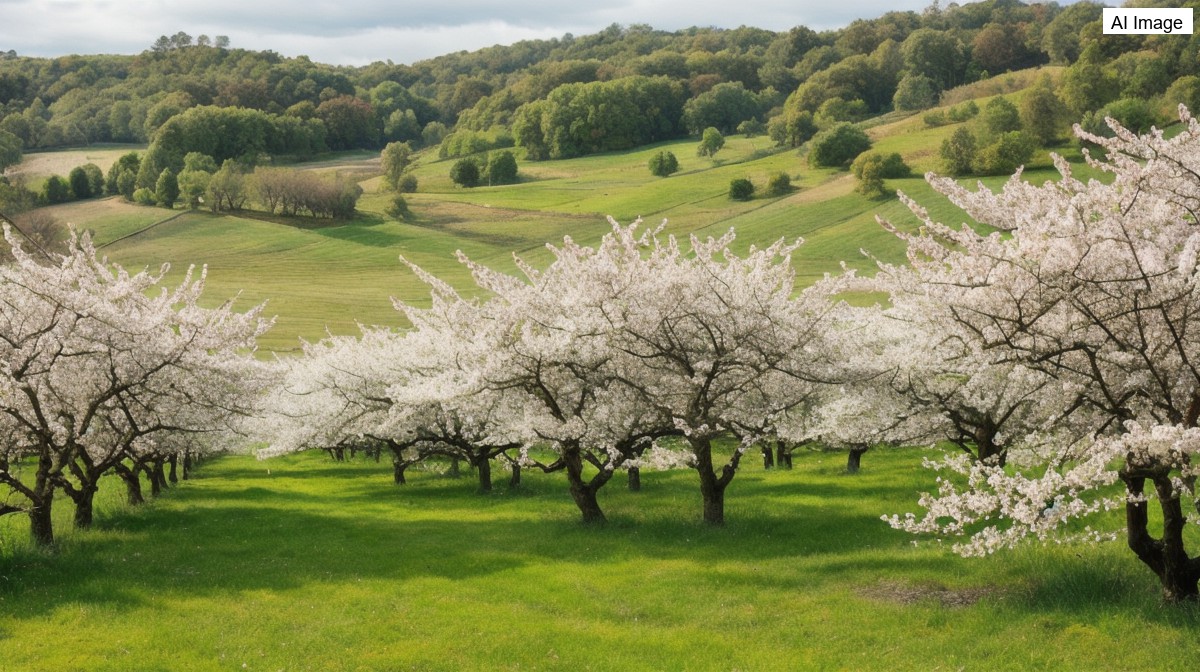
The varroa mite has wiped out at least 60 percent of bee hives across Australia, raising serious concerns for the many crops that depend on bees for pollination, according to ABC News Australia. The rapid spread of the parasite has devastated numerous beekeeping businesses over recent seasons.
Almond grower Neil Bennett told the broadcaster that he relies solely on bees to grow his crop, describing pollination as the moment that decides how much of each year's blossom turns into a harvest. Without enough healthy hives, he said, the size of his crop would be greatly reduced.
Bennett explained that he prepares his orchard as carefully as possible ahead of each season. In recent years, he said, most growers have adopted a best management practice of providing an additional pollen source, such as wildflowers or a flowering cover crop, to support the bees while they are at work.
He compared a single food source to eating steak every day on a diet, saying the extra flowers give the bees variation. Growers also put out water for the bees to find when they arrive. According to Bennett, the hives are typically brought in around the end of July and removed by the end of August.
Each July, Bennett hires hives from a beekeeper and places them in his orchard for roughly four to six weeks. This year, however, he is worried about both the number of hives he can secure and, just as importantly, the strength and general health of the bees inside them.
It has been a poor season for beekeepers, Bennett said, with limited floral resources to build up their hives, while some have been battling bushfires that burnt out their sites. As a result, he expects the bees to arrive a little underdone for a marathon. He normally relies on about 110 hives for his orchard.
Asked whether there were alternatives to bees, Bennett said that at this stage there are none for almonds. He noted that other crops such as kiwifruit have developed ways to assist pollination artificially, and that there has been experimentation with blowflies, but said many crops still depend wholly and solely on bees.
Despite the pressure, Bennett said he remains optimistic that a way will eventually be found to manage the parasite. He pointed out that the rest of the world has learned to live with the varroa mite over many years, while Australia has only faced it in the last couple of years, and said he is confident the industry can move forward, though it will take time.