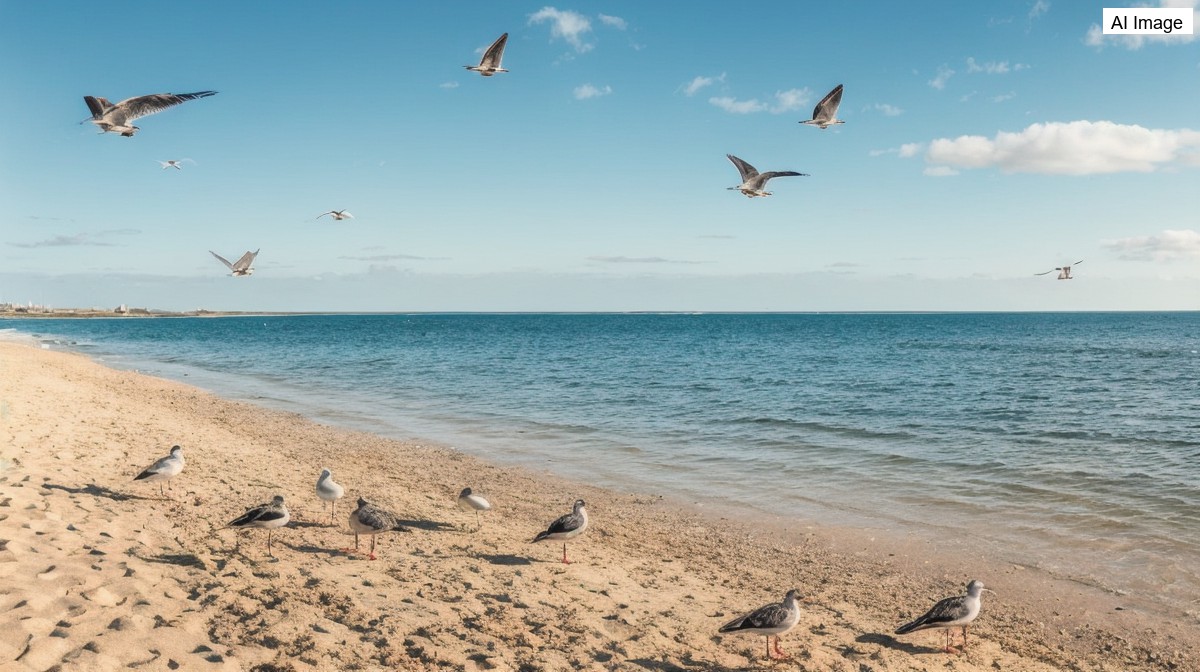
Birdwatchers have been flocking to Geraldton in Western Australia after the sighting of a rare visitor, a black-headed gull that has not been seen before in this part of the country. The appearance of the bird has caused a stir among enthusiasts, who are keen to catch a glimpse of it while it remains. For a species that is normally a world away, its arrival on the Western Australian coast has turned an ordinary stretch of beach into a destination.
What makes the sighting so significant is just how seldom the bird turns up on Australian shores. There are fewer than a dozen records of the black-headed gull ever appearing in the country, and this is only the second time one has been recorded in Western Australia. It is also the first to be found this far south, which adds to the sense of occasion for those tracking it.
The most likely explanation for its surprise appearance is the weather. It is believed the gull may have been knocked off course by a storm, carrying it far beyond its usual range. While the species is ridiculously common across Europe and northern Asia, outside the breeding season it tends to move only as far as the southern part of mainland Asia, where it is a familiar sight through countries such as India and Malaysia. Getting much further south, past Indonesia and all the way to Australia, is extremely uncommon.
The rarity has been enough to send dedicated birdwatchers on long journeys. Tegan Douglas, one of those who travelled to see it, drove up from Perth to Geraldton and back in a single day, a round trip of around 800 kilometres. For her and others in the twitching community, the chance to see something so unusual is well worth the effort, a reminder of how a single visitor with fancier plumage can renew appreciation for the birds people see every day.
Despite being so far from home, the gull appears to be settling in with ease. According to those who have observed it, the bird is sitting in among the regular silver gulls and behaving just as they do, feeding alongside them and even taking the cheeky local habit of going after hot chips on the beach. By all accounts it has fitted in with the locals as if it belonged there all along.
Whether it stays or eventually heads back is the question on every birdwatcher's mind. With the rest of its species likely still around mainland Asia, the gull is a long way from its kind, but given how comfortably it has mixed with the silver gulls, observers suspect it may linger for a while yet. For now, its presence offers a small and welcome novelty, and a prompt to notice the birdlife that is all around every day.