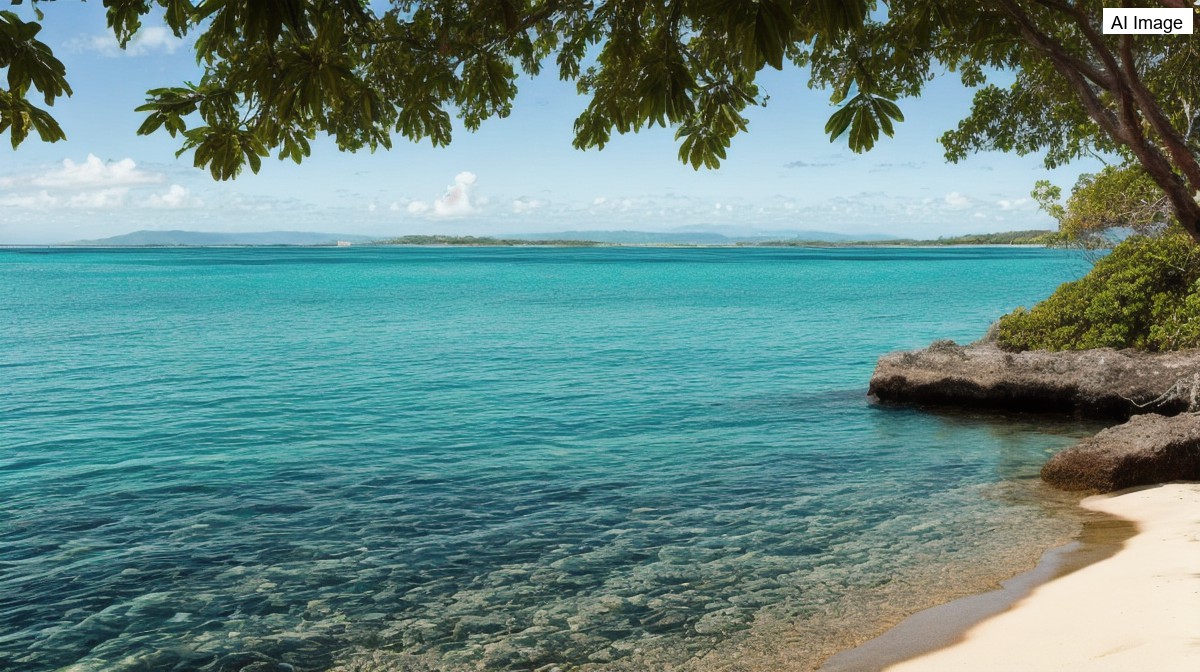
On any other afternoon, it would have been an unremarkable scene in the Torres Strait: a fourteen-year-old boy and his cousin sitting in a small boat eating mangoes before deciding to jump in the water for a swim and a spot of fishing off Thursday Island. But within moments of entering the water, Sam Nye's life was changed in the most violent way imaginable when a shark clamped down on his torso with devastating force, tearing open his left side and leaving his internal organs exposed.
The survival of the teenager in the immediate aftermath owes everything to the quick reactions of family members on the scene. His nephew stripped off his shirt to use as a makeshift bandage while others physically held Sam's displaced organs in place, pushing his intestines back into the cavity and wrapping him as tightly as they could manage. He was airlifted to Townsville, where surgeons launched the first in what would become a marathon sequence of twenty-two operations over the following months.
The medical team, led by Dr Brendan O'Connor, faced a challenge that had no precedent in published surgical literature. The bite had exposed Sam's abdominal cavity, grazed his hip bone and come within a millimetre of perforating his bowel. Doctors first cleared the wound of contaminants before sealing the inner lining with negative pressure dressing. They then applied a biodegradable skin substitute that acts as a scaffold, encouraging new blood vessels and tissue to grow through its structure in successive layers.
A permanent surgical mesh was stitched directly to his pelvis and ribs to rebuild the internal wall of his abdomen, providing the structural support that the destroyed muscle and tissue could no longer offer. Multiple skin grafts completed the external reconstruction. Dr O'Connor attributed Sam's remarkable recovery in large part to his youth and baseline fitness, factors that gave his body the resilience needed to endure the repeated surgical interventions and the gruelling rehabilitation that followed.
Four months after the attack, Sam is walking unaided, has regained his strength through intensive physiotherapy and is preparing to return to the island community where he grew up. In an interview with ABC News Australia, the teenager said he feels like a different version of himself but is confident he can do everything he did before the shark changed the course of his life. His case is expected to be formally published in surgical journals as the most extensive bite wound from which any patient has been successfully reconstructed.