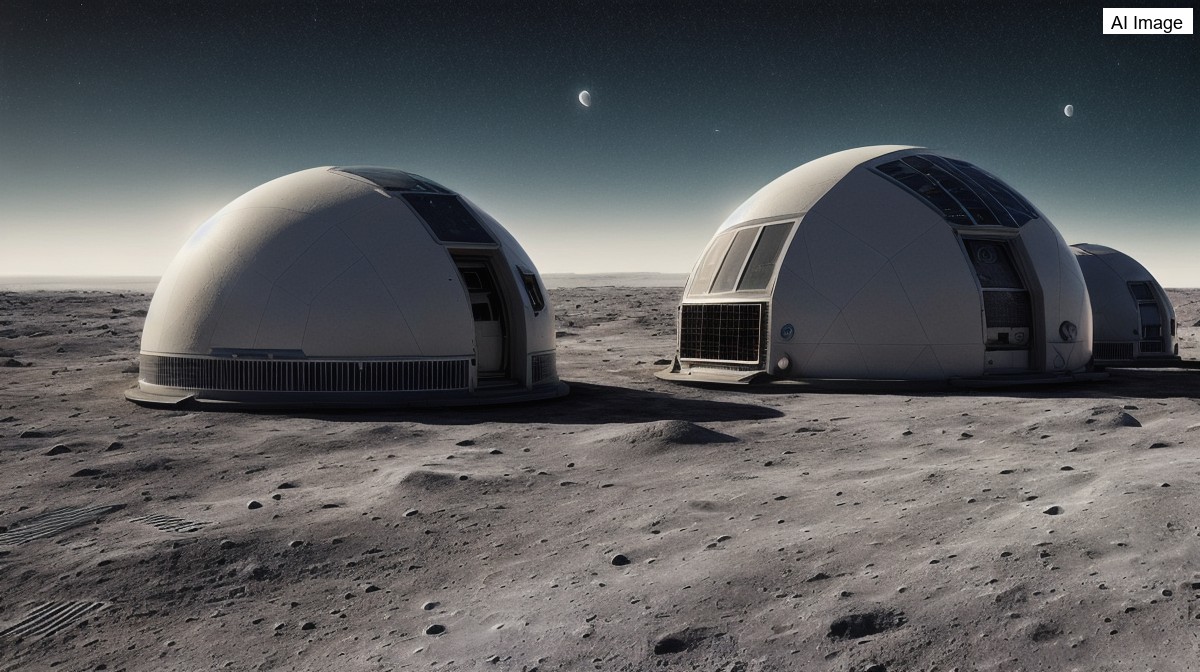
NASA has announced significant updates to its ambitious plans to build a permanent base on the moon by 2032, revealing new equipment and forging partnerships with private companies to make sustained human presence on the lunar surface a reality. The agency unveiled lunar drones, advanced rovers, and high-powered cameras designed to capture unprecedented detailed imagery of the moon's surface.
Among the companies selected to build the new generation of lunar equipment is Jeff Bezos' Blue Origin, which will be part of a broader consortium of private contractors sharing in more than 20 billion US dollars in funding over the next seven years. The hopping drones, described by observers as resembling science fiction machines, are designed to explore terrain that would be too difficult or dangerous for astronauts to traverse on foot.
The NASA director addressed questions about the health and safety of astronauts who would eventually live at the permanent base, acknowledging that maintaining human wellbeing in the harsh lunar environment presents significant challenges. The completed base is expected to cover hundreds of square kilometres and will enable humans to have a continuous presence on the moon for the first time in history.
The announcement builds on recent momentum in lunar exploration, with four astronauts having launched to the moon just last month. The construction timeline envisions a phased approach, with initial infrastructure being established before a full permanent base becomes operational. The project represents the most ambitious lunar development programme since the Apollo era of the 1960s and 1970s.
Australia has been following these developments closely, with ABC News providing extensive coverage of the announcement. The project has implications for Australia's own growing space industry, which has been seeking greater involvement in international space programmes. The scale of the investment and the involvement of multiple private companies signals a new era in space exploration where government agencies and commercial enterprises work together to achieve goals previously considered the exclusive domain of national space programmes.