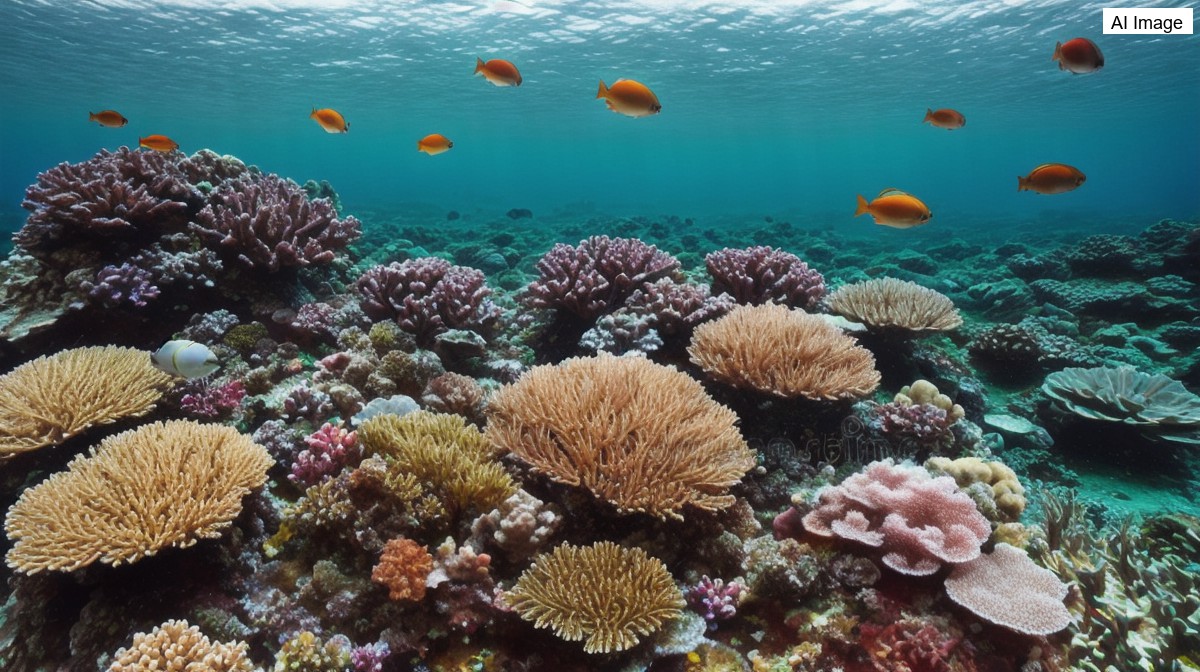
World Ocean Day has placed the Great Barrier Reef firmly in the spotlight, as scientists turn to the wider public for help in tracking the health of the oceans. Fishers, divers and snorkelers are being encouraged to take part in reef science in a simple way, by capturing underwater photos and submitting the data to a citizen science website. The idea is that ordinary visitors to the water can contribute information that researchers would otherwise struggle to gather, turning a day at the reef into a small act of conservation.
Off the coast of Townsville, that effort is already underway beneath the waves at John Brewer Reef. About 15 metres below the surface, a team of researchers and citizen scientists is moving along the ocean floor armed with underwater cameras, clipboards and measuring tapes. Their task is to document as many coral and fish species as they can, recording what lives on this stretch of the Great Barrier Reef as part of an international push tied to the day.
World Ocean Day falls on the eighth of June each year, and it is used to raise awareness about the conservation and protection of reefs. This year the focus has fallen on encouraging participation rather than simply observation, with the message that everyone who enters the water can play a role. By framing the day around hands on involvement, organisers hope to build a stronger sense of shared responsibility for the marine environment.
Central to the appeal is a request that anyone visiting the Great Barrier Reef upload photos of the fish and coral they encounter to an app called iNaturalist. The images allow scientists to build a clearer record of exactly what is out there, effectively creating a biodiversity snapshot of a particular place. Each contribution adds another data point to a picture that has long been incomplete, helping to map where different species are found across the reef.
The reliance on volunteers reflects a practical reality for reef science. There has been a real lack of data about what lives on the reef, and gathering it across such a vast area is too expensive for scientists to manage on their own. With professional surveys unable to cover everything, members of the public have stepped in to fill the gap, finding a way to keep the information flowing where funding and time fall short.
Alongside the documentation work, divers are also carrying out a delicate piece of coral management. Coral has grown so successfully on the sculptures of the Museum of Underwater Art that it has begun to weigh the artworks down and even bend them out of shape. To protect both the structures and the coral, teams are relocating some of it from the fragile tree shaped sculptures into nearby planter beds, a garden area and a coral greenhouse, around 20 metres away, where it can continue to grow.
Taken together, the activities off Townsville show how scientific monitoring and public participation are being woven together on the reef. From counting species with measuring tapes to uploading a single holiday photo, the work invites everyone who visits to contribute to a fuller understanding of the reef. With thousands of fish and coral species spread across the Great Barrier Reef, scientists say the broad effort is exactly what is needed to keep track of its health.