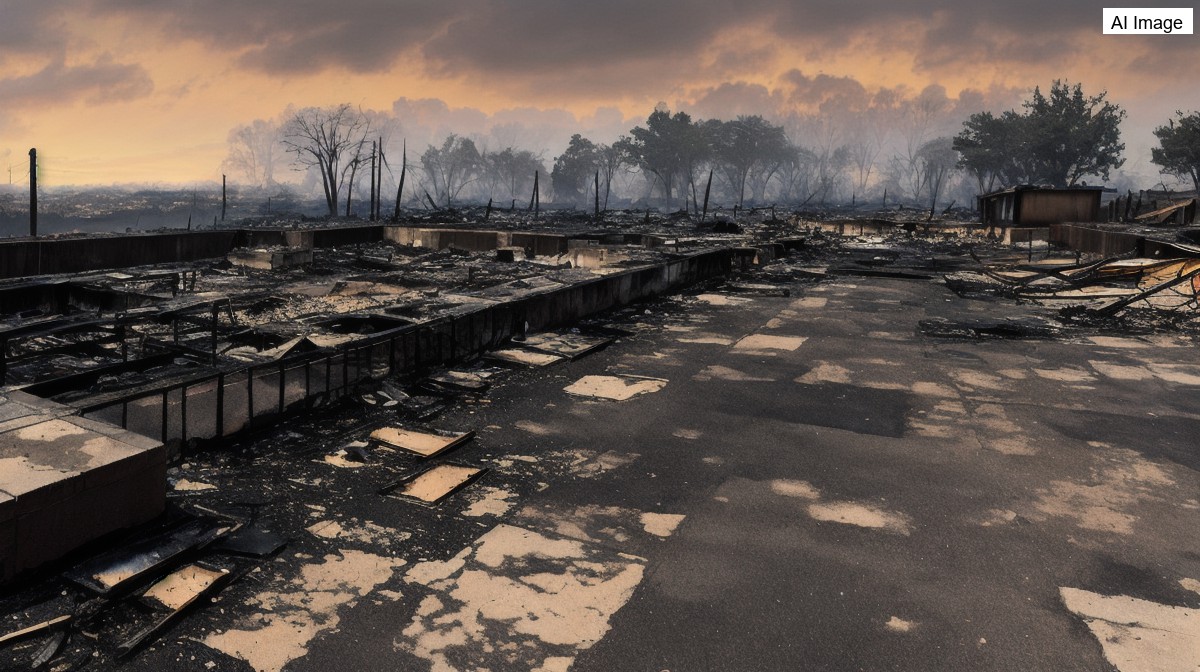
A devastating fire has swept through a densely populated neighbourhood in the Indonesian capital Jakarta, damaging 330 homes and displacing hundreds of residents who were forced to flee with whatever belongings they could carry. The blaze broke out at a market in the city and spread rapidly through the tightly packed structures, overwhelming the initial firefighting response and requiring a massive deployment of emergency resources.
Thirty-five fire trucks and 175 firefighting personnel were dispatched to the scene to combat the fire, which raged for several hours before crews were able to bring it under control. The scale of the deployment underscores the severity of the incident, which ranks among the largest urban fires in Jakarta this year. At least three people sustained injuries during the blaze, though no fatalities have been reported.
The fire tore through a residential area characterised by narrow alleyways and closely built structures, conditions that are common in many of Jakarta's older neighbourhoods and that make firefighting operations extremely challenging. The proximity of buildings to one another allowed the flames to jump rapidly from structure to structure, consuming entire blocks before firefighters could establish effective containment lines.
As dawn broke over the affected area, the full scale of the destruction became apparent. Hundreds of families found themselves without homes, their possessions reduced to ash and rubble. Emergency shelters were established in nearby community facilities to house the displaced residents, while local authorities began coordinating the distribution of food, water and essential supplies to those affected.
Jakarta firefighting authorities have stated that an investigation into the cause of the blaze is underway, though no official determination has been made. Urban fires are a persistent challenge in many of the Indonesian capital's densely populated districts, where a combination of old electrical wiring, gas cooking equipment, and informal construction practices creates conditions that are highly susceptible to fire outbreaks.
The Jakarta city government has faced repeated calls to improve fire prevention infrastructure in vulnerable neighbourhoods, including widening access roads to allow fire trucks to reach affected areas more quickly and upgrading electrical systems in older residential zones. Despite ongoing efforts, the density and informal nature of development in many parts of the city continue to pose significant obstacles to fire prevention and response.
Community organisations and humanitarian agencies have mobilised to provide assistance to the displaced families, many of whom lost not only their homes but also their livelihoods, as the fire destroyed small businesses and market stalls in addition to residential structures. The recovery process for the affected neighbourhood is expected to take months, with many families facing an uncertain future as they wait for government assistance and insurance assessments.