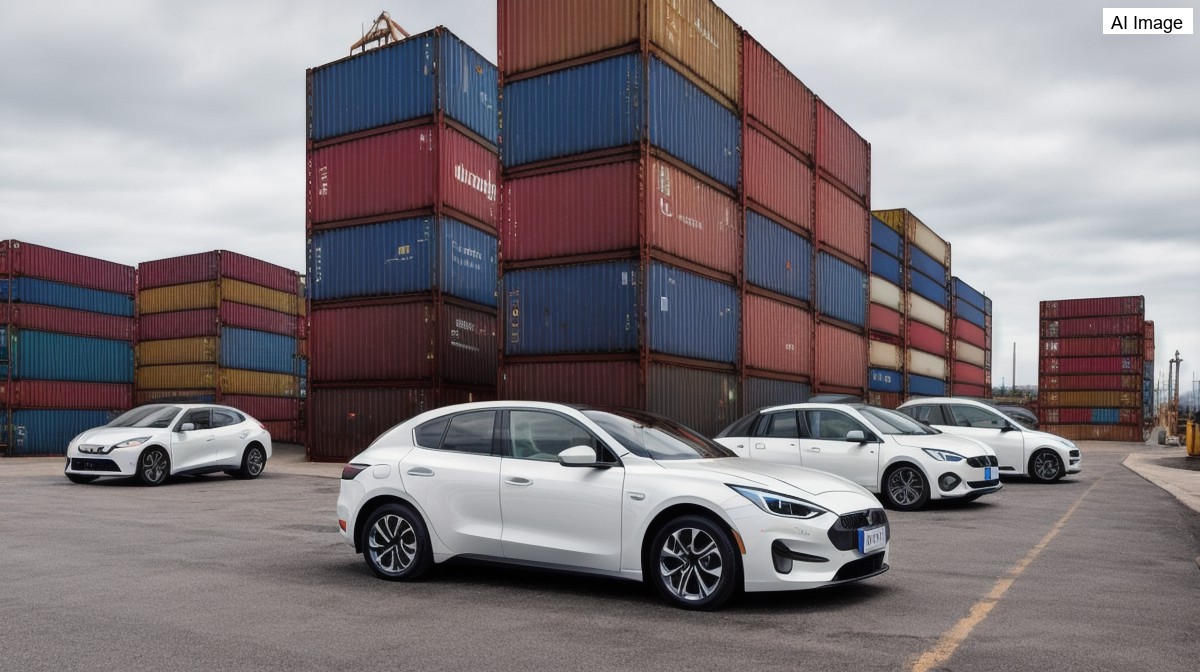
Electric vehicles from Chinese automaker Geely will arrive in Canada next month under an agreement reached between Prime Minister Mark Carney and Chinese President Xi Jinping. The shipment marks a concrete step in a wider trade arrangement between the two countries, bringing Chinese-made electric cars onto the Canadian market in a formal and regulated way.
The Geely vehicles will be the first Chinese-owned and manufactured vehicles to go on sale in Canada under the deal. That makes their arrival a notable moment for the Canadian auto market, which has not previously seen cars that are both built and owned by a Chinese company offered for sale through such an agreement.
The framework sets clear limits on the scale of those imports. According to the terms, the agreement allows up to 49,000 Chinese electric vehicles to enter Canada each year at a reduced tariff rate. The cap and the lower tariff together define how far the opening goes, giving Chinese automakers a defined but bounded path into the Canadian market.
The arrangement is already showing up in trade figures. According to China's ambassador to Canada, Canadian exports have risen by nearly 28 per cent in the five months since Carney's visit, a sharp increase that points to a rapid warming of commercial ties between Ottawa and Beijing over a relatively short period.
Beyond simply importing finished vehicles, Canada is also looking to draw more activity into the country itself. Ottawa aims to attract joint ventures and investment into Canada's electric vehicle supply chain, seeking to capture some of the manufacturing and industrial benefits rather than serving only as a destination market for Chinese-built cars.
The broader, landmark trade agreement underpinning these moves was reached in January. At the time, Carney set out his goal of increasing Canada's exports to China by 50 per cent, framing the deal as part of a deliberate strategy to deepen trade with one of the world's largest economies and diversify Canada's commercial relationships.
Not every barrier has come down, however. China cut tariffs in March on some Canadian products, but left duties in place on canola oil and pork, showing that sensitive sectors remain subject to ongoing friction. The result is a trade relationship that is expanding quickly in areas like electric vehicles while still carrying unresolved disputes in others.