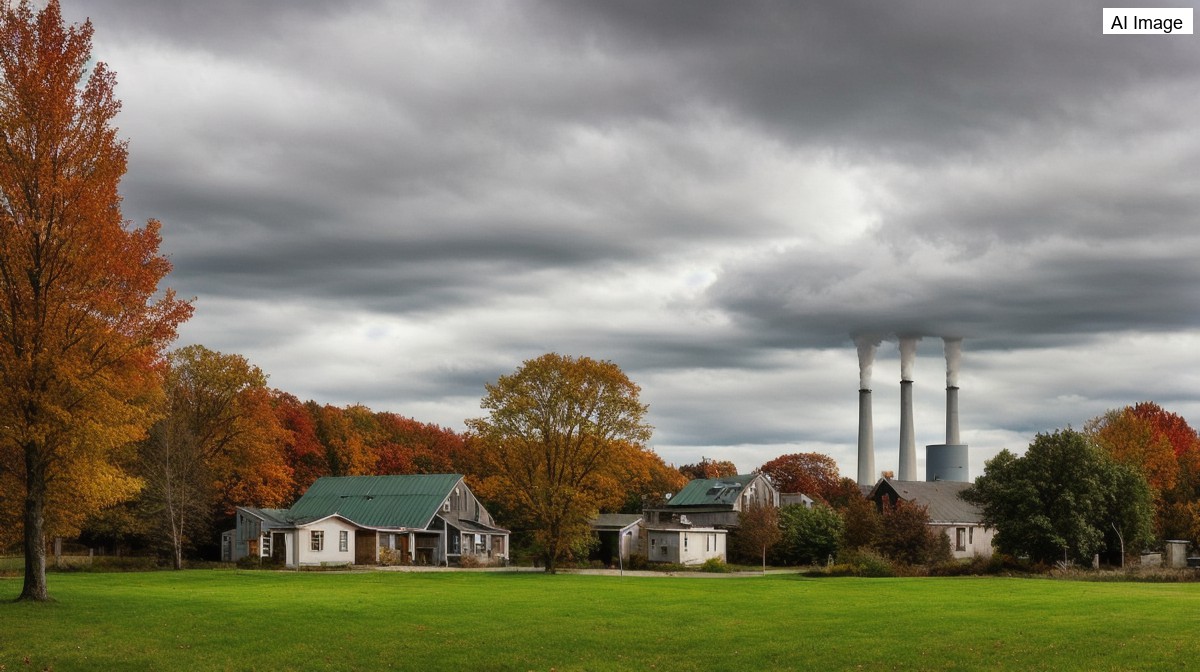
The small Ontario town of Port Hope, home to fewer than 20,000 residents, finds itself at the centre of a heated debate over its nuclear future. While a massive $2.6 billion cleanup of low-level radioactive waste continues across the community, authorities are simultaneously considering the construction of a new nuclear power plant nearby, potentially the world's largest. The juxtaposition of an ongoing remediation effort with plans for new nuclear development has deeply divided the community.
The radioactive waste problem in Port Hope stretches back decades, a legacy of the town's long association with the nuclear industry. Over the years, low-level radioactive waste was spread across residential properties throughout the community. Canadian Nuclear Laboratories has been tasked with the enormous cleanup operation, which has so far remediated over 300 properties with approximately 800 still to go. An estimated 130,000 truckloads of contaminated soil have already been removed and transported to a long-term storage facility.
For residents like Autumn, who has lived through eight years of constant construction, the experience has been gruelling. She described dump trucks and heavy machinery operating Monday to Friday from seven in the morning until five in the afternoon, causing her house to vibrate during soil compaction. Unable to afford to relocate her family during the work, she expressed ongoing concern about potential long-term health impacts from exposure to the contaminated soil, despite official assurances from Canadian Nuclear Laboratories that the contamination levels pose no risk to human health.
Opposition to the proposed nuclear plant has been vocal. At a recent public meeting, residents and activists called for a national public inquiry into the historical and current management of radioactive waste in Canada, starting with Port Hope. Organiser Fey Moore demanded the plant proposal be withdrawn entirely, arguing that the community's trust in the nuclear industry has been fundamentally broken by the careless handling of waste in the past. Critics question how a new facility can be trusted when the legacy of the previous one is still being cleaned up at enormous public expense.
Mayor Olena Hankivsky, however, sees the proposed plant as a once-in-a-generation opportunity for the town. The project promises up to 1,700 high-skilled jobs and as much as $10.5 million in annual tax revenue. The mayor spoke of creating energy sovereignty and independence for Canada, noting that many young residents have expressed a desire to stay in Port Hope if meaningful employment opportunities were available. The debate reflects a broader national conversation about the role of nuclear energy in Canada's future, balancing economic opportunity against environmental concerns and community trust.
According to CBC News, the site under consideration lies just outside Port Hope, in the village of Wesleyville, where Ontario Power Generation has maintained land for some 50 years. Officials describe exploring the potential to build one of the largest nuclear power plants in the world there, of up to 10,000 megawatts, enough to power some 10 million homes, on a site that already holds an old oil power plant slated to be demolished. They point to its proximity to a transmission corridor and to the industrial demand base of the province as reasons for choosing the location.
Supporters frame nuclear as far denser than the alternatives, noting that covering the entire Wesleyville site with solar panels would yield only 250 to 400 megawatts on a sunny day, according to CBC News. The proposal also carries an economic dimension, with Port Hope having already received 5.5 million dollars to help with the assessment process. For some residents, however, the prospect of a plant of that scale sits uneasily alongside an ongoing cleanup that has meant years of dump trucks and disruption, and lingering worries about the potential health impacts for their families.