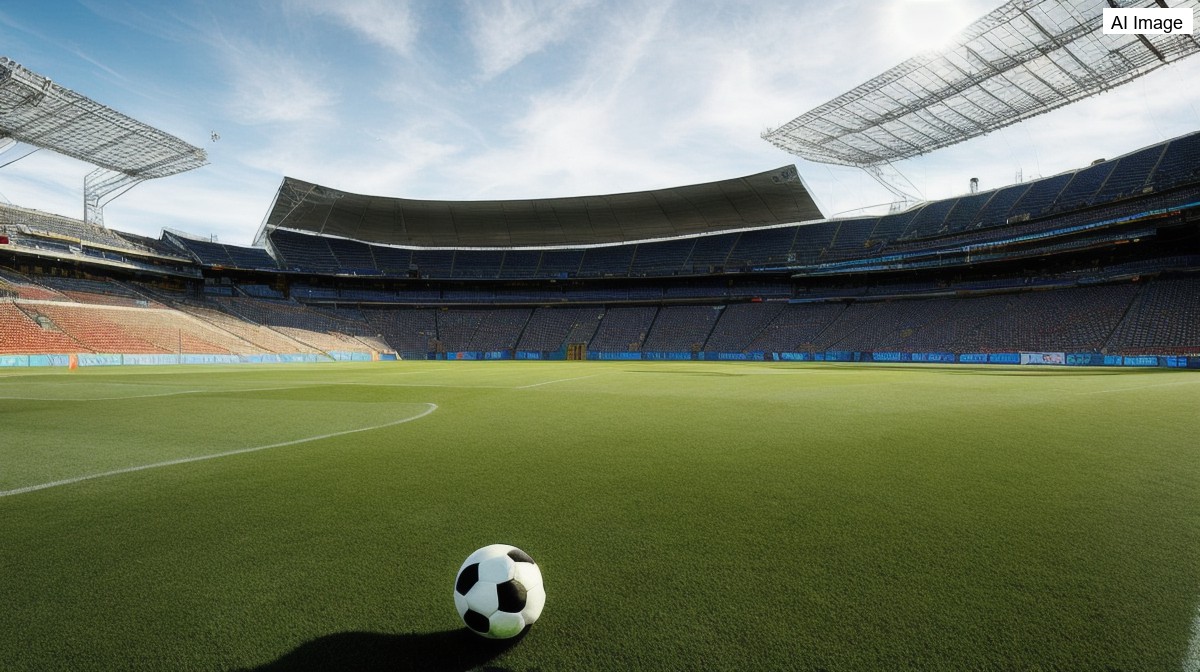
With the FIFA World Cup now just over a week away, crews are putting the final touches on the venue that Toronto will use for the tournament, a ground that is being referred to simply as Toronto Stadium for the duration of the event. CBC's Megan Fitzpatrick, who was given a preview of the site a couple of weeks ago, said the renovations carried out there are significant and designed to ready the stadium for the world's biggest soccer event.
The most visible change is the addition of temporary stands that rise high above the existing structure at both ends of the field. According to the report, more than 17,000 seats have been added at either end of the stadium, a major expansion built specifically to accommodate the crowds expected for the matches. Those temporary seats are not permanent, however, and will be taken down once the tournament has wrapped up.
Even with the expansion, the numbers tell a modest story. The additions bring the total capacity of Toronto Stadium to about 45,700, a figure that still makes it the smallest of all the venues being used across the host cities during the World Cup. The temporary build-out was aimed at fitting in as many supporters as possible at a ground that was not originally designed on the scale of the tournament's largest arenas.
The contrast with other host venues is stark. Fitzpatrick noted that the stadium in Dallas, where matches will also be played, has a capacity of more than double Toronto's at 94,000, while Canada's other host city, Vancouver, will welcome crowds in a stadium that holds around 54,000. By comparison, roughly 45,000 fans will be packed into Toronto Stadium for its share of the games during the tournament.
Not all of the work is temporary. Several of the upgrades made to the venue are permanent, beginning with a significant overhaul of its broadcast infrastructure. Four new giant video screens have been installed in every corner of the stadium, a change intended to enhance the experience for fans in the stands and one that will remain in place long after the World Cup crowds have gone home.
The improvements extend well beyond the screens. The audio system and the lighting systems have both been upgraded, again with the goal of enhancing the experience for spectators as they cheer on the teams. New concession stands have been added around the ground as well, along with a brand new kitchen built to prepare the food that will be served to the tens of thousands of fans passing through on match days.
Other behind-the-scenes additions round out the project. A new Wi-Fi system has been installed throughout the venue, and a new soccer field has been laid for the tournament. Taken together, the mix of temporary seating and permanent infrastructure upgrades is meant to leave Toronto Stadium ready for its turn in the global spotlight, while leaving lasting improvements behind once the temporary stands eventually come down.
The upgrades did not come cheap. According to officials, the renovations cost more than 150 million dollars in total, with most of that bill covered by the City of Toronto and the rest paid by Maple Leaf Sports and Entertainment. Some of the work was designed purely for the tournament, while other elements were framed as lasting legacy improvements for the venue and the surrounding exhibition grounds.
Among those legacy additions are 32 new suites installed at the north end of the ground, which will remain in place long after the World Cup while the temporary tribunes are dismantled. The tournament has also required a sprawling media operation, with organizers building a media area that includes roughly 250 tables for print journalists and around 125 television positions for commentators, according to Don Hardman, who is heading up venue operations for FIFA Canada.
To make the most of the surrounding exhibition grounds, several nearby buildings are being repurposed: the Better Living Centre into a media centre, the Argos weight room into a referee lounge, and the visitors' dressing room into a Team B locker room dressed in FIFA branding so both nations are on equal footing. Officials say they fine-tuned the setup after Toronto FC hosted Inter Miami on May 9, a test run watched by about 60 staff, after which only small adjustments were made to the 55 entrances on the east side that will funnel in the 45,000 spectators expected at every match.