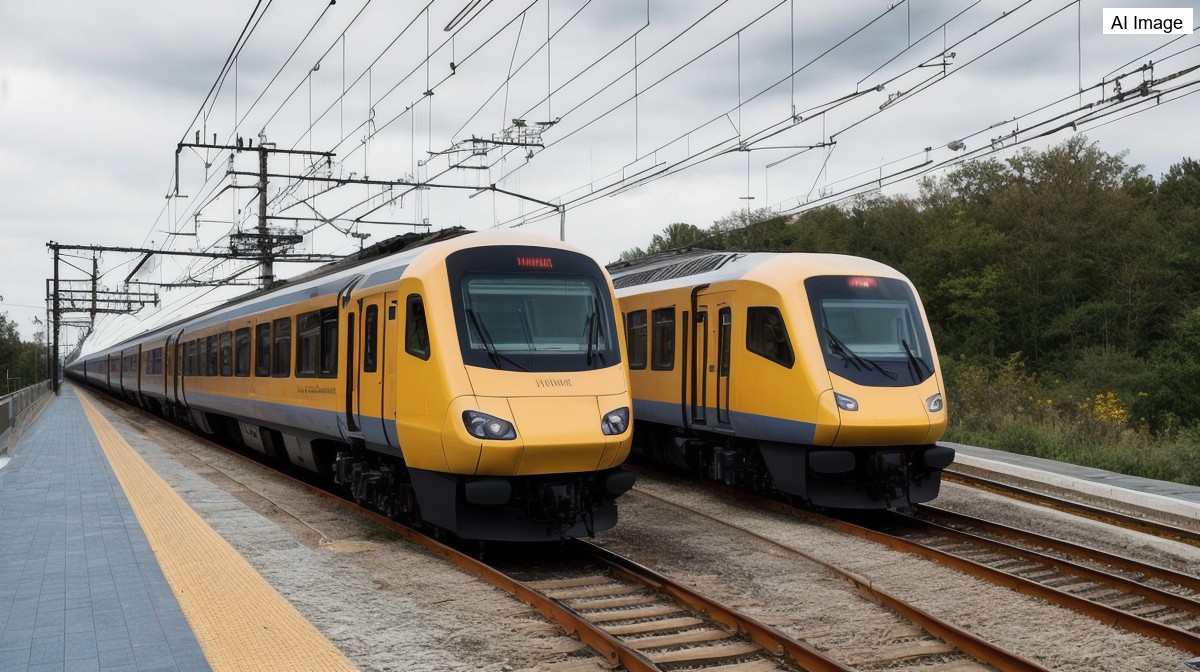
The push for high-speed rail in Canada is taking a new turn. According to CBC, the federal government is now favouring a more southern route for Alto, the proposed high-speed line meant to whisk passengers between Toronto and Montreal in roughly three hours, a shift that could put Kingston on the map as a stop.
The project is ambitious in scale. The initial route ran about 1,000 kilometres from Toronto to Quebec City, with stops proposed in Peterborough, Ottawa, Montreal, Laval and Trois-Rivieres. It would be Canada's first high-speed rail network, with trains running at 300 kilometres an hour or more, and Alto estimates travel times would be roughly cut in half, integrated with existing VIA Rail service.
Kingston, for its part, does not want to be left behind. Officials there point to Queen's University, to military members coming and going from CFB Kingston, and to a regional hospital network as reasons the city deserves a stop. Canada's transportation minister said he is considering it, adding that a stop in Kingston would not lengthen the trip enough to dissuade riders.
Yet the plan is also drawing pushback. The Ontario Federation of Agriculture says many farmers are worried about the railway cutting through their land, fearing what it would mean to operate a business with half of a farm on one side of the tracks and half on the other. Premier Doug Ford agreed the line should follow the Highway 401 corridor rather than take farmers' land.
Transportation Minister Stephen McKinnon said sticking to the highway could be complicated, notably because of the curvature of the route, but that the basic logic would be to use public rights-of-way whenever possible. Beyond the technical questions, the project has become political, with Conservative leader Pierre Poilievre opposing Alto and Parti Quebecois leader Paul Saint-Pierre Plamondon saying that if elected, his government would keep Quebec from getting involved.
Experts, meanwhile, are urging caution. One transport specialist who sits on an independent academic advisory panel for Alto noted that Canada is the only G7 country without high-speed rail, which makes it easy to get excited, but said there are still too many unanswered questions, with no business case, no confirmed cost, no ridership projection and no clarity on fares.
Alto, for its part, is touting ambitious numbers, projecting 24 million passengers a year by 2055, more than 50,000 jobs during construction and a boost to Canada's economy. Another round of consultations is set for the Ottawa-to-Montreal segment this fall, the first part planned for construction, which is expected to begin in roughly four years.