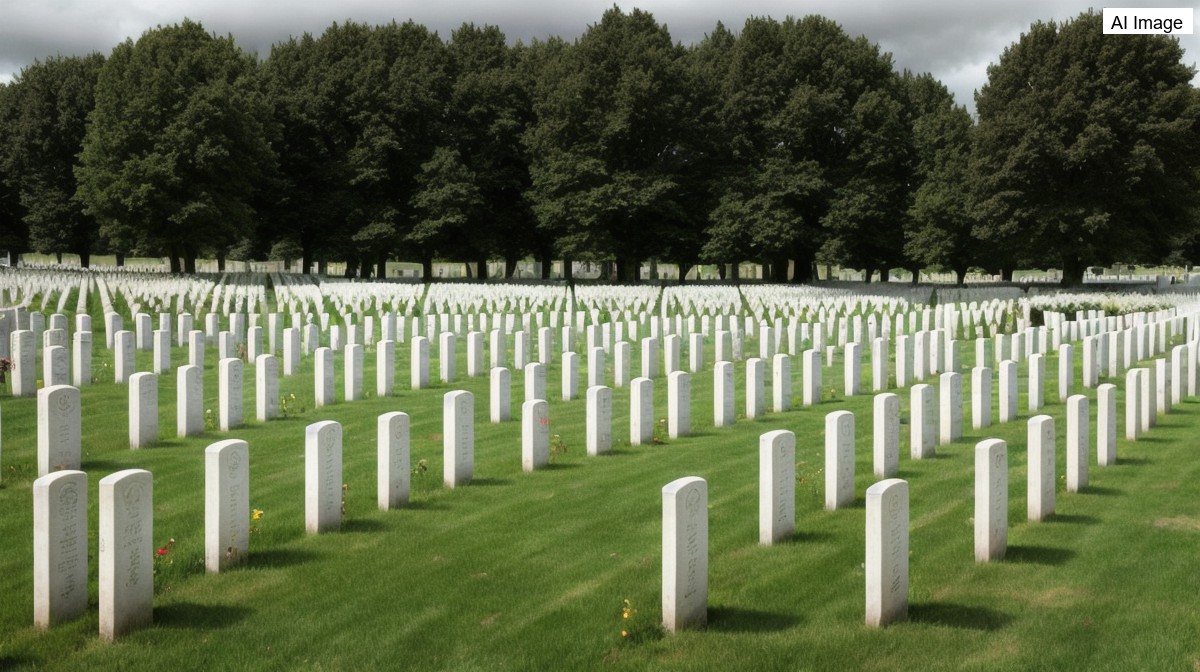
More than a hundred years after he fell in battle, a Canadian soldier has finally been given a proper burial. According to CBC News, a Canadian soldier who had been missing for more than a century has at last been laid to rest, bringing a measure of closure to a story that stretches back to the First World War.
The soldier has now been named. According to the account, he was Private Albert Detmold, who was killed during the First World War. His remains were discovered in France about half a decade ago, but it was only recently that they were confirmed to be his, allowing him at last to be identified and honoured by name.
Detmold's path to the Canadian forces was a winding one. According to CBC News, he was originally born in Germany, immigrated to England, and eventually settled on a homestead in Manitoba. It was from there that he enlisted with the Canadian forces during the war, joining the ranks of those who would serve far from the home he had made on the Prairies.
His burial reflected the complexity of his personal history. According to the account, his interment at the cemetery was unusual in that it included both a minister and a rabbi. That detail traced back to his life story, as Detmold had grown up in a Jewish family but wrote down that he was Presbyterian when he enlisted with the forces.
The discovery of his remains was part of a much larger find. According to CBC News, his remains were among more than 120 sets uncovered at the site of a hospital construction project in France that had been in the works for years, on ground that had once been part of the battlefields of the First World War.
Such discoveries are not uncommon on that soil. According to the account, each year across France dozens of sets of remains are found in areas that were once battlefields, most of which will likely never be identified, making the confirmation of a name like Detmold's a rare and meaningful outcome.
For those connected to the effort, the identification carried deep significance. According to CBC News, someone representing the family described it as an honour, saying it had been amazing to see the whole process and the effort that so many people had put in to identify the remains, work that ultimately allowed a long-lost soldier to be brought to rest.