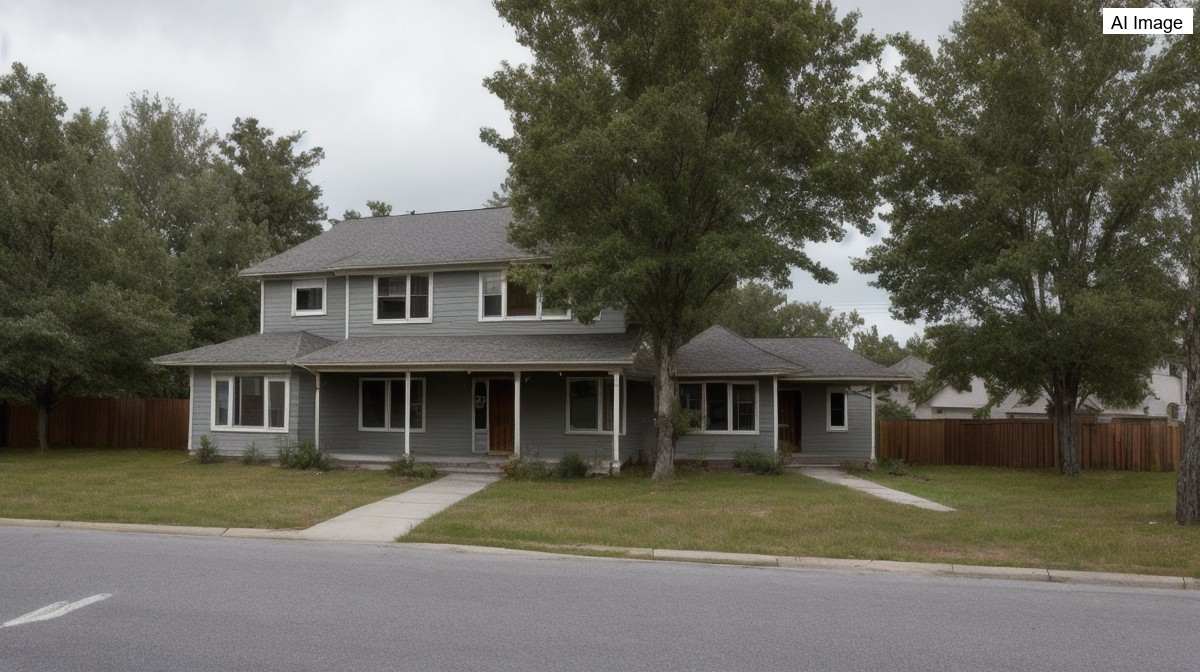
A house in Toronto's Leaside neighbourhood that has sat vacant for the past six years has its neighbours riled up. They are raising concerns about the impact the empty property is having on their street, and about what they feel it represents for the wider city, where questions about unused homes have become a recurring source of frustration.
Much of the worry centres on safety. With the building exposed to the weather and the wood deteriorating, neighbours have raised serious questions about its structural integrity. Their fears were underscored when a couple of boards recently blew off the house and struck a neighbouring home, an incident residents said could easily have injured someone had they been standing in the wrong place.
There is also concern about what a neglected, covered-up structure might be hiding. Neighbours worry that a building left in that state could develop mould or mildew, problems that might not be obvious from the outside but could end up affecting whoever eventually owns or moves into the property once any work is finally finished.
The house itself has a paper trail that only adds to the frustration. It was purchased in 2020 and, in 2024, was approved for conversion into a multiplex, the kind of project meant to add housing in an established neighbourhood. According to neighbours, however, the work has been sporadic at best, leaving the site in a state one described as a hulking mess rather than an active construction project.
The situation also intersects with a broader city policy. Toronto introduced a vacant home tax back in 2022 as a way to discourage owners from leaving properties empty. Since then, the number of houses considered eligible for the tax has been dropping steadily, falling from around 7,200 at the outset to just under 5,000 by 2024.
Those figures, though, may understate the true scale of the issue. The number of unoccupied homes across the city is likely much higher than the tax rolls suggest, because properties that are undergoing renovations or being rebuilt are exempt from the levy. For the people living next to the Leaside house, the debate is less about citywide totals than about a single deteriorating building on their block and what finally becomes of it.