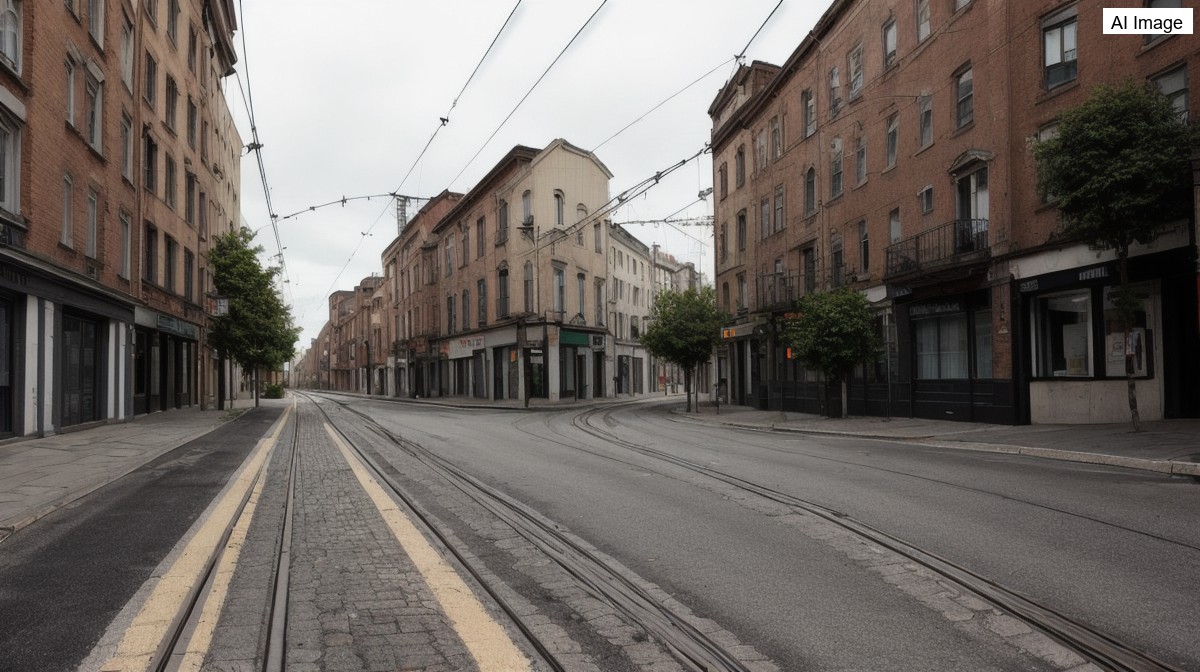
The Toronto Transit Commission is turning to artificial intelligence to tackle a hazard that transit riders see all too often, drivers who slip past or pull into the curbside lane just as a streetcar opens its doors to let passengers on and off. Starting July 20th, the agency is launching a nine-month pilot that will use camera technology to track that illegal behaviour, in the hope of eventually making the busy stretch of pavement beside a stopped streetcar safer for the people stepping into it.
The trial will be limited in scale but spread across some of the city's busiest lines. Four streetcars are being equipped with the artificial intelligence system, and they will alternate across five routes, the 504 King, the 501 Queen, the 505 Dundas, the 506 Carlton and the 511 Bathurst. By rotating the equipped vehicles, the pilot is designed to gather data from a range of streets and conditions rather than a single corridor.
For transit officials, the reason for the effort is written in the injury numbers. Between 2014 and 2024, more than 140 people were hit by motorists driving past open streetcar doors, a toll that underlines how routine and how dangerous the manoeuvre can be. Each of those collisions involved a passenger caught in the gap between a stopped streetcar and the traffic that was supposed to wait behind it.
The rule the pilot is built around is already on the books. Under the Highway Traffic Act, road users must stop behind a stopped streetcar whenever its doors are open, a requirement that applies whether a person is behind the wheel of a car, riding a bike or on a scooter. Riders described how commonly they see that law ignored, with one estimating it happens a large share of the time on their daily trips.
The technology itself was not built from scratch for Toronto's streetcars. It was developed by the British Columbia based company Gatekeeper Systems, which adapted equipment it already uses primarily on school buses. According to the company's founder, the system has a single job, to capture the evidence set out in the legislation, push it up into the cloud, and then match the vehicle's licence plate with its owner so that a citation can be issued.
During the pilot itself, however, no drivers will actually be fined. Officials said the cameras will gather data over the nine months rather than generate penalties, and that the information collected will be used to advocate for an automated ticketing program at some point in the future. For now, the trial is about proving the case rather than punishing individual motorists.
The penalties that could eventually follow are not trivial. The offence of passing a stopped streetcar with its doors open carries a fine of more than 180 dollars, along with three demerit points against a driver's record. Combining a financial hit with points on a licence is meant to reflect how seriously the law treats the risk to passengers stepping off a streetcar.
The pilot also lands in a charged political context around automated enforcement. Last year the province eliminated automated speed enforcement cameras, with Premier Doug Ford dismissing them as a municipal cash grab. Even so, the Ministry of Transportation has said that, under the existing framework, the city and the TTC remain free to put an automated streetcar ticketing program in place, leaving the door open to the very system the pilot is designed to test.