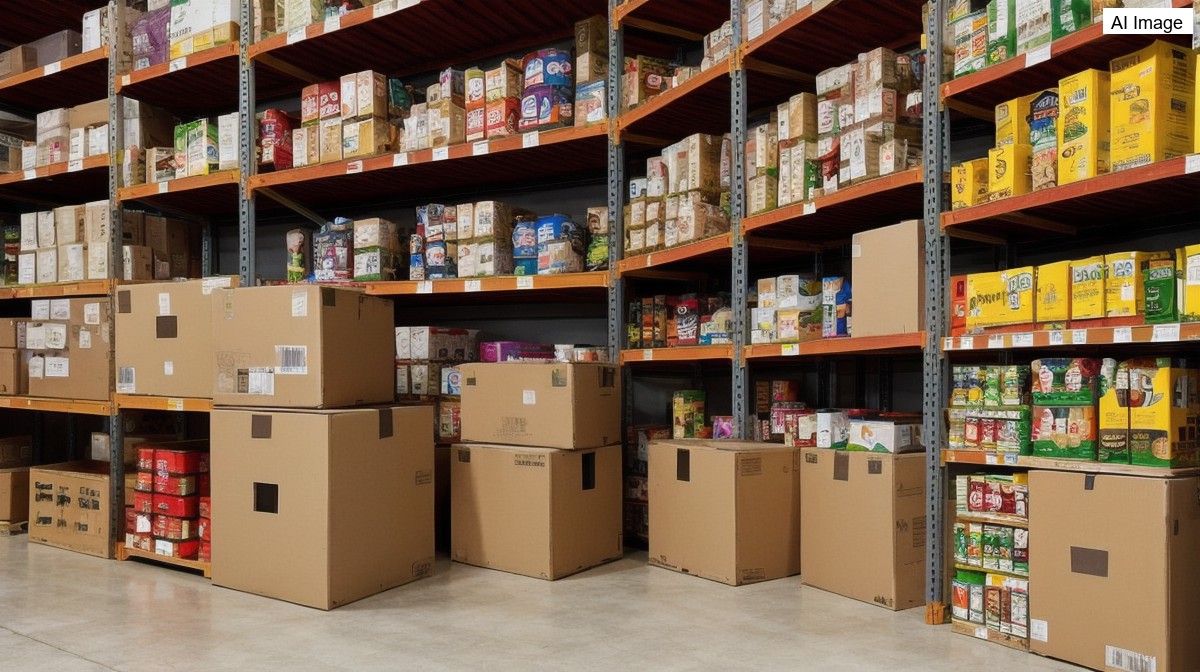
Edmonton's food bank is marking 45 years of operation, a milestone that organizers describe as bittersweet. The anniversary is a recognition of decades of service to the community, but it also reflects a reality that few would have wished for: that the need for emergency food assistance in the city has not faded but grown.
The food bank started in 1981, set up to provide temporary food relief for families during the recession of the early 1980s. The idea was that it would help households get through a hard stretch and then no longer be needed. Instead, more than four decades later, it has become a permanent fixture in Edmonton, woven into the city's social safety net.
Among those who have witnessed that evolution is Tameson Ben-Snight, who started as a volunteer in 1988. Her long involvement has given her a front-row view of how the demands placed on the food bank have shifted over the years, through changing economic conditions and the fluctuating fortunes of the families who turn to it.
According to her account, the numbers tell a striking story. Demand stood at around 19,000 food hampers on average in the 1990s, before falling to about 9,000 in 2008. Since then, however, it has climbed sharply, reaching a current figure of 43,000, a level far beyond what the food bank was ever designed to handle.
That increase points to the pressures many households are facing, with the cost of living weighing heavily on family budgets. The jump from 9,000 hampers in 2008 to 43,000 today underscores how an institution meant to be a short-term measure has instead had to scale up to meet a deepening and persistent need.
Despite the growth in demand, those who run the food bank say their ultimate hope is that fewer families will want to use it in the future. They speak of a scenario in which the cost of living goes down, minimum wage goes up, and people have the means to buy their own food, a situation they describe as something that would be beautiful to see.
Until that day arrives, the message from operators is that they are there to help. To support their programs, the food bank is holding a fundraiser tied to the anniversary, continuing the work that has carried it through 45 years and positioning it to keep serving Edmonton families for as long as the need remains.