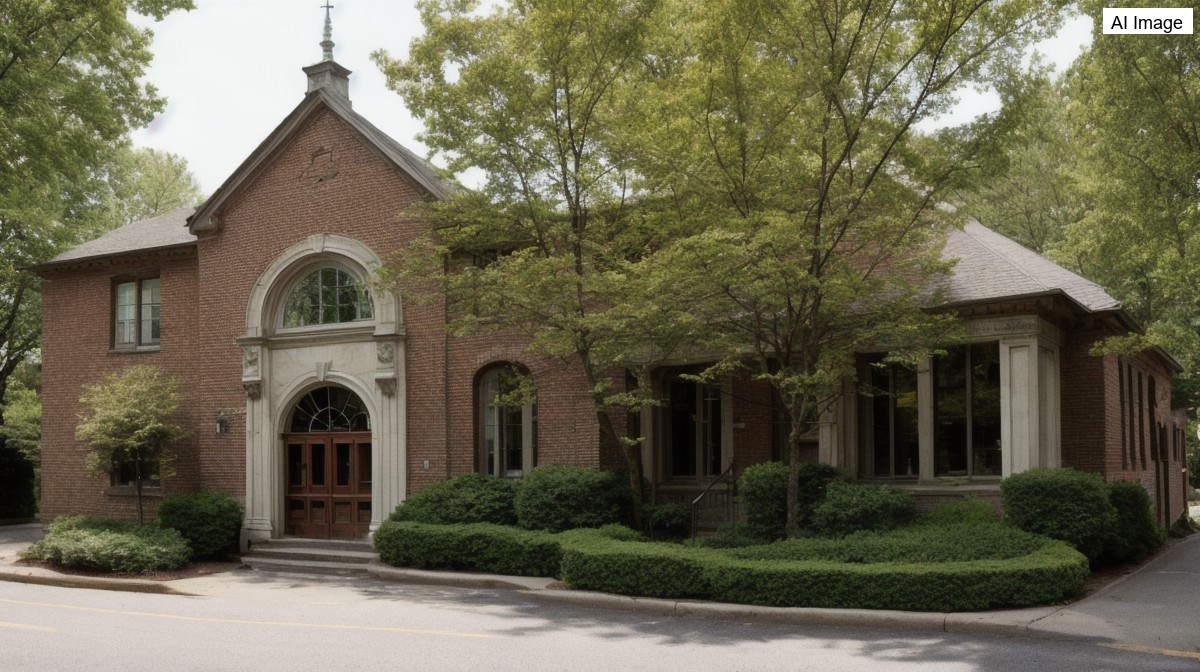
Through a year and a half of strained relations between Canada and the United States, one site has stood as a quiet monument to those shaky ties. The Haskell Free Library is an over a century old building that straddles the border between Quebec and Vermont, and it was built deliberately for people on both sides to use. That shared purpose has long made it a symbol of how closely the two communities live together.
That symbolism was tested when the cross border arrangement was disrupted. After Donald Trump took office for the second time, Canadians were barred from using the front doors of the library, which are located on the United States side. The change cut off a routine that residents had taken for granted, and it left friends and neighbours in the community searching for a way to restore access.
That search has now produced a solution that was just unveiled. Described by those present as a new beginning, the Haskell Free Library in Stansted, Quebec, now has a new entrance that lets Canadians back in with no hassle. The building, famous for sitting on both Canadian and American soil, once again has a clear and welcoming way in for the people on the Canadian side of the line.
For members of the community, the moment carried real emotion. One person said the new entrance was beautiful and that it simply made them smile. They added that the library was very close to their heart and that they were proud of what had been done there, capturing the sense of relief and attachment that many local residents feel toward the building.
The change comes after a specific restriction imposed the previous year. Last year, the Trump administration barred Canadians from using the main entrance in Derby Line, Vermont. For people who had used the library for years, the new rules replaced a system that, in their view, had always worked without trouble and had asked very little of anyone who wanted to visit.
Some residents expressed clear frustration at how the situation had unfolded. They recalled that the old rule was simple, that a person would stay on the sidewalk and walk in the door, and that this had been taken away. Calling the change disappointing, they questioned why anyone would mess with a long standing tradition, insisting there had been no problems at all and that the restriction had created a problem where none existed.
Despite the tensions, the unveiling itself became a moment of connection. Americans and Canadians attended the event together, and some Americans watched from the United States side of the border. Reflecting on the experience, one resident said it had made the community stronger and that the people on both sides had learned to work together, turning a frustrating episode into a renewed sense of shared purpose.