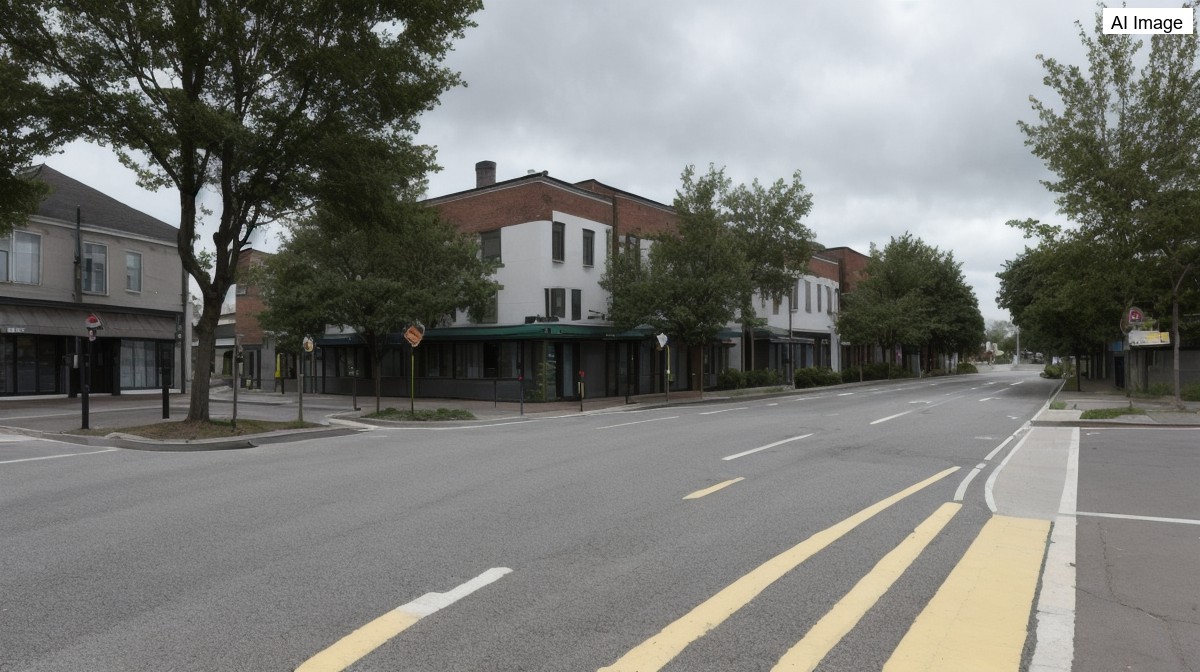
Toronto has made major changes to a downtown intersection long shared uneasily by pedestrians, cyclists and drivers. The redesign tilts the balance firmly toward people on foot and on bikes rather than those behind the wheel, marking a clear shift in how the space is meant to be used.
At Portland and Wellington, the new layout means that those choosing to drive are now forced to turn off, while cyclists and pedestrians continue straight through. The change reshapes the flow of the junction so that the most vulnerable users move through it with priority.
City officials say the old layout was a problem. It was described as a very complicated intersection, with many interactions between drivers and frequent near misses, especially with pedestrians but also with people cycling. Simplifying the intersection and improving the public space was part of the goal, with safety placed first.
The work is part of a broader cycling plan. The city is also installing a two-way bikeway on Portland running from Front to Queen, an extension of a larger project that already saw a lane added on Dan Leckie Way two years ago. Together, the pieces are meant to knit local streets into a connected network.
Supporters point to how heavily the area is already used by people outside cars. By the city's count, there are ten times as many pedestrians and cyclists at the intersection of Portland and King Street on a typical Saturday night as there are people in vehicles, which officials say is why they want to emphasize the public spaces. The new Portland Bikeway also creates a path toward popular cycling corridors on Adelaide and Richmond Streets, continuing the safer infrastructure found across the tracks on Dan Leckie Way and giving riders a way to reach them without using a risky arterial road like Bathurst.
For some residents, the difference is immediate. One person welcomed the change, saying you no longer have to look seven different ways to decide whether it is safe to cross. Previously, they said, a pedestrian, a cyclist and a car would all show up at once and nobody knew whose turn it was or where to go, leaving everyone guessing.
Not everyone is convinced. As with any big change in Toronto, some people are not fans, with one resident arguing that gridlock has only been made worse and warning that anyone expecting the bumper-to-bumper traffic to ease should think again. Still, the city points to its safety record to justify the work, noting that between 2013 and 2023 there were 1,500 collisions on Dan Leckie and Portland, resulting in six pedestrians or cyclists being seriously injured or killed.