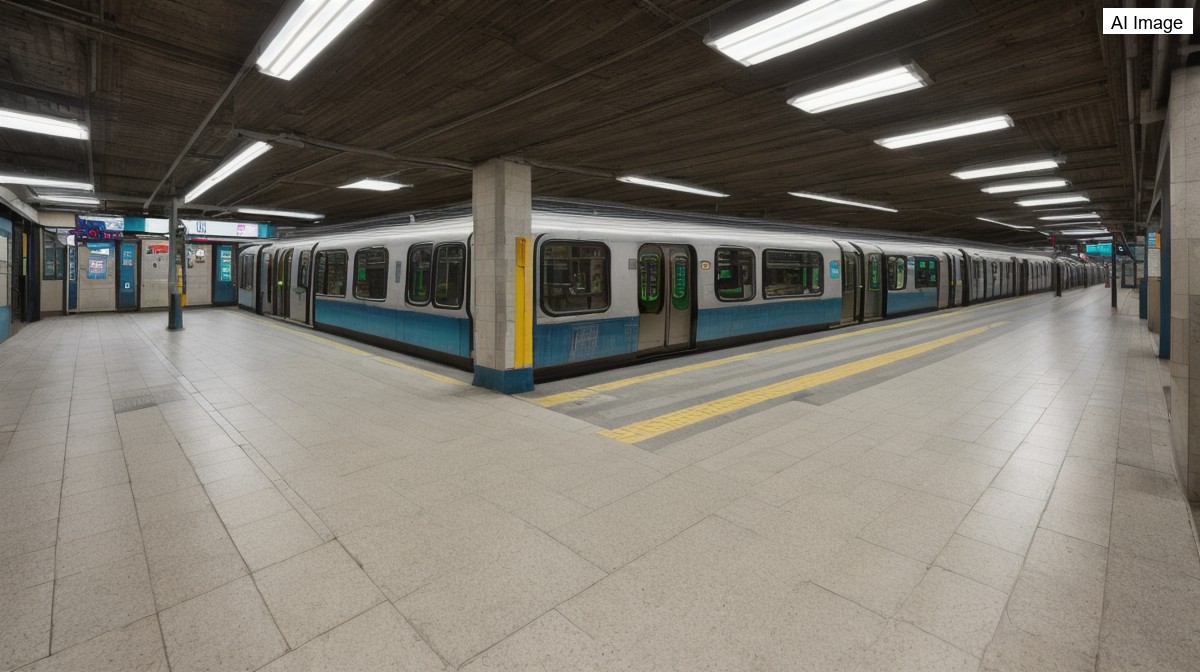
The board of the Toronto Transit Commission has moved ahead with a plan to place waist-high metal barriers along subway platforms, starting at TMU station and potentially expanding to nine more stops across the network. The proposal, debated by the board on Wednesday, is part of a wider effort to keep riders away from the tracks, though it drew sharp questions over both its cost and its effectiveness.
Under the plan, the first set of barriers is expected to be in place at TMU station by September. Riders who spoke to CBC put the price tag at around two million dollars per station, a figure that left some commuters uneasy. While a few said the barriers would make them feel safer, others argued the money could be better spent, with one rider warning that anyone determined to climb over a waist-high barrier would simply do so.
Alongside the metal barriers, the TTC board also approved a six million dollar plan to advance the design of platform edge doors at Yonge and Bloor station. Those full-height barriers, which open only when a train is aligned with the platform, are modelled on systems already in use in Japan and are widely seen as a more complete solution than the waist-high option being rolled out first.
Transit officials pointed to New York as evidence the metal barriers can work. The TTC's chief executive said he travelled to New York while the barriers were being installed there and spoke with customers afterward, describing them as grateful to have something standing between them and an approaching train. The agency noted that New York has now extended the concrete and metal barriers to roughly one hundred stations.
TTC board chair Myers said data gathered in New York supported moving forward. He noted that objects such as luggage had previously ended up on the tracks, and that figures collected after the barriers were installed showed a measurable difference between conditions before and after. Pressed on whether the appeal was more about the feeling of safety than measurable results, he maintained the numbers told their own story.
The barriers form only one piece of a broader safety package. The plan also calls for cameras that rely on artificial intelligence to detect when people come close to the tracks or when other intrusions occur, automatically alerting station staff. The board chair argued that those cameras, working together with the physical barriers, should make the platforms meaningfully safer for passengers.
Not everyone was satisfied that the agency had gone far enough. Councillor and mayoral candidate Brad Bradford, who has pushed for full platform edge doors, dismissed the waist-high barriers as another half-baked, watered-down solution and a lesser version of what he had proposed. When asked why the city did not pursue something more ambitious in the meantime, transit officials directed the question to the TTC chair, in a report by Nama Weingarten of CBC News in Toronto.