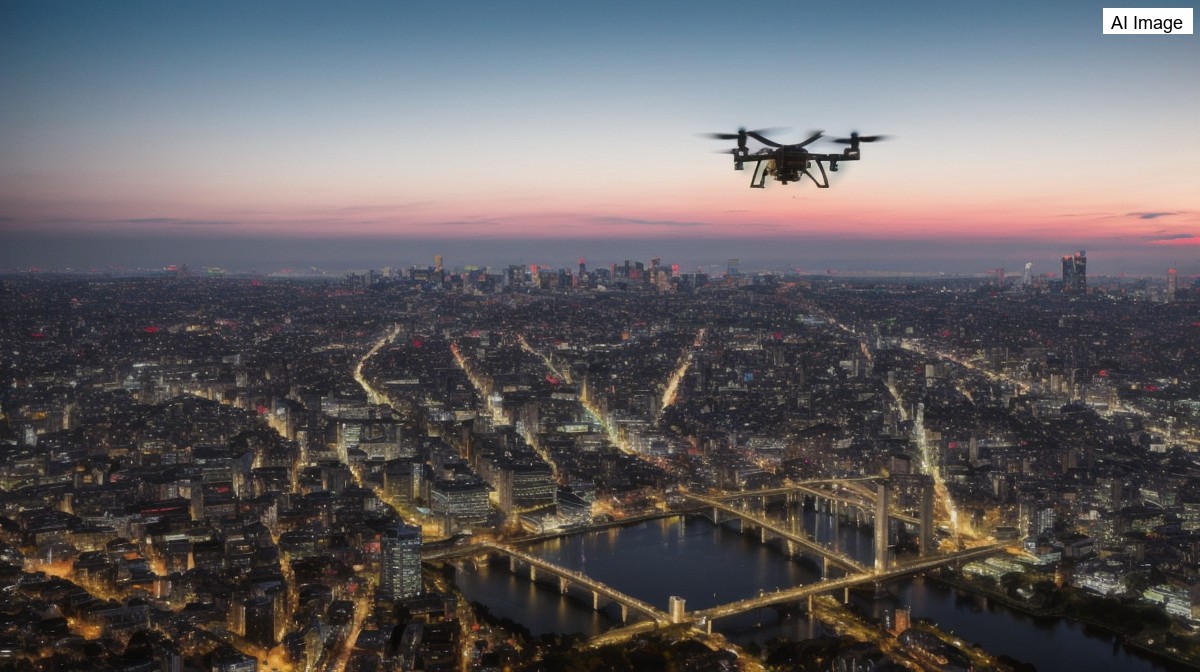
As Toronto prepares to welcome a mass influx of soccer fans for the World Cup, police in the city are getting ready to guard not only the streets but also the skies. The preparations include extra surveillance over the Toronto stadium, where officers will be on the lookout for illegal drone use. To show how that effort works, the Toronto Police Service gave CBC News exclusive access to its anti-drone squad in action.
The airspace around the stadium is already tightly controlled. The area is a no-fly zone, monitored 24 hours a day, seven days a week, with even authorized aircraft such as helicopters requiring caution from those operating nearby. That permanent restriction forms the baseline for the heightened security planned around the tournament's matches.
To demonstrate their capabilities, police and the CBC set up a controlled cat-and-mouse exercise. A CBC team put a drone into the air to fly over the Toronto stadium, while officers worked to detect and intercept it. The team moved to an undisclosed location several blocks away on the far side of the stadium, leaving police to pinpoint both the drone and its pilot.
The squad relies on technology that, for security reasons, could not be shown. Citing national security restrictions, police did not reveal the tools in place, but said they include specialized tracking equipment and countermeasures that can force drones out of the sky. Those capabilities allow officers to locate a drone in the air and then trace it back to whoever is flying it.
In the exercise, it did not take long for officers to find the rogue drone and then begin the hunt for the pilot. Tracking the signal, an officer directed colleagues toward a person in a vest near a set of pylons, in a parking lot west of a nearby hotel. The interdiction team closed in, approached the pilot and asked them to land the drone, explaining that it was restricted airspace.
The consequences for unauthorized flights can be significant. Fines can reach 3,000 dollars, and in more extreme cases officers can lay criminal charges. Police framed the enforcement around two main fears: a hobbyist accidentally crashing a drone into a crowd and seriously hurting people, and the even bigger worry of a flying terror attack using a drone rigged with explosives.
Police said they are on guard for every scenario, with multiple teams out enforcing the airspace, including interdiction officers and countermeasure officers. Their ultimate message to the public, however, was a simple one: leave the drones at home and come to enjoy the event. With public safety described as their big concern, the anti-drone squad is set to be a fixture above the stadium throughout the tournament.