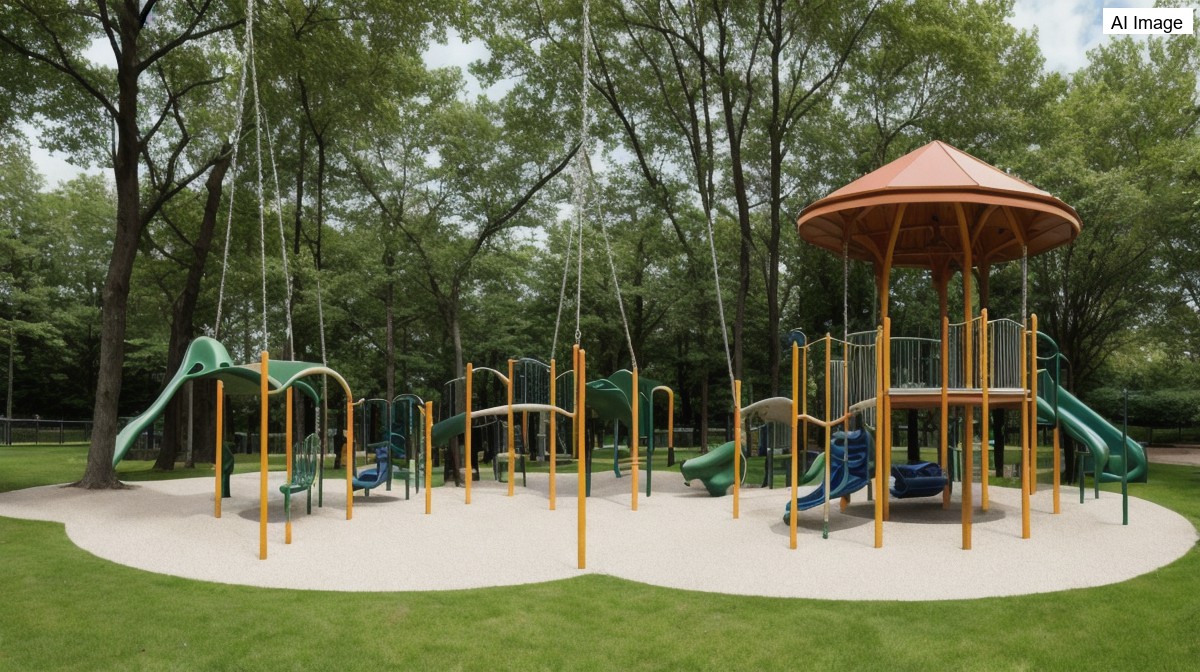
A newly opened playground in West Edmonton has been designed so that children of all abilities can play side by side, a project that took roughly five years of planning and construction. The space was built with accessibility at its core, with equipment intended for children who cannot use conventional play structures. Among the first to benefit is a boy named Francis, who is completely non-ambulatory and unable to bear weight on his legs. For his family, the new park marks the end of years in which he could mostly watch other children play.
His mother explained that the previous playground had been largely inaccessible for her son, who struggled to get on and off the equipment and had been hurt while trying to use it. The family recalled how he had injured himself on the old slide, cutting open his forehead in a wound that would reopen and bleed each time. She described the earlier experience as almost torturous for him, because he was often left on the sidelines while his friends climbed and ran. He had simply been unable to reach much of the equipment at all.
Since the new playground opened, the difference in his daily life has been immediate. His mother said his friends and peers now run over to him, and that he can roll himself onto many of the play elements on his own. She said the change has lifted his spirits and made him far more socially comfortable around other children. Where he was once an onlooker, he is now part of the group at play.
Located in West Edmonton, the playground includes equipment chosen specifically to remove barriers for children with disabilities. Among the additions are a communication board, a wheelchair-accessible merry-go-round and a wheelchair-accessible swing. These features allow children who use wheelchairs or who have limited mobility to take part in the same activities as everyone else. The goal was to ensure no child is left only to observe from the edge of the play area.
The local community league said the project was made possible by approximately 1.1 million dollars raised through grants and community fundraising. Building the space required about five years of planning and construction before it could open to families. Organizers framed the long effort as worthwhile because of what the playground now offers to the wider neighbourhood. They described it as an environment where everyone deserves to play.
For the organizers, the value of the playground goes beyond the equipment itself. They said being at a playground is about making connections and relationships, and that the new space gives children the chance to form deep bonds together. One representative expressed the hope that the project would become a standard, with accessibility considered for all people in a neighbourhood. The wish was that other communities would also come together to build similar spaces.
For Francis, the playground has quickly become a place he intends to use as often as possible. He said he plans to try every single piece of equipment, returning every school day from Monday through Friday. His enthusiasm reflects the change the project has brought to a child who had previously been kept at a distance from play. After years of watching from the side, he now has a space built for him to enjoy alongside his friends.