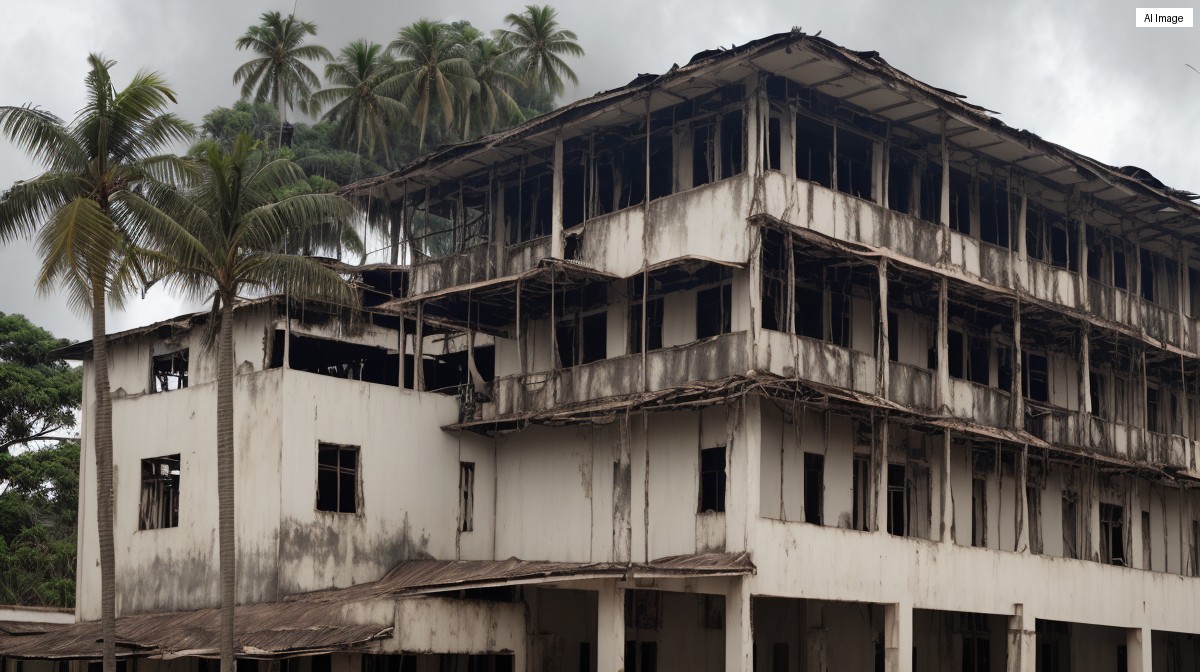
A hospital in the Democratic Republic of Congo was set on fire after families of Ebola victims attempted to retrieve the bodies of their loved ones from the facility. The incident highlights the growing tensions between health authorities enforcing strict containment protocols and communities grappling with grief and cultural practices surrounding the burial of the dead. Ebola victims' remains are highly infectious, and health officials have sought to manage burials in a controlled manner to prevent further transmission of the disease.
The Ebola outbreak continues to spread through Central and Eastern Africa, with new cases now being reported in southeast DRC, hundreds of kilometers from the outbreak's original epicenter. The geographic expansion of the virus has raised alarm among public health officials, who warn that the disease is proving difficult to contain within its initial boundaries. The movement of infected individuals across vast distances is complicating efforts to trace contacts and isolate new cases before they can spark further chains of transmission.
The situation is further complicated by the nature of the virus involved. This latest outbreak is caused by the Bundibugyo variant, a rare strain for which there is currently no cure and no vaccine. Unlike more common Ebola strains, which have seen the development of experimental treatments and vaccines in recent years, the Bundibugyo virus has received far less research attention, leaving medical teams with limited tools to combat the disease beyond supportive care and containment measures.
The outbreak has also raised concerns about possible cross-border spread. Cases have nearly reached neighboring Uganda, prompting health authorities there to heighten surveillance along the border. The World Health Organization has declared the situation a public health emergency of international concern, a designation reserved for events that pose a risk to multiple countries and require a coordinated international response. The declaration is expected to unlock additional resources and mobilize global health partners to support containment efforts in the region.
The hospital fire underscores the deep challenges that health workers face in managing Ebola outbreaks in communities where trust in medical institutions can be fragile. Past outbreaks in the DRC have been marked by similar confrontations, as families resist protocols that prevent them from performing traditional burial rites. Bridging the gap between public health imperatives and community needs remains one of the most pressing tasks for authorities as they work to bring this outbreak under control before it spreads further across the continent.
This article was produced by AVALW News on Thursday, May 22, 2026 based on reporting from a live TRT World broadcast. Facts were verified against the broadcast content. The situation remains developing and details may be updated as more information becomes available.