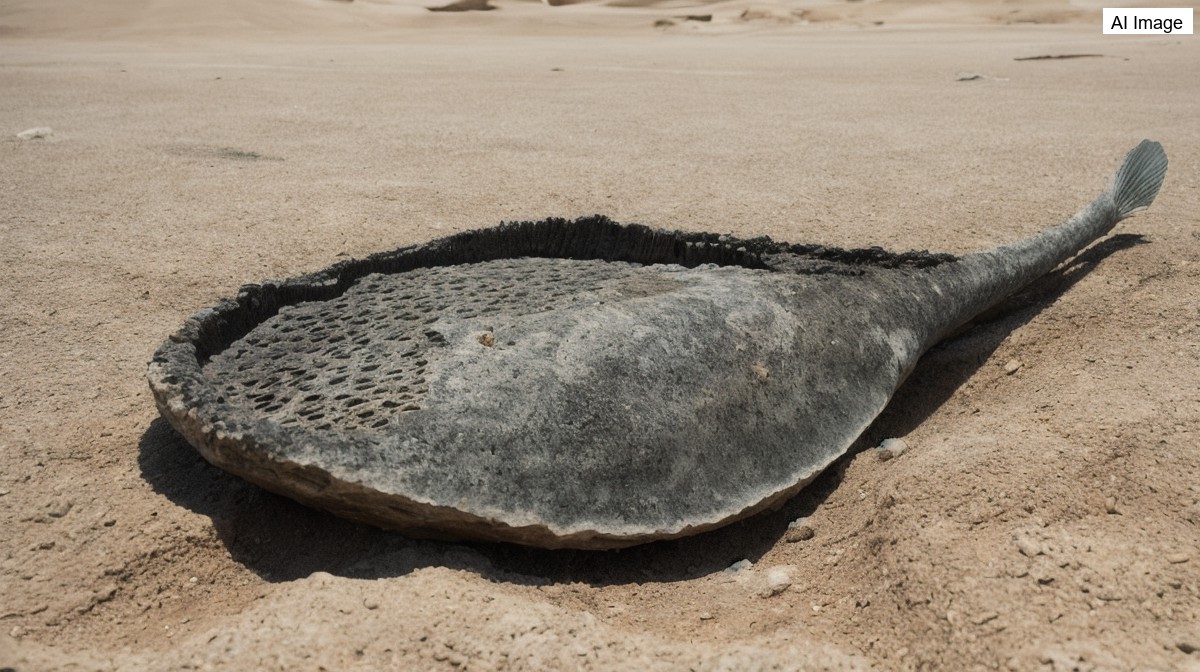
An Egyptian-led international research team has documented a rare fossil site in the country's eastern desert that dates back more than 62 million years. The find is being described as a scientific breakthrough because it sheds new light on how modern marine fish emerged after the mass extinction that wiped out the dinosaurs. The discovery offers researchers an unusual window into a chapter of the planet's history that has long been difficult to study.
Dinosaurs went extinct some 66 million years ago, and fossils dating to the period that followed are notoriously hard to work with. Specimens from that span are usually fragmented, which makes them difficult to decipher and leaves large gaps in the scientific record. That is precisely why the latest find stands out against the patchy evidence researchers have had to rely on until now.
At the heart of the discovery are three complete fish skeletons unearthed in the desert and dated to about 62.2 million years ago. Unlike the broken fragments that typically survive from this era, the full skeletons give scientists a far clearer picture of the animals themselves. The team says the find helps fill what had been a mysterious gap in the fossil record, a period researchers refer to as the Patterson's Gap.
The fossils also speak to the conditions of the time. Researchers point to a phase of ancient global warming that set in right after the dinosaurs disappeared, and the new specimens offer a unique window into when modern marine fish began to appear. In doing so, the team says, the find changes the existing understanding of that obscure stretch of the fossil record.
The work is far from finished. According to the team, researchers are now studying some 500 well-preserved specimens recovered from the site. The sheer number of intact fossils suggests the location could keep paleontologists occupied for years and yield further insights as the analysis continues at the dig.
The discovery was made in Egypt's eastern desert, where members of the team remain at work. By piecing together the evidence from the site, the researchers hope to better explain how marine life recovered and diversified in the aftermath of the extinction that ended the age of the dinosaurs.