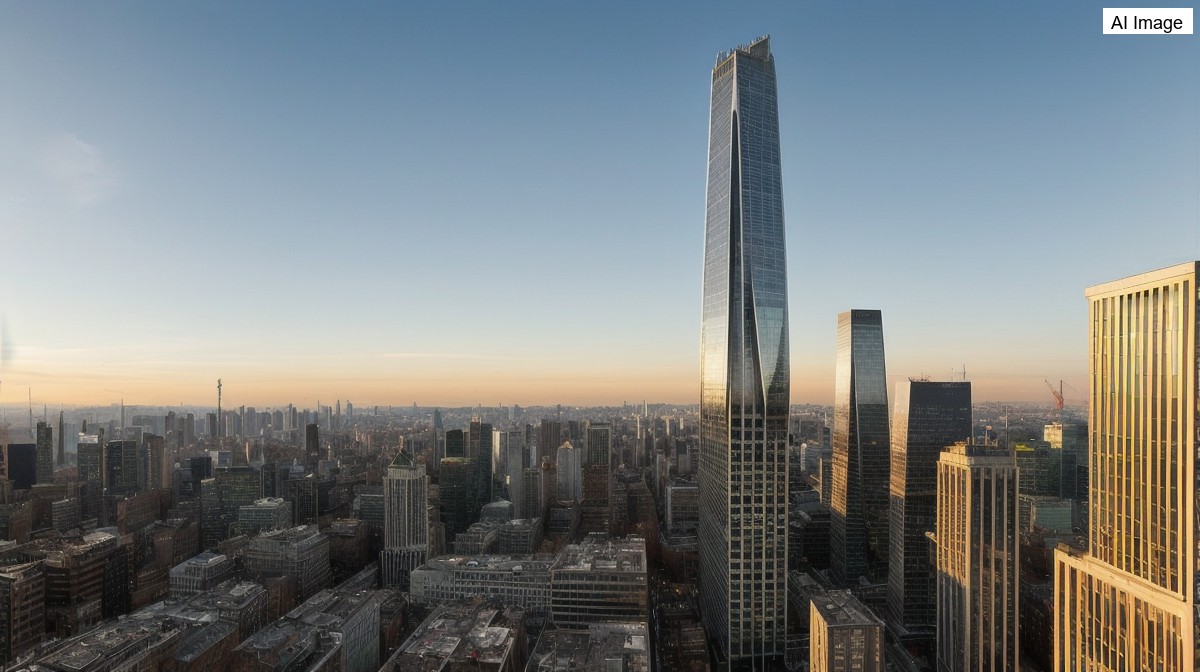
A small aircraft has crashed into Beijing's tallest building, the CITIC Tower, in an extraordinary incident over a city whose airspace is among the most tightly controlled in the world. The plane, reported to be roughly the size of a car, struck the towering skyscraper that dominates the Chinese capital's central business district, immediately drawing a heavy security response and a wave of online censorship.
According to early accounts, the aircraft hit the upper floors of the 108-storey tower, damaging at least two of its glass panels. Footage that briefly circulated on social media appeared to show the small plane striking the building, while one witness described hearing a loud crash at around 6 p.m. local time, the moment the impact is said to have occurred in the heart of the city.
The CITIC Tower is one of Beijing's most recognisable skyscrapers and, according to the reporting, is associated with China's sovereign wealth fund. Its prominence in the skyline made the crash all the more startling, given that the building stands as a symbol of the capital's financial district and of the country's corporate and economic power.
In the immediate aftermath, police closed off the roads around the skyscraper and stopped passers-by from filming the scene. Authorities moved quickly to seal the area, preventing anyone from approaching the point of impact or even recording the police cordon itself, in a sign of how sensitively the incident was being handled by the security forces.
It remains unclear whether the crash caused any casualties or how many people had been on board the aircraft. There has been no immediate official comment from the Chinese authorities, and online posts, videos, photos and commentary about the incident were quickly removed from Chinese social media platforms as censorship took hold across the networks.
The absence of an official version is especially striking given that the case is, by any measure, highly unusual. Beijing maintains near-total control over the skies above the capital, an airspace that is essentially never overflown by planes or helicopters, and where even drones have been barred from flying since the start of May this year.
That tight regime of aerial control has only deepened the questions surrounding how a light aircraft came to strike one of the city's signature towers. With the scene locked down and information tightly restricted, the circumstances of the crash, its cause and its consequences remained largely unconfirmed in the hours after it was reported to have taken place.