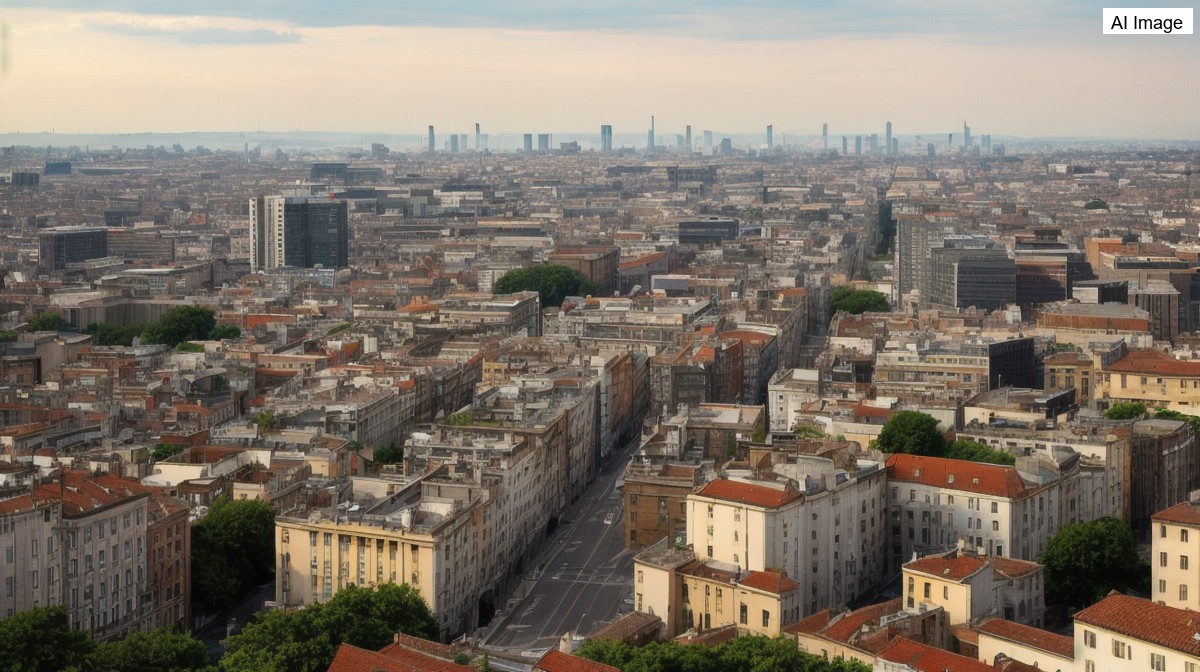
More than 200 people have been reported dead in Spain as a suffocating heatwave grips Western Europe, the deadliest figure yet to emerge from a crisis now stretching across the continent. The toll comes from a public health institution linked to the Spanish government, and most of those who died were over the age of 65, the group that bears the brunt when extreme heat lingers day after day with no overnight relief.
France has become the epicenter. Speaking earlier in the evening, President Emmanuel Macron called the conditions unprecedented, and the warnings backed him up: more than 50 million people, three quarters of the population, were placed under a red alert, leaving almost no corner of the country outside the most dangerous band of heat.
In Paris the strain was already landing on emergency services, which fielded dozens of cases of cardiac arrest after a day hot enough to set a record for the month of June. The next day eased only marginally, and the city stayed locked in a heat that pushed bodies and infrastructure alike to their limits.
The emergency has exposed how poorly equipped French homes and institutions are for temperatures like these. Air conditioning remains something of a luxury, rare in schools, hospitals and ordinary households, so for many people there was little escape even indoors. The shortage has driven a national argument over cooling onto newspaper front pages and television panels, with particular alarm for residents of Parisian attic flats, where zinc roofing turns living space into an oven.
Some relief is in the forecast, with temperatures expected to dip before climbing again next week. For now Spanish officials have yet to give a fuller account of the dead, leaving the figure of more than 200 as a preliminary and still-rising measure of the heatwave's human cost.