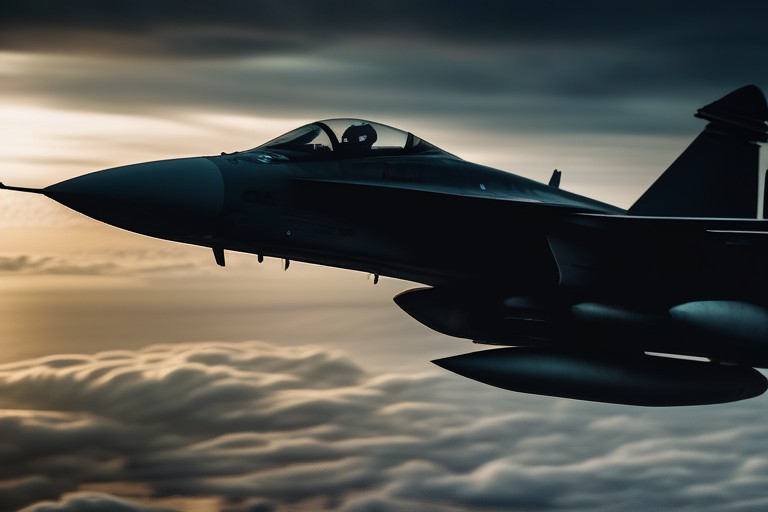
UK Defence Secretary John Healey has accused Russian pilots of dangerous and unacceptable behaviour after revealing that Russian fighter jets repeatedly intercepted a Royal Air Force reconnaissance aircraft over the Black Sea. The incident, which took place roughly a month ago, involved an RAF Rivet Joint surveillance plane conducting routine operations in international airspace as part of broader efforts to protect NATO's eastern flank.
According to details disclosed by the Ministry of Defence, a Russian Su-35 flew close enough to the Rivet Joint to trigger the British aircraft's emergency systems and disable its autopilot. The encounter escalated further when a second Russian jet, an Su-27 fighter, carried out six separate passes of the RAF plane, at one point closing to within just six metres of its nose. Given that the Rivet Joint cruises at approximately 500 miles per hour, such proximity represents an extraordinary risk of collision.
The RAF aircraft was unarmed at the time and operating well within international airspace, making the Russian manoeuvres a clear departure from accepted norms of aerial conduct. Healey described the repeated close passes as a pattern of reckless behaviour that endangers the lives of aircrew on both sides. The UK government chose to make the details public despite the incident occurring weeks earlier, signalling the seriousness with which London views the confrontation.
The disclosure comes amid heightened tensions between Russia and NATO nations over military activity near alliance borders. Rivet Joint aircraft regularly patrol international airspace along NATO's eastern boundary, gathering signals intelligence as part of routine surveillance operations. Moscow has not publicly commented on the specific incident, though Russia has previously defended its intercepts of Western military aircraft near its territory as standard practice. The UK's decision to publicise the encounter underscores growing concern in Western capitals about the frequency and intensity of such confrontations in the region.