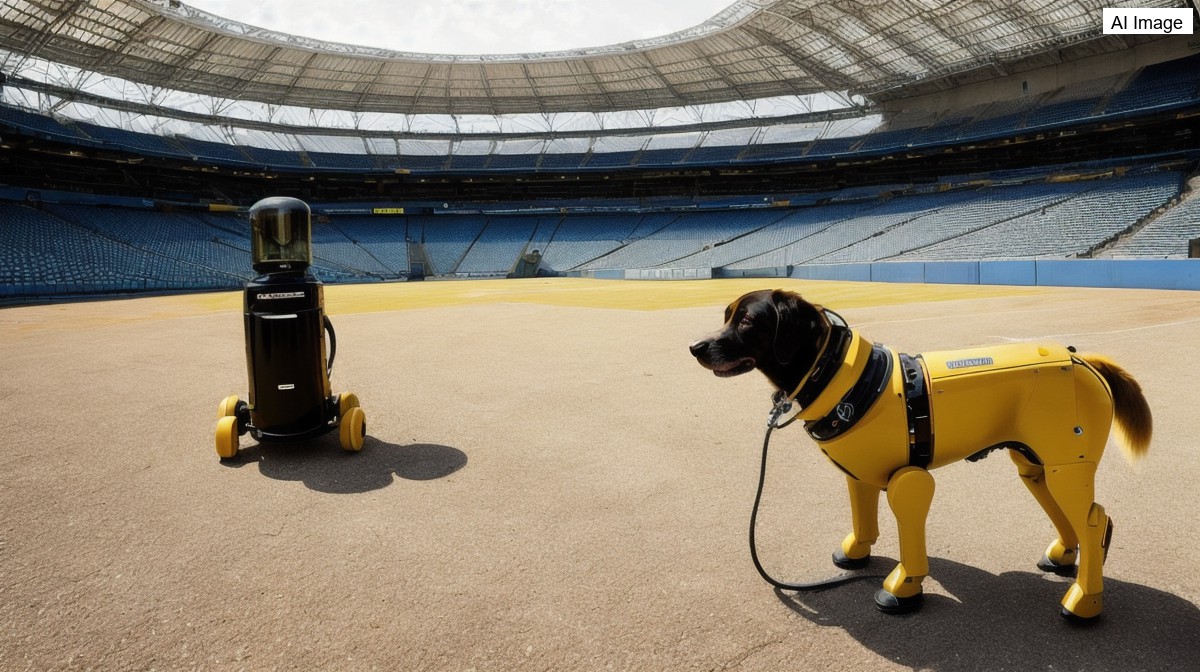
Robot dogs built by Boston Dynamics are now patrolling FIFA World Cup venues in the United States, sparking a fierce debate about surveillance and privacy among football fans. The four-legged machines, known as Spot, have been filmed roaming around stadiums in Texas in footage that has gone viral on social media.
The robots are equipped with three hundred and sixty degree cameras, thermal sensors and artificial intelligence designed to detect suspicious activity, investigate unattended packages and help keep venues secure. Boston Dynamics insists the devices are not scanning the faces of fans despite widespread claims to the contrary.
Data privacy expert Harry Morgans from Privy B warned that the real concern is not the appearance of the robots but what lies behind them. The databases, data collection and surveillance technology following fans is the issue. The cameras on these robots are recording everything in their field of view.
Morgans raised concerns about the lack of transparency regarding where recordings are being stored, how long they are kept and most critically how they might be cross-referenced against other police databases. Fans attending a football match may unknowingly end up in surveillance systems they never consented to join.
The deployment of robotic security at sporting events represents a significant escalation in the use of automated surveillance technology in public spaces. While organisers argue the technology is necessary for security at the largest sporting event in the world, critics see it as a step toward normalising mass surveillance.
The debate echoes broader concerns about the balance between public safety and individual privacy rights. Supporters of the technology point out that anyone not engaging in criminal activity has nothing to fear, while opponents argue that the presumption of innocence should not require surrendering the right to privacy.
The FIFA World Cup 2026, hosted across the United States, Canada and Mexico, is set to be the most technologically monitored sporting event in history. The use of robot dogs alongside existing CCTV and electronic surveillance systems raises fundamental questions about what level of monitoring is acceptable in democratic societies.