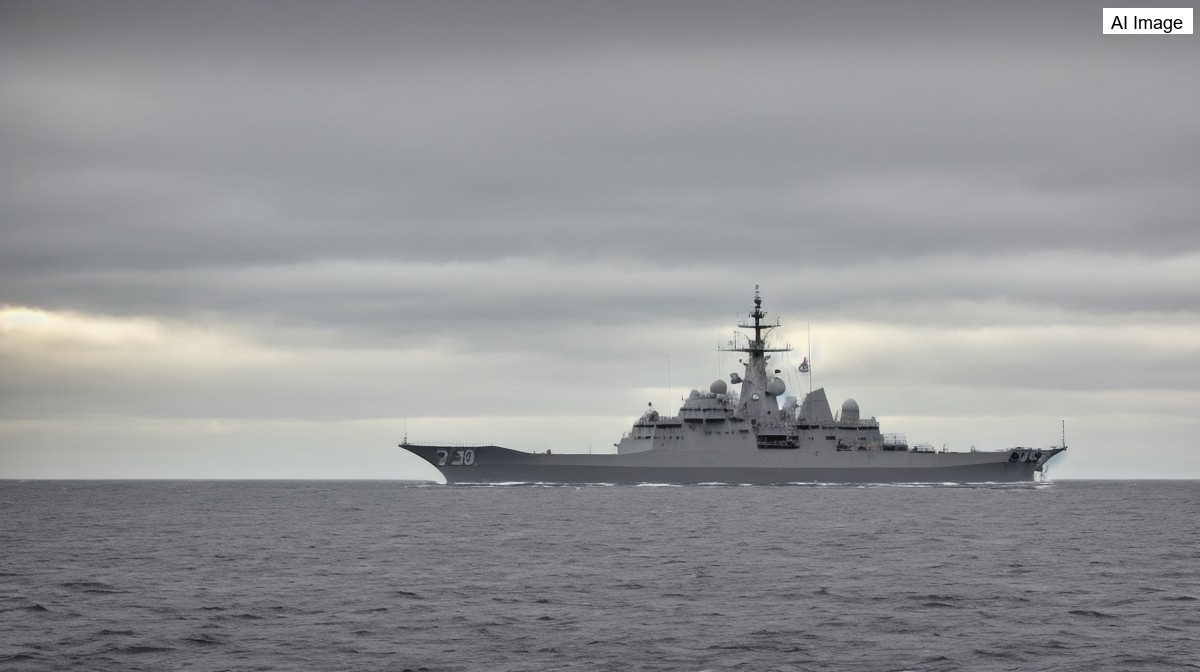
A Russian Navy frigate is reported to have fired warning shots at a British yacht in the English Channel, in an incident a Ministry of Defence spokesperson confirmed it was investigating. According to the reports, the civilian yacht had sailed closely towards the Russian military ship before the shots were fired, at a distance of around 500 yards. There were said to be no injuries and no damage to the yacht, but the episode marked a striking moment in an already tense standoff at sea.
A Ministry of Defence spokesman later set out the official account of what had happened. Following attempts to contact the British vessel in the Channel, the spokesman said, the Grigorovich fired warning shots that were not aimed at the yacht but were an attempt to prevent a possible collision. The ministry assessed the incident as isolated and not linked to the Royal Navy's interception of the sanctioned Russian tanker over the weekend, adding that HMS Mersey had been monitoring the Russian vessel and that support had been provided to the yacht's crew. The framing recast the encounter less as a deliberate act of aggression than as a tense moment at close quarters between a civilian boat and a warship.
The warning shots were said to have been fired at around 11:40 in the morning, roughly 20 nautical miles south of the Isle of Wight, between the island and the Normandy coast. That position places the incident in French territorial waters rather than British ones, a distinction commentators were quick to draw, noting that shots fired on a British vessel in British waters would have been seen by many as an act of war. The frigate involved was reported to be the Admiral Grigorovich, described as part of Vladimir Putin's Black Sea fleet, which had been operating in and around British and nearby waters for several weeks and had been seen escorting Russian tankers through the English Channel.
The Royal Navy had been tracking the vessel closely. Two river-class patrol ships, HMS Mersey and HMS Tyne, followed the frigate through the Channel on Monday afternoon, in the period before the warning shots were said to have been fired. A Royal Navy Fleet Air Arm Wildcat helicopter was also reported to be operating in the Channel, observing the location as the situation developed.
Nearby, off the Dorset coast at Weymouth, the sanctioned Russian shadow fleet tanker recently intercepted by British forces remains anchored, with its crew still on board and its captain already charged and having appeared in court. While the proximity invited speculation that the warning shots were a response to that seizure, the Ministry of Defence indicated it was treating the Channel incident as isolated and was not linking it to the interception of the tanker, which Royal Marines had boarded on Sunday.
The Royal Navy moved to check on those aboard the yacht. HMS Mersey, one of the two river-class patrol vessels that had been monitoring the frigate, continued to shadow it, while a sea boat launched from HMS Tyne visited the civilian yacht to gather details from the crew and confirm that they were safe. Officials reiterated that there had been no injuries and no damage to the vessel as the assessment was carried out.
There is recent precedent for such claims, though in very different waters. In 2021, Russia said it had fired warning shots near a Royal Navy warship in the Black Sea, an episode that came ahead of Moscow's full-scale invasion of Ukraine the following February. What sets the new reports apart is how close to home they fell, with the alleged shots fired not in a distant sea but in the English Channel, one of the busiest and most closely watched waterways in Europe, just off the British and French coasts.
The incident also feeds into mounting scrutiny of Russian maritime activity around the United Kingdom. The Ministry of Defence has previously disclosed that Russian spy vessels were seen tracking undersea cables in the North Atlantic, and that the Royal Navy and Royal Air Force had tracked spy submarines and an attack submarine near strategically important locations. The government has faced significant criticism over the extent to which Russian shadow vessels and military ships have been able to move through British waters, criticism that the latest reported confrontation is likely to sharpen.