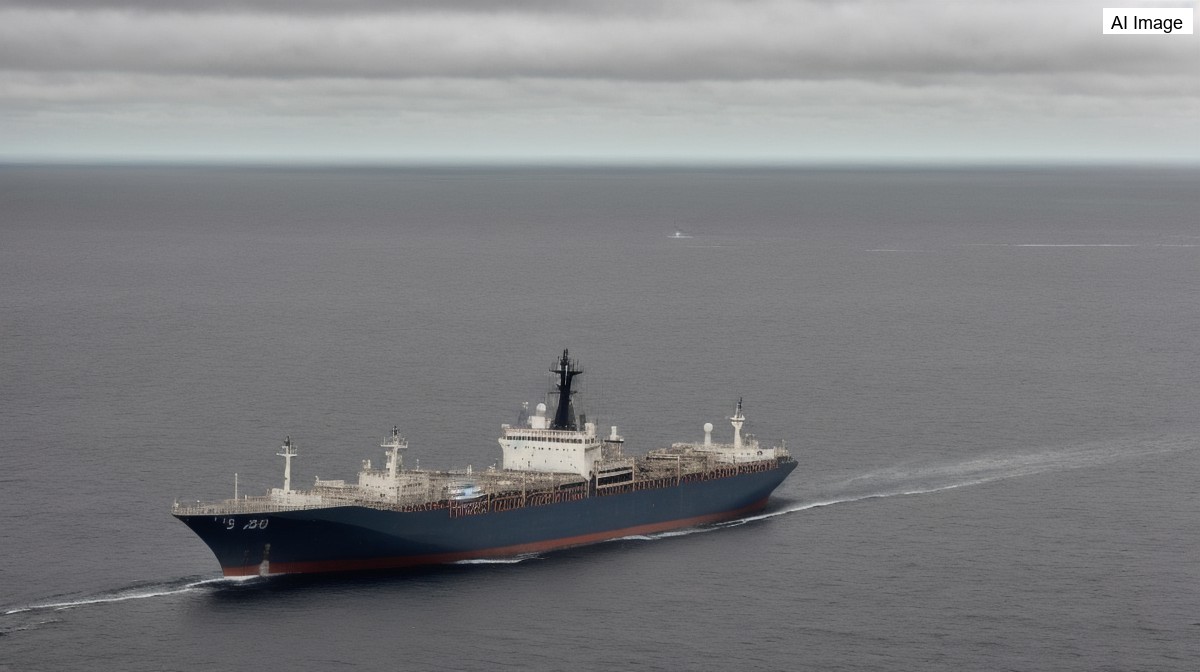
British armed forces intercepted a Russian shadow fleet oil tanker in the English Channel in the early hours of Sunday morning, in an operation that the government quickly moved to publicise. Prime Minister Keir Starmer confirmed that Royal Marine Commandos, alongside specially trained officers, boarded the vessel while it was attempting to pass through the Channel. The boarding party was supported from the air by the Royal Air Force, and the tanker is now being held and monitored off the south coast of England.
The Ministry of Defence released footage of the boarding shortly after it was completed, underlining how deliberately the operation was framed as a demonstration of capability. Officials described it as a carefully planned, well resourced action carried out by personnel who train for exactly this kind of interception at sea. The vessel was singled out as part of the so called shadow fleet, the network of tankers used to move Russian oil while evading Western sanctions.
The interception is the first significant decision to become public under the new defence secretary, Dan Jarvis, who took over the brief this week after the resignation of his predecessor. Jarvis has said he is determined to secure the funding the armed forces need, and the boarding allowed the government to point to concrete action at a moment when its defence plans have been under heavy scrutiny. Sir Simon Mayall, a former Middle East adviser at the Ministry of Defence, said the minister would have personally signed off on such a sensitive move.
Mayall called the boarding a highly political act, but welcomed it, arguing that the government needed visible good news on defence and that Britain had for too long confronted Russian activity with one hand tied behind its back. He stressed that the operation reflected the professionalism of the forces involved, even if, in his view, the political backing for the military has at times been lacking. He cautioned that it remained to be seen whether the boarding was a one off or the start of a sustained series of interceptions.
The action follows a sustained pattern of Russian shipping and naval movement close to British shores. According to figures cited during coverage of the operation, Russian vessels have repeatedly entered United Kingdom waters, including 84 sanctioned tankers that came within roughly 13 miles of the coastline. Alongside the tanker traffic, commentators pointed to Russian naval activity on the surface, beneath it and in the air as a persistent challenge to British and allied security.
The boarding also raised practical questions about what happens next to the crew. During earlier discussion of interceptions of this kind, concern was voiced within government that those on board detained vessels might attempt to claim asylum once brought ashore. For now, officials say the tanker itself will remain under watch off the southern English coast while its status is assessed.
The timing has sharpened the political debate around Britain's defence posture. The operation landed in the middle of a difficult week for the government, after a row over the defence investment plan and the departure of the previous defence secretary, who had warned that the resources on offer would barely allow the forces to stand still. Supporters of higher spending seized on the boarding as proof of what the military can do when given clear direction, while pressing the prime minister to match that capability with sustained funding.