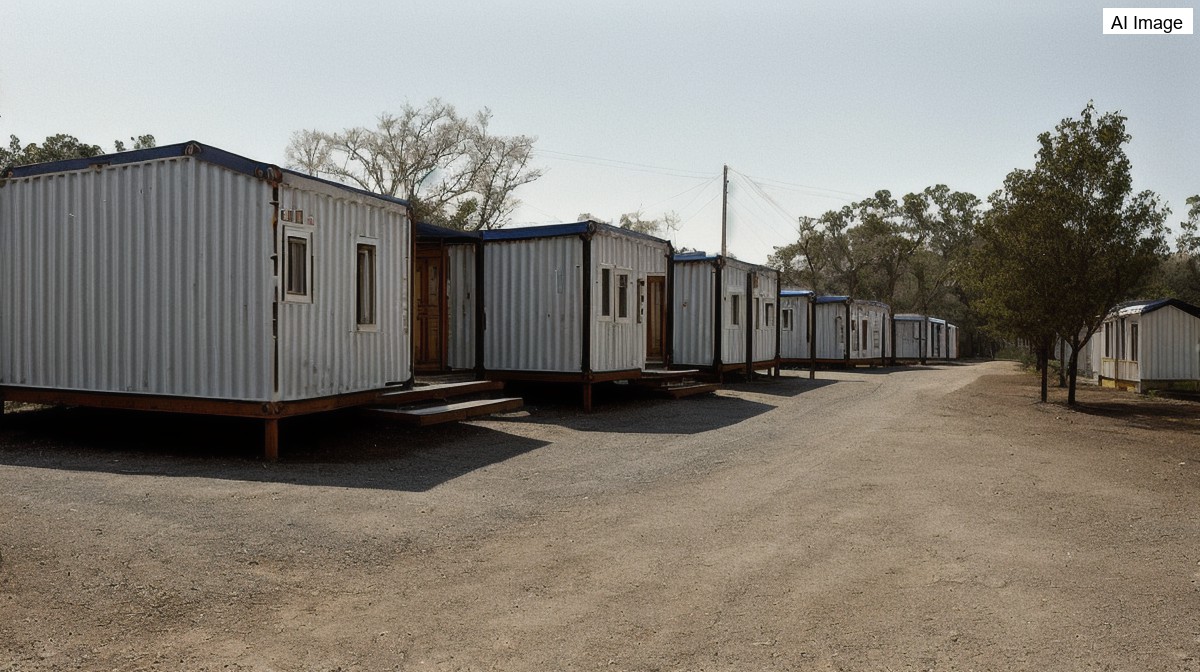
More than 1,000 Afghans who once helped the US military, together with their family members, are being held at an unused military base in Doha, the capital of Qatar, where they are still waiting to learn what their future holds. They had been promised they would be taken to a safe place, but instead they remain in limbo after the United States froze its refugee resettlement efforts. The camp where they are staying is known as Camp Aselia.
Rather than bringing them to the United States, the Trump administration had been in talks to move the group to a third country, the Democratic Republic of Congo. For people who served alongside American forces in Afghanistan, the prospect of being sent somewhere else entirely has only deepened the uncertainty. Many have already spent a long time at the base, with some of the children having marked more than one birthday inside its fences.
The non-profit organisation Afghan Evac has been in contact with residents of the camp and has been organising with congressional leaders to push back against the administration's discussions about sending families to third countries. On one call in April, staff from the offices of Representative Meeks and Senator Blumenthal joined the residents. One senator, who said his own son had served in Afghanistan, described the Afghans as patriots and heroes who love America, and pledged to fight for them as he would for the country's own veterans.
The contrast with another group of would-be refugees has sharpened the anger around the case. While the residents of the camp continue to wait, the Trump administration opened 10,000 slots for white South African refugees, known as Afrikaners, to come to the United States. That decision has become a focal point for critics who argue that Afghans who risked their lives for American forces are being left behind.
In June, on Capitol Hill, senators confronted the Secretary of State, Marco Rubio, about the future of those still at Camp Aselia. Rubio said the United States could not admit any Afghans at this point, citing an executive order issued after a National Guard attack the previous year. He said that no single country was going to take 1,000 people, but that Washington had spoken to multiple countries about taking several hundred of them and allowing them to move to a safe location.
One senator pressed the point further, saying the administration had capped refugee admissions at a record low of 17,500, and that Afrikaners had comprised roughly 99 percent of those slots. He called it a race-based refugee system and described the administration's foreign policy in scathing terms. The exchange underlined how the fate of the Afghans at the camp has become entangled in a wider political fight over who the United States is willing to take in.
Among those who spoke was a 15-year-old girl who said she had already spent two birthdays at the camp. She asked what would happen to her, to her 11-year-old brother, and to the other children, including those who were born there, and to their futures. She said there should be someone willing to fight for them, and that even though it was dangerous, she had taken the risk to speak out because she wanted to bring about change and hoped one day to get these people to safety, perhaps to America.
ABC News said it had reached out to the State Department about the claims made by people at the camp. A spokesperson said the department had no information regarding an alleged incident raised by residents, and that accusations are dealt with promptly to protect those at the camp, whose security is described as a priority. The department added that it continues to work toward a positive resolution that provides safety for the remaining people to start a new life outside Afghanistan, while upholding the safety and security of the American people.