Farmers in the Udu local government area have lamented the loss of more than 30 million naira worth of cassava. They blame the loss on a lack of processing facilities, a poor road network and the high cost of transportation, in a situation that has turned a season of cultivation into one of mounting frustration. The complaints point to a deepening concern over food security, tied directly to how cassava is cultivated in the area and what becomes of it after harvest.
The area is weighed down by serious infrastructural challenges. Key access roads in the council area are in deplorable condition, and the difficulty of movement is compounded by a lack of potable water, which leaves residents to depend on local streams. In a place where agriculture is the main means of survival, these gaps strike directly at the livelihoods of the people who live there.
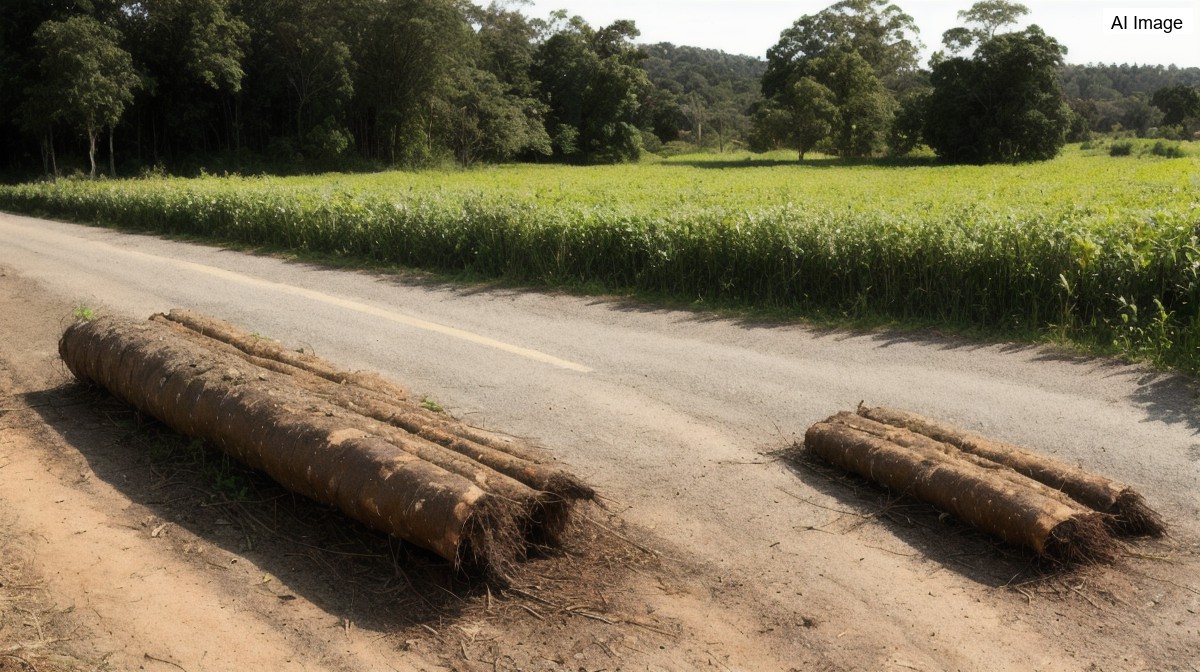
Reaching the farms themselves is just as difficult. The roads leading to farming communities remain a daunting challenge, and crews and traders alike struggle to scale through to some of the settlements where cassava is grown. Without reliable routes, moving the harvest from the farm to where it can be sold or processed becomes a costly gamble for the farmers.
The consequences are showing in how the farmers now approach their work. With revenue losses recurring year after year and running into millions of naira, many say they no longer cultivate for profit but simply to feed their families. The hope of making a steady income from cassava has faded for those who keep planting despite the odds.
One of the farmers, Mr. Sunde, who operates a tractor under a mini agricultural mechanization program known as the Odea Tractor Scheme, said he lost more than 10 million naira to post-harvest losses. His account put a concrete figure on the scale of the damage that individual farmers are absorbing in the area.
He pointed first to the roads as the major challenge, saying that without a way to move produce there is little farmers can do. He also cited the lack of equipment and inputs such as fertilizer and chemicals, along with the rising cost of the manual labour needed to peel, wash, dry and package cassava by hand, which leaves much of the crop to go to waste before it can be sold.
The problem does not end at the farm. According to the farmer, cassava that has already been processed at the factory remains unsold because there are no buyers and market conditions are poor. With produce sitting idle and no ready market, farmers are left to reinvest what little they can while a large share of their harvest is wasted, deepening concerns over food security in the area.