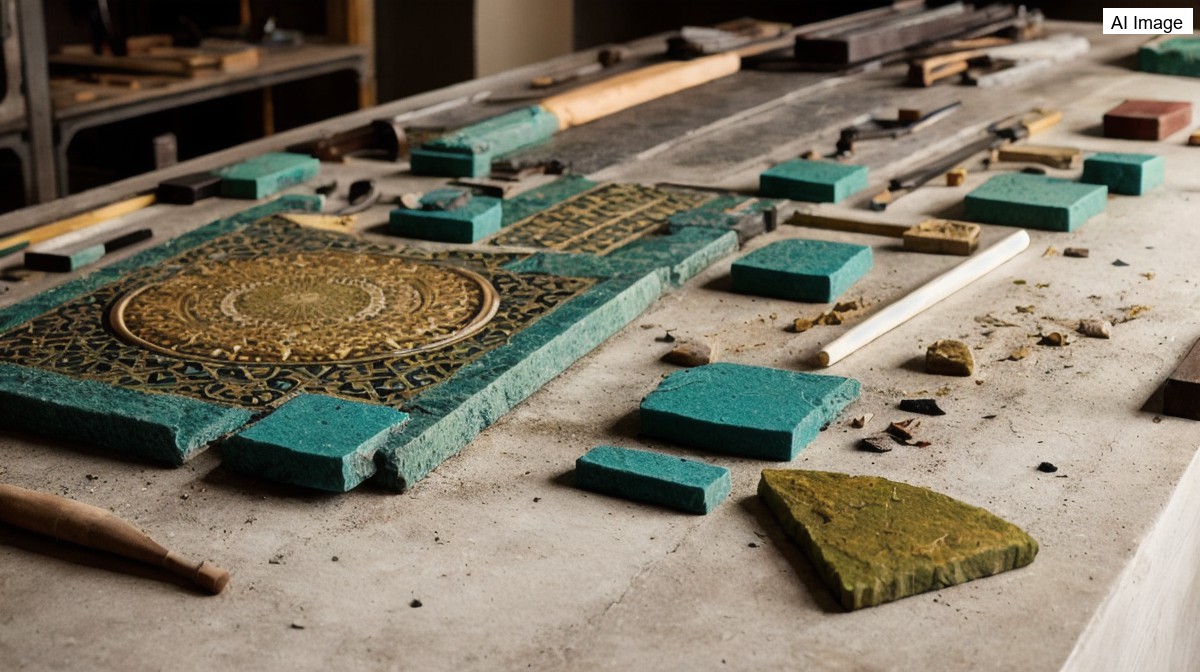
In a workshop in Aleppo, small pieces of stone are being shaped into something much larger than mere decoration. A group of women there is reviving the traditional art of natural stone mosaic, turning it into modern designs that still carry the memory of an old craft.
The effort is part of a project called Armagan, founded by visual artist Azma Mahbouk. She says the aim is to bring back an art form that had been slowly disappearing from the city, before it could be lost altogether.
Natural stone mosaic is one of the region's oldest decorative crafts. Aleppo was once renowned for its intricate designs, which adorned walls, floors and architectural surfaces across the city, a reflection of its long artistic heritage.
In recent years, however, that tradition has come under pressure. Years of conflict, economic hardship, rising costs and weaker demand have pushed many of the city's traditional crafts to the margins, leaving long-held skills at risk of fading away.
For the women involved in the project, the work goes beyond preserving heritage. It is also about building practical skills and creating a sustainable source of income at a time when stable work is hard to come by in the city.
The revival has not been without obstacles. Organisers say finding suitable raw materials was difficult at first, as the stones initially arrived in sizes that were too thick and hard to work with for the delicate mosaic designs.
The wider environment has also been challenging. The absence of tourists has left many heritage businesses struggling, in a city where traditional arts once depended on visitors, collectors and a thriving local market. Even so, every stone placed by hand is part of a broader effort to protect memory and pass the craft on to another generation.