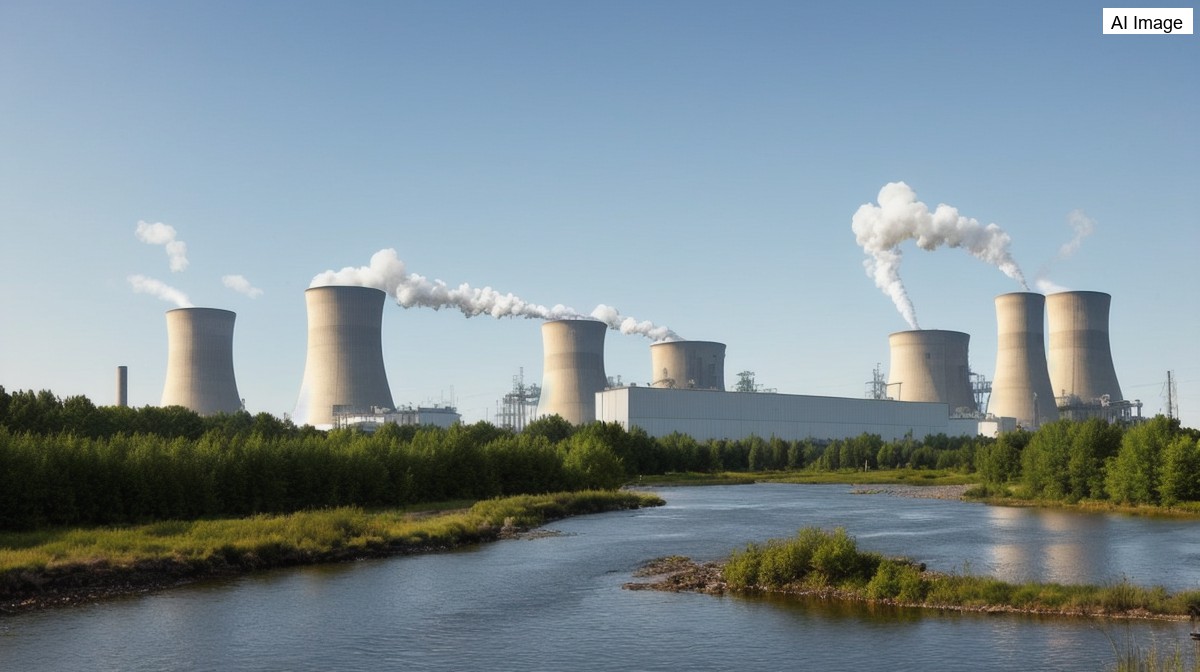
New Jersey is turning to nuclear power in its fight against rising energy costs. Governor Mikey Sherrill has signed the Power New Jersey Act, a law designed to ease the burden of high electricity bills by expanding the state's use of nuclear energy and, in the governor's words, to stop the bleeding for households squeezed by their monthly charges.
The strategy rests on increasing competition and supply. By opening the door to more nuclear generation, the state hopes to add capacity to the grid and put downward pressure on prices. Speaking in Trenton, Sherrill framed the move as a signal that New Jersey is open for business to nuclear energy companies willing to invest in the state.
At the heart of the law is a plan to buy nuclear power on behalf of residents. The state intends to set up a program to purchase nuclear energy at what officials describe as a fair price, with an emphasis on doing right by ratepayers rather than leaving them exposed to volatile costs. The approach ties the expansion of supply directly to the goal of steadier bills.
Part of the vision involves a newer generation of technology. The governor said she is eager to see whether small modular reactors could be used to replace the footprint of the Oyster Creek reactor, which has closed, or be developed on the property of the Salem reactor. Such reactors are seen as a way to add nuclear capacity without the scale of traditional plants.
New Jersey already leans heavily on nuclear power. The state's three reactors, located in South Jersey, generate enough electricity for almost three million homes, giving the sector a substantial role in the region's supply. Officials argue that building on this existing base is a logical path toward keeping the lights on affordably as demand grows.
The law arrives alongside more immediate relief for consumers. Sherrill recently announced a plan to give every homeowner in the state a $25 credit toward their electricity bill, a short-term gesture meant to blunt the impact of high costs while the longer-term supply measures take shape. Together, the steps form part of a broader push on affordability.
Officials are also keeping a close eye on surging demand from data centers, which can drive up costs for everyone else. The governor has signaled that on days of very high power usage, such as during heat waves, data centers would be the first to be curtailed rather than ordinary ratepayers. For now, the focus is on expanding supply, a bet Sherrill says will pay off for the state in the years to come.