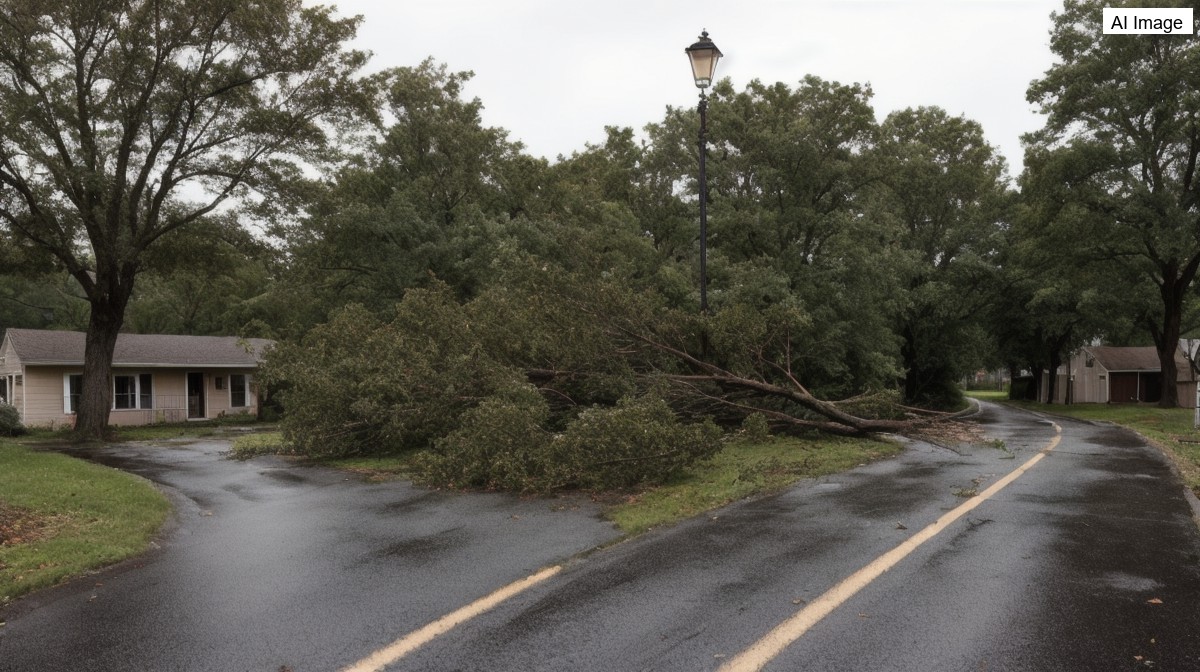
A powerful round of severe storms swept across the New York and New Jersey region on the evening of July 4, leaving behind widespread damage, scattered injuries and hundreds of thousands of power outages. The system arrived as communities across the tri-state were marking Independence Day, and it turned what was meant to be a festive night into a scramble to deal with downed trees, damaged homes and darkened neighborhoods. Forecasters described the storms as fast-moving and intense, carving a path of destruction that was felt across a broad swath of the area, particularly to the north and east of New York City.
The scale of the disruption was reflected in the power figures, with more than 247,000 customers reported without electricity across the region at the height of the outages. The largest concentration of those outages was in New Jersey, which bore much of the brunt of the storms. Utility crews faced the prospect of a long night and the days that could follow, as high winds brought down lines and left large numbers of homes and businesses in the dark just as residents were trying to enjoy the holiday.
In New Jersey, the town of Paramus saw trees and power lines knocked over as the storms blew through, a scene repeated in communities across the northern part of the state. Nearby, in River Edge in Bergen County, the storms were blamed for a fire that destroyed a home, a stark illustration of the danger that severe weather can pose beyond the more familiar threats of flooding and wind. The combination of falling trees, downed lines and structural damage kept emergency crews busy across the region.
One of the more alarming incidents unfolded in the Bronx, where a tree fell onto a number 4 subway train as the storms moved through. The operator of the train was injured in the incident, though officials indicated that the injuries were not serious. The episode underscored how the storms reached deep into the heart of New York City's transit network, disrupting a system that millions of people rely on and raising fresh concerns about the vulnerability of infrastructure during extreme weather.
The worst of the weather appeared to track across Long Island as the evening wore on, with meteorologists describing the storms as especially vicious over the eastern parts of Suffolk County. As the cells pushed offshore, they left a trail of damage behind them, adding Long Island to the list of areas hit hard by the system. The intensity of the storms in that part of the region highlighted just how widely the impact was spread, stretching from northern New Jersey across the city and out to the eastern end of Long Island.
The timing of the storms created particular challenges for the many Independence Day fireworks displays planned across the area. In some places, organizers and broadcasters described threading the needle between storm cells to get the shows in at all, while other communities were less fortunate and saw their plans disrupted by the dangerous conditions. The threat of lightning and high winds forced difficult decisions about whether to proceed, delay or cancel celebrations that draw large crowds.
For many residents, the July 4 storms compounded the damage from a previous round of severe weather that had struck the night before. Parts of New Jersey in particular were still cleaning up and dealing with outages from those earlier storms when the new system arrived, stretching resources and testing the patience of communities hit twice in quick succession. The back-to-back nature of the storms left neighborhoods contending with fallen limbs, blocked streets and repeated power interruptions.
As the storms moved offshore, attention turned to the recovery effort and the task of restoring power to the hundreds of thousands left without it. Crews worked to clear debris and reconnect lines, while residents assessed the damage to homes and property. The episode served as a reminder of how quickly summer storms can turn severe in the region, and of the strain that extreme weather places on infrastructure, emergency services and the daily lives of people across the tri-state area.