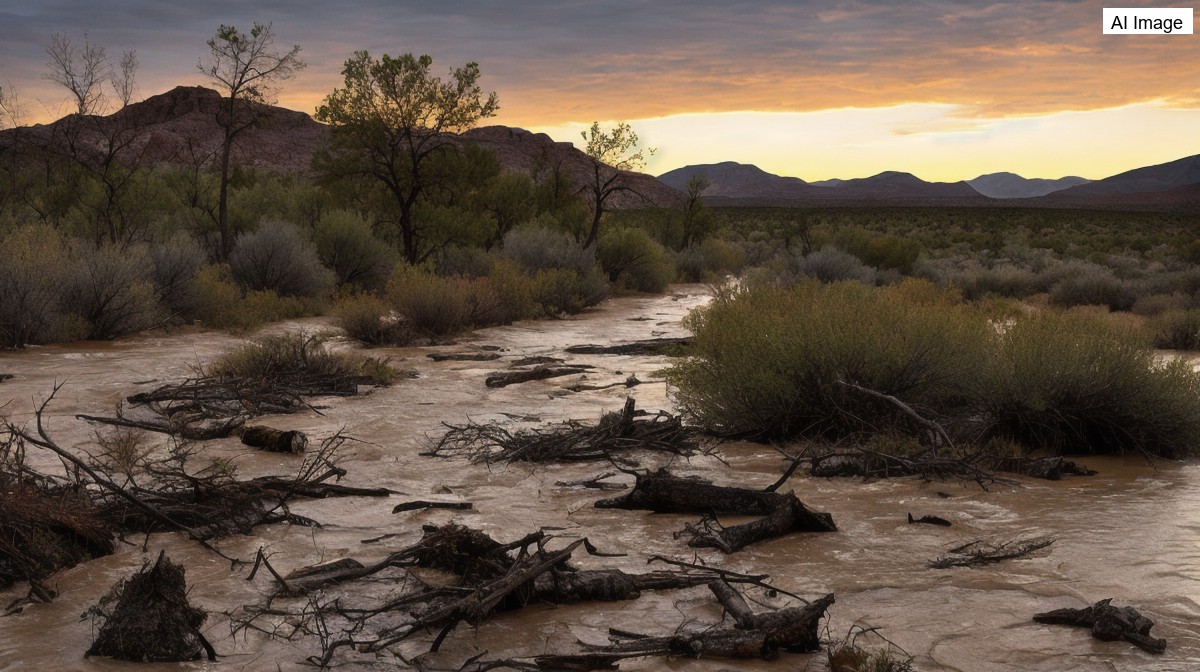
At least five people, all believed to be members of the same family, have been killed in a flash flood in Wayne County, in a rural part of Utah, local authorities said. The county sheriff's office reported the deaths in the aftermath of fast-rising water that swept through the area, turning a sudden burst of heavy rain into a deadly disaster for one household caught in its path.
According to the sheriff's office, all five victims are believed to belong to a single family, a detail that has underscored the scale of the loss. Authorities have attributed the deaths to flash flooding, the sudden and violent surges of water that can form with little warning during intense rainfall and overwhelm anyone in their way before there is time to react.
The toll emerged over the course of the emergency response, as crews searched for people who had been unaccounted for after the water hit. What began as reports of missing individuals gave way to confirmation that all five had died, leaving no survivors among the group that authorities say was overtaken by the flooding as it tore through the area.
Wayne County sits in a rugged, sparsely populated part of Utah, a region of canyons, washes and dry terrain where flash floods are a well-known and recurring hazard. In such landscapes, water can rush down narrow channels and low-lying ground with extraordinary speed, catching people who may have little time to move to higher and safer ground.
Flash floods are among the most dangerous forms of flooding precisely because of how quickly they develop. A storm dropping heavy rain over higher terrain can send a wall of water racing downstream into places that were dry only minutes earlier, a dynamic that makes canyon country especially perilous whenever powerful storms move through the region.
The deaths in Wayne County came amid a broader stretch of dangerous flooding affecting parts of the United States, with heavy rainfall and flash-flood warnings issued across several areas. For the community around the disaster, the immediate focus shifted to accounting for everyone caught up in the event and beginning to assess the damage the water left behind.
For the relatives at the center of the tragedy, an ordinary stretch of summer weather turned into an irreversible loss in a matter of moments. Authorities did not immediately release further details, and officials were expected to continue their work in the affected area as the community absorbed the news that five members of one family had been lost to the floodwaters.