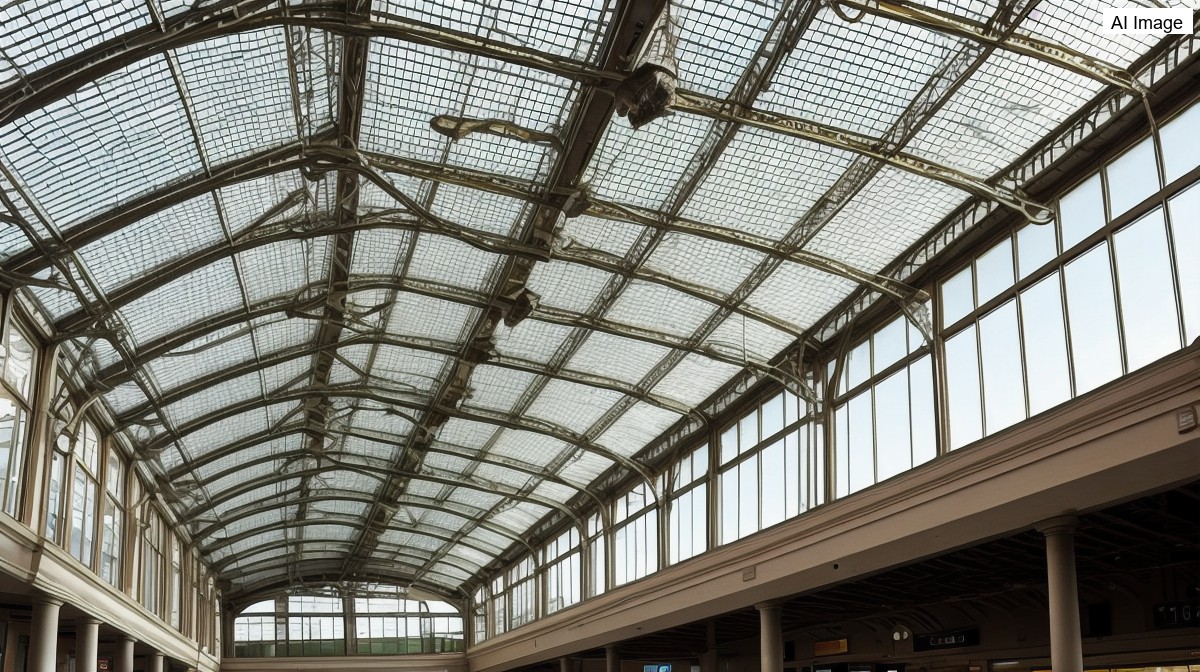
New York's original Pennsylvania Station was, by the accounts of those who remember it, a temple to travel. Sunlight filtered through its glass ceilings, illuminating travertine marble walls and a vast great room. Even for someone who never boarded a train there, the steel-and-glass ceiling, catching the dust in the air, could feel like the mournful sound of a train whistling in the night.
The station was built with two different concourses. One was a boarding concourse, and a second, separate concourse was set aside for departing passengers. The division reflected an era when a great train station was designed not just to move people but to give the act of travel a sense of ceremony and order.
Its scale extended to how people arrived and left. There were grand entrances on both the north and the south, neither of which exists anymore. The design also included special taxi lanes and dedicated drop-off and pickup areas, the kind of considered detail that set the building apart from an ordinary terminal of its day.
One of the most striking aspects of the original station was the boarding concourse, which, as historic photographs show, was built out of glass blocks. The whole purpose of those blocks was to carry daylight down through the boarding concourse to the exit concourse below. Light, in other words, was treated as part of the architecture itself rather than an afterthought.
The effect, for those who walked it, was almost cinematic. You could walk around the perimeter of Penn Station and find it all lit up, an experience one admirer compared to walking into a film noir city. The building did not just shelter travelers, it staged them, turning a transfer between trains into something closer to a scene.
For its defenders, that was the entire point. Good architecture moves the soul, as one put it, and if a 10-year-old child could walk into a station and feel that, then the building was a success. By that measure, the original Penn Station was remembered as one of the city's great achievements.
But even monuments are not immune to time. The same station that once symbolized progress and grandeur would eventually face neglect, decline and, finally, destruction. The grandeur captured in those old photographs was, in the end, a prelude to the wrecking ball and to whatever the site would become next.