New York's Garment District, the Midtown neighborhood that became the engine of American fashion, traces its roots to the city's industrial growth. As the city's fashion industry grew, manufacturers began moving north in search of larger and more modern spaces. That search would eventually concentrate the business in one part of Manhattan and give the area the identity it still carries today.
By the 1920s, the heart of garment production had shifted into Midtown Manhattan, into what is now known as the Garment District. The move turned a cluster of blocks into the center of an entire industry, drawing workers and businesses into a dense pocket of the city. It was there that much of the country's clothing would be designed, cut and sewn for decades to come.
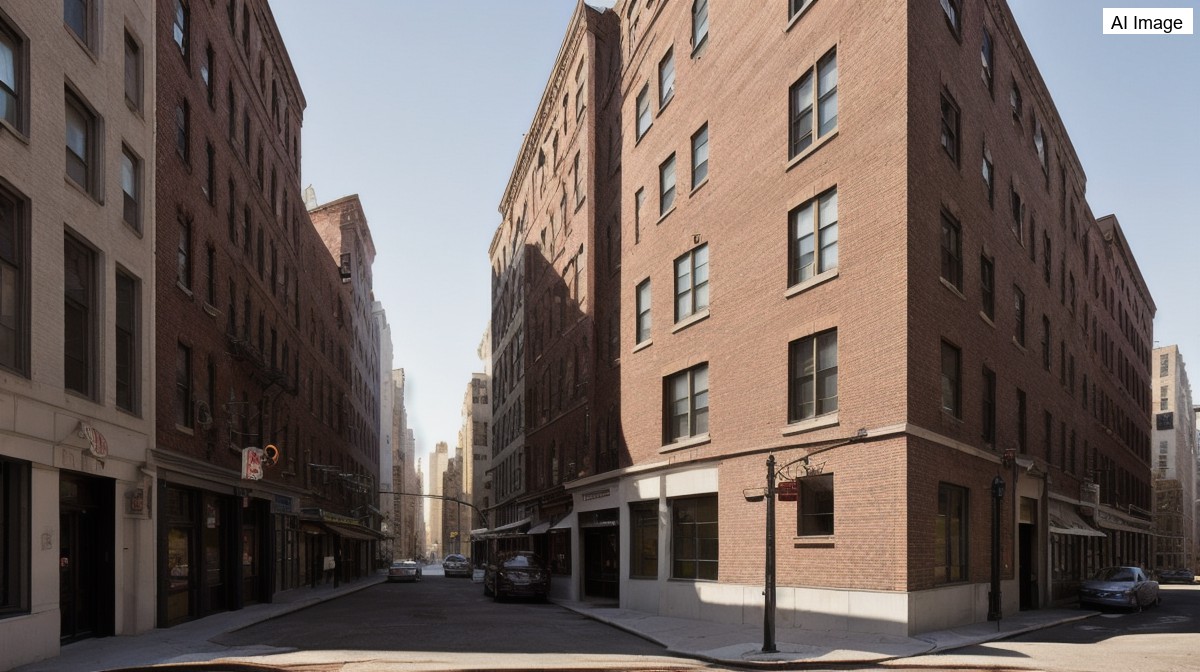
The scale of that work demanded new kinds of buildings. There was a need to build bigger and better garment lofts in New York to house the growing trade. Those lofts became the physical backbone of the district, the spaces where the day-to-day work of the industry actually took place as it kept expanding.
Today, the district's history is marked in the streetscape itself. A giant 28-foot-high stainless steel needle is shown threading an enormous 15-foot-wide aluminum button, standing in the heart of the neighborhood. The thread and needle sculpture serves as a kind of gateway to the Garment District and a public tribute to the trade that built it.
Right next to the oversized button sits a statue of the garment worker. It was sculpted by Judith Weller and based on her own father, who worked in the garment industry. The result is a deeply personal monument, one that puts an ordinary worker, rather than a famous name, at the center of the district's story.
Those workers are the foundation of everything that followed. They paved the way for some of the biggest designers in the entire world, turning the district into a launching pad for global fashion. The monuments in the streets are meant to keep that connection between the labor and the legacy visible to anyone passing through.
That legacy is perhaps clearest in the buildings themselves. A Seventh Avenue building known as the designer building was home to names like Bill Blass, Donna Karan, Ralph Lauren and Oscar de la Renta, with the list going on. From the lofts where clothes were stitched to the studios of household-name designers, the Garment District remains a monument to how New York shaped modern fashion.