At a moment of global energy uncertainty, China's massive bet on renewable power is increasingly looking like a strategic advantage. With the impact on its electricity prices kept relatively low, the country has reached a milestone in its energy transition, as more than half of China's new power capacity now comes from renewable sources rather than from fossil fuels.
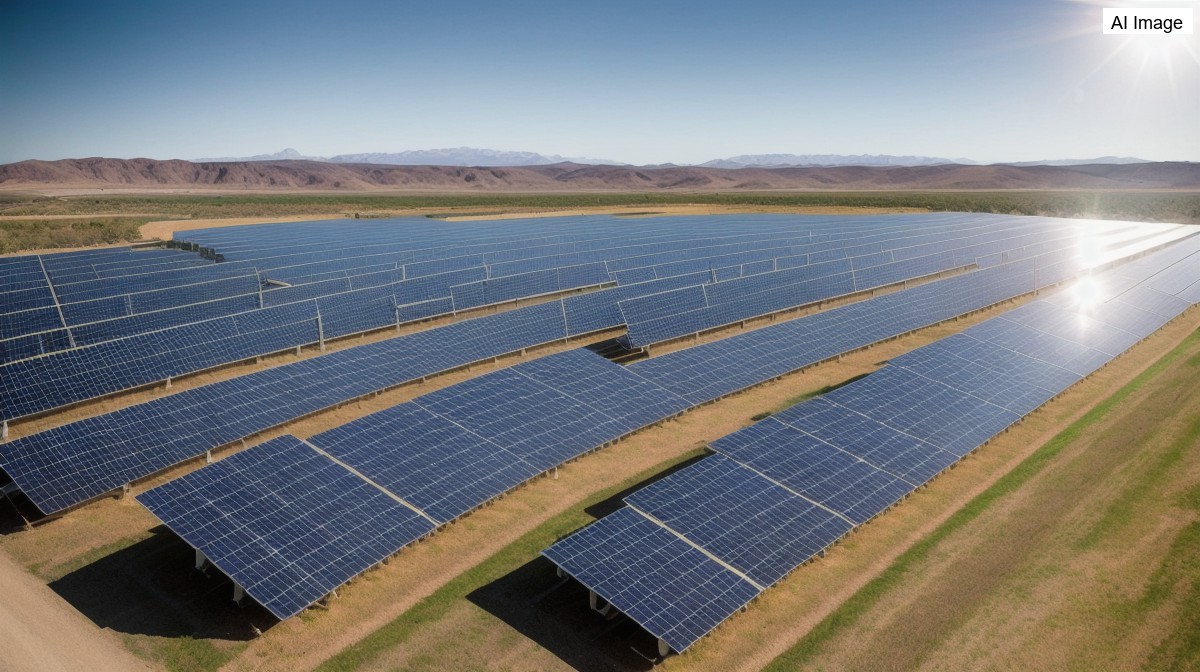
Nowhere is the shift more visible than in the desert province of Gansu, where the transformation is on display across the landscape. Driving through the region, solar towers appear one after another, rising like artificial suns in the desert, some already operating and shining brightly while others stand under construction nearby. The sheer scale of the build-out dwarfs many comparable projects elsewhere in the world.
The pace of expansion has been striking. According to the report, the first solar plant visited only came online in 2018, and yet there are now 18 such plants across the country, with more than a dozen more currently under construction. Backed by the state, China's renewable push continues to grow at speed, turning what were once experimental sites into a sprawling national network.
The contrast with the United States is sharp. American businesses are still investing billions of dollars in large-scale renewable energy projects, but at least 38 new solar, wind and battery power plants were cancelled in the first part of 2026, in the face of opposition to renewables from the Trump administration, according to the nonpartisan organisation E2. While the US pulls back, China presses forward.
The region also captures a deeper story of transition. The area known as Yuman was once the cradle of China's oil industry, but in 2003, when oil production essentially dried up, residents moved away and it became a ghost town. Now signs of life are returning as renewable companies move in, even as an old refinery and columns of rusted tankers remain in the background as reminders of the booming industry that once defined the place.
That domestic base is also acting as a buffer against external pressures. China is not immune to global price shocks, but its enormous internal renewable capacity, combined with its coal reserves, is helping to stabilise supply and limit the economic fallout from turbulence in world energy markets, giving Beijing more room to absorb shocks that are hitting other economies harder.
The picture is not without contradictions. Coal still dominates much of China's energy mix, contributing to the country being the largest emitter of greenhouse gases in the world, according to the research group Climate Trace. Even so, a strategic bet on renewables that was once driven mainly by pollution concerns and long-term planning is now proving to be a clear geopolitical advantage in an uncertain global landscape.