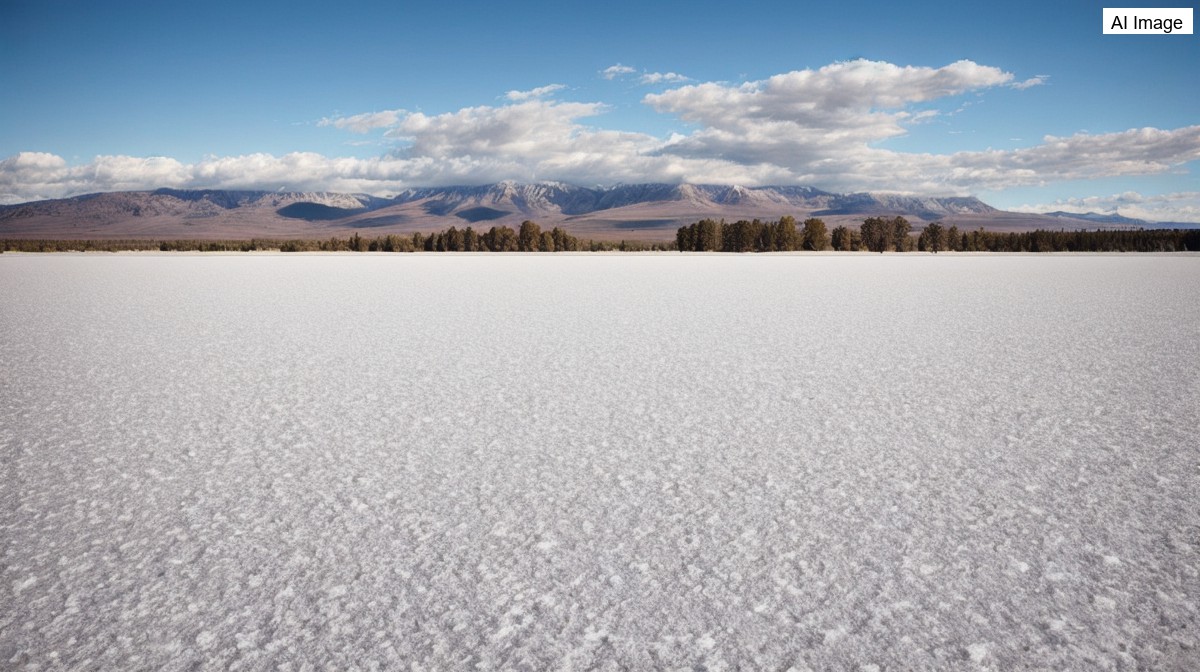
Bolivia is sitting on one of the largest lithium resources in the world, and President Rodrigo Paz says that if the country can develop these reserves it will transform its struggling economy and improve the lives of some 12 million Bolivians. The promise has placed the nation's vast mineral wealth at the center of his economic agenda.
The scale of that wealth becomes striking when set against Bolivia's neighbours. Peru, Bolivia and Chile together hold the greatest concentration of minerals in the world. Peru moves around 50 billion dollars a year and Chile around 65 billion dollars, yet Bolivia, which has the greatest concentration of all, moves only about 6 billion dollars a year. The president framed it bluntly, asking why the country would want to remain poor.
Since being elected last October, Paz has signalled that Bolivia is open for business. But there is a clear disconnect between that rhetoric and the realities on the ground, where the new government is grappling with deep economic strain and growing public anger over the state of the country.
That tension was on full display in La Paz. As the interview with the president was being arranged, violent protests erupted across the country and shut down parts of the capital. Reaching the area meant climbing through barricades and a police perimeter protecting the parliament building and the presidential palace, with protesters heard throwing dynamite nearby and tear gas hanging in the air. Paz was locked in tense negotiations, and the meeting, first expected near midnight, finally went ahead a week later.
Many of the protesters have called on Paz to resign. Asked whether there was a point at which he would consider stepping down, the president looked instead to the end of his term. He said that within five years Bolivia would be an advanced country built on new institutions, a frontal fight against corruption, a controlled fiscal deficit and a clear path toward an open economy with clear laws, adding that he hoped to leave a government of plural participation in which racial, regional and cultural differences are not used to generate political conflict.
At a precarious moment for his presidency, Paz has won public backing from the Trump administration. Secretary of State Marco Rubio said the United States stands squarely in support of Bolivia's government, and Trump and his team have embraced Paz's new vision, much as they have welcomed wins by other centre-right politicians across Latin America.
Paz said he had met with Trump and described a relationship built around a shared geopolitical and geoeconomic vision for the continent, calling Bolivia's own approach pragmatic and open to collaboration wherever it serves the development of the economy. For investors, Hans Humes, chairman and chief executive of Greylock Capital, who has spent his career in frontier markets, urged patience to see how well Paz pulls it off, noting that markets generally provide a positive tailwind.