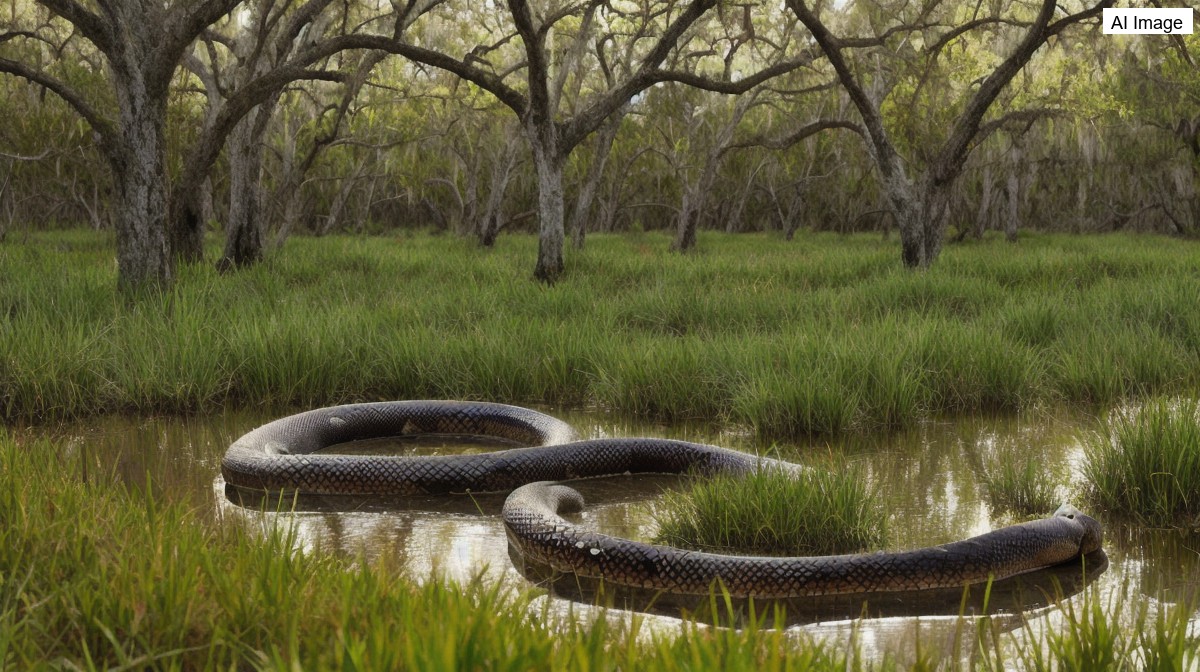
A case in Florida has reignited the debate over how the state handles its fight against invasive species, after a wildlife enthusiast was issued a 180 dollar citation for capturing a Burmese python. What the man saw as a good deed for the environment ended up costing him a fine, in a story that has since drawn wide attention and no small amount of criticism.
According to the account, the man noticed the snake while at a national park and decided to act. After catching the python, he notified park rangers about what he had done, expecting his report to be welcomed rather than penalized. Instead, the encounter with officials would take an unexpected turn once they arrived on the scene.
The rangers told the man to secure the snake and to wait for them to arrive. It was at that point, once they reached him, that he was issued the citation for handling wildlife, a rule that applies within the protected boundaries of the national park regardless of the type of animal involved or the intentions behind the action.
The case quickly drew support from wildlife expert Ron McGill, who publicly defended the man and argued that he should not have been penalized for removing an invasive species. In McGill's view, punishing someone for taking action against the python sends the wrong message about a problem that continues to grow across the region.
McGill described the Burmese python as the single most invasive species in the area, warning that the reptile could have been responsible for eliminating countless other native species had it been left in place. By removing that python, he said, the man had not hurt the environment but helped it, and in doing so had effectively saved several other animals.
Underscoring his support, McGill accompanied the man in court and said he would have paid the fine himself if it was ultimately issued. The episode has left many questioning how authorities should balance strict wildlife handling rules inside protected areas with the broader and urgent effort to curb one of the most damaging invasive species in Florida.