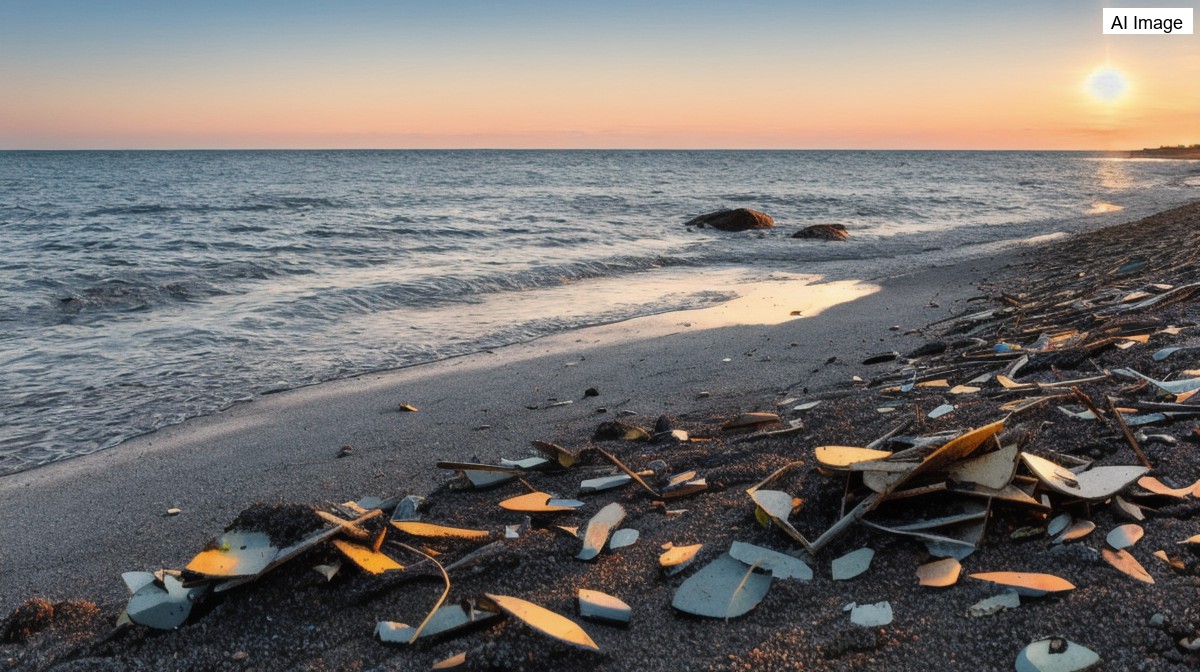
Days after the dramatic explosion of a Blue Origin New Glenn rocket on the launch pad at Space Launch Complex 36 at Cape Canaveral, officials are issuing warnings that chunks of potentially toxic rocket debris could begin washing up along Brevard County's coastline in the coming days or weeks. According to LiveNOW FOX, Blue Origin has explicitly advised beachgoers who encounter any debris not to touch it, as it may not be safe to handle.
The explosion occurred on Thursday evening during a static fire engine test, sending a massive fireball into the sky and shaking houses in the surrounding area. The launch pad burned for several hours as emergency crews waited for the fire to subside. No injuries were reported in the incident, but the damage to the launch infrastructure is expected to take at least a year to repair, according to industry estimates.
Beach visitors interviewed by Fox 35 Orlando were aware of the situation and expressed calm responses. I think the plan is usually if you run into something on the beach you just phone it in, take a picture of it and let others handle recovery of it, one beachgoer told reporters. However, some residents have raised questions about whether they should be concerned about potential health risks from the debris.
Space expert Greg Autry sought to reassure the public, stating that he did not believe there was anything the public needed to worry about regarding their safety or that would be super hazardous to the wildlife. He explained that Blue Origin uses liquefied natural gas, primarily methane, as fuel, which produces water and carbon dioxide when burned rather than harmful soot or hydrocarbon pollution. He contrasted this with the 2016 SpaceX Falcon 9 explosion at the same facility, which used a kerosene-based fuel that did produce soot and hydrocarbons.
Despite the reassurances about air quality and fuel safety, concerns remain about the physical debris itself and its potential impact on the Indian River Lagoon ecosystem. Autry acknowledged that any foreign material in the lagoon is undesirable if it can be avoided. Local authorities are monitoring the coastline and urging residents to report any findings to the appropriate agencies rather than attempting to collect or move debris themselves.
The incident has broader implications for the American space programme. Blue Origin's loss of Launch Complex 36 comes at a critical time as the company is a key contractor for NASA's Artemis programme, selected to build the Blue Moon Mark II lander that will carry astronauts to the lunar surface. With the pad expected to take at least a year to rebuild, questions are being raised about whether this setback will affect the timeline for future Artemis missions and the broader goal of establishing a permanent moon base.