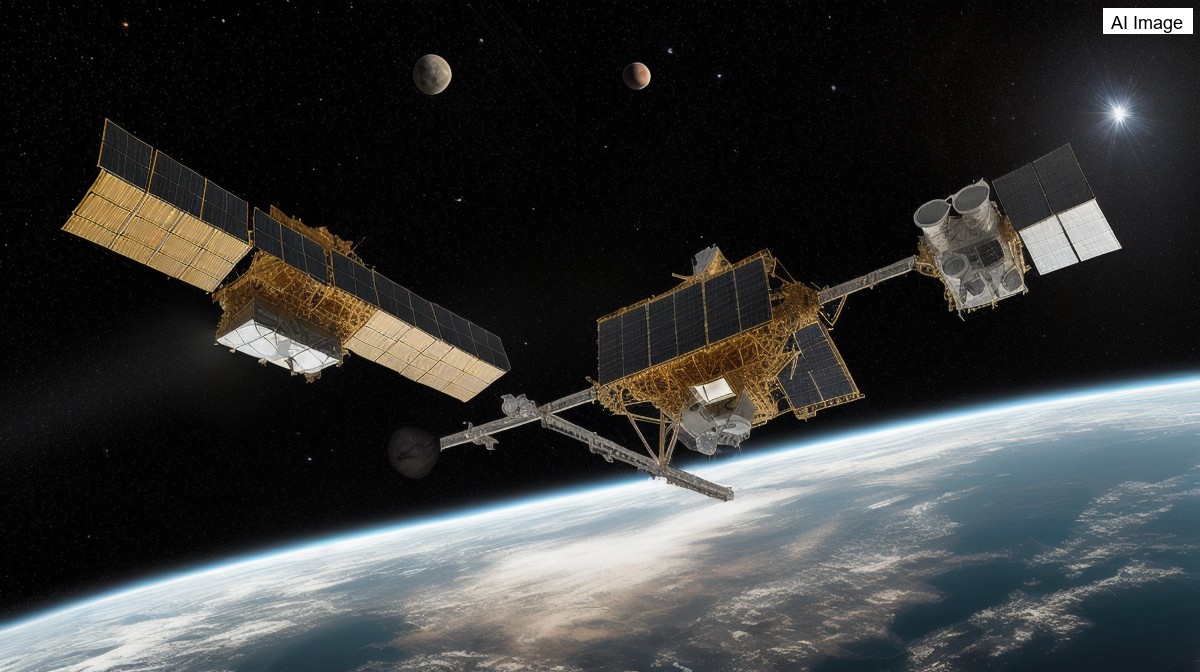
NASA is attempting a first-of-its-kind rescue mission to save a space telescope that is set to crash back down to Earth. Officials described the effort as a roughly 30 million dollar gamble to preserve a 500 million dollar telescope that would otherwise be lost.
The Swift telescope has been scanning the cosmos for decades, capturing some of the biggest explosions in the universe, including supernovas. But it is now set to fall back toward Earth this fall, with intense solar activity dragging it down toward a fiery fate in the planet's atmosphere.
To prevent that, NASA has turned to a startup company called Catalyst Space, which was hired to build a three-armed robot to come to the rescue. The robot is called Link, and it is designed to chase down the telescope, grab onto it, and give it a boost to a higher, safer orbit.
According to those involved, the robot has a tremendous amount of maneuverability, using its robotic arms to grip onto the frame of a satellite and push the multi-ton spacecraft back up higher in altitude. Nothing quite like this has been flown before.
The mission is set to launch as soon as tomorrow over the Pacific. Organizers said the project came together unusually fast, taking only nine months from contract to launch, compared with a traditional aerospace program that might take around five years.
There is no guarantee the mission will succeed. As one of those behind the effort put it, the goal was simply to put a shot on goal. If it works, the Swift telescope could be back studying the stars by September.
The Swift telescope may just be the start. The Hubble telescope is also losing altitude, and Catalyst has said that its next-generation robot could one day be used to save Hubble as well.
Those backing the project framed it as part of a broader push for the United States to become more capable of carrying out complex operations in space, arguing that putting hardware into orbit is no longer enough and that servicing and repairing it there is the next frontier.