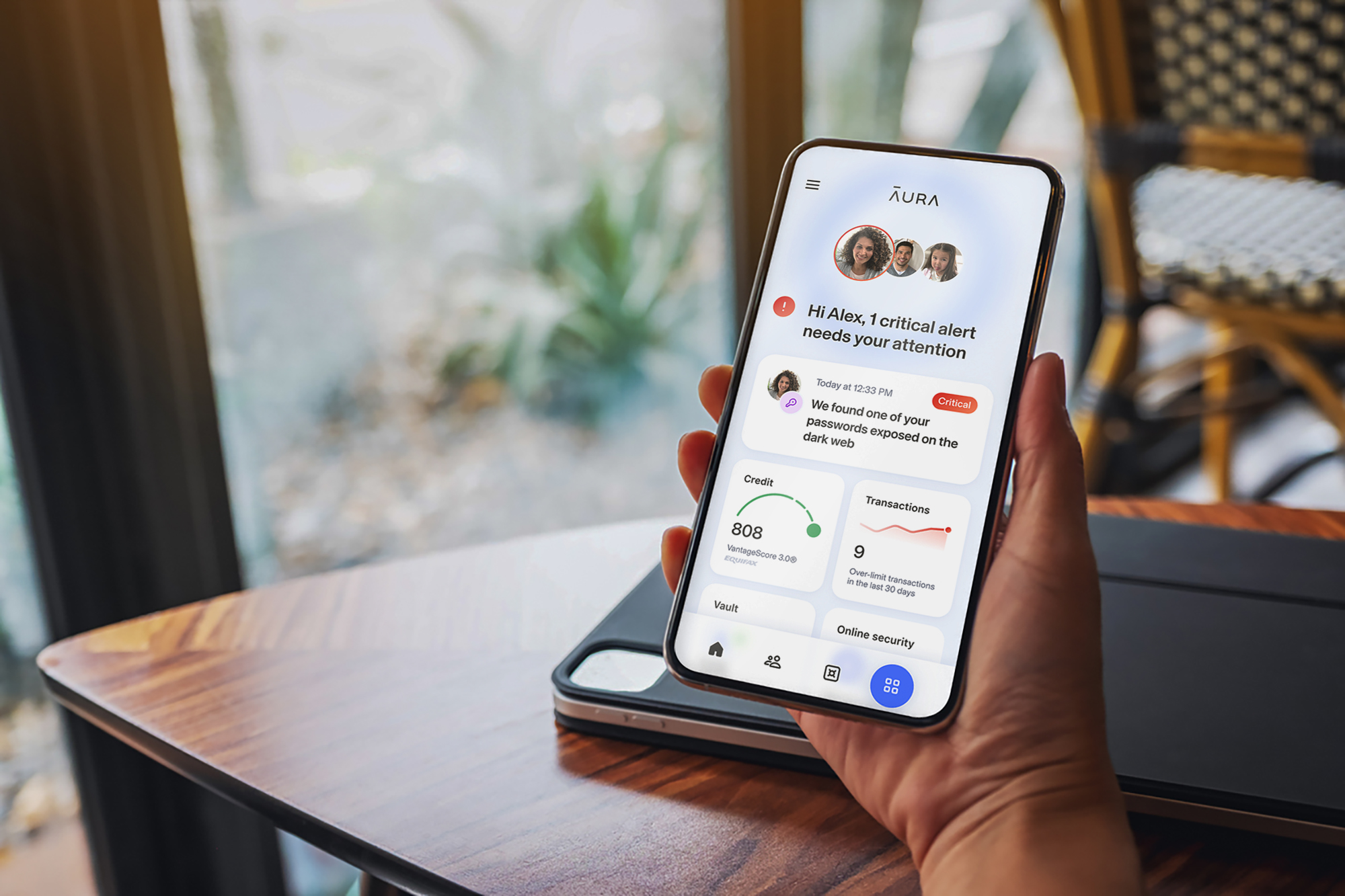
Hari Ravichandran, who built the identity-protection company Aura after his own identity was stolen, will remain chief executive of the combined business following Aura's acquisition of the Australian-listed firm Qoria. He has spent years arguing that artificial intelligence can do much of the work of keeping families safe online, a bet he is now making at a larger scale.
Aura said in April 2026 that Ravichandran would remain CEO of the combined company once it completes its acquisition of Qoria (ASX: QOR). The company also said it had secured expanded capital commitments of US$100 million, up from a previously disclosed US$75 million, with the additional $25 million funded by Ravichandran himself and existing investor WndrCo.
The deal extends a thesis Ravichandran has pushed for years: that AI, not manual engineering, should carry the load of online safety. He has described training a model to judge which apps ought to count against a child's screen time, rather than coding each case by hand, as “a one-time setup,” because “the models just get smarter as they get fed more and more information,” he told Entrepreneur in a past interview.
Ravichandran founded Aura in 2017, after his own identity was stolen, to fold identity-theft and fraud protection, parental controls, and a VPN into a single app. His first company, the web-hosting provider Endurance International, founded in 1997, grew into a publicly traded business worth $3.5 billion.
He has consistently tied the company's direction to his own life as a father of four. Children today are “all growing up with devices,” he has said, recalling that with his oldest, “the first time she crawled, she crawled to an iPad.” Aura has said roughly 40% of its customers use its parental-control tools.
Aura's most recently reported valuation is US$1.6 billion, the figure attached to a $140 million equity-and-debt round it completed in March 2025, its first since separating from Pango Group. Across its disclosed Series E, F, and G rounds, Aura has raised roughly $490 million, according to company announcements.
On management, Ravichandran has described his relationship with staff as “a handshake between myself and the team,” and has said that “taking that accountability very seriously has been very helpful.” He has also said the company narrowed its go-to-market approach from three or four channels to two before that growth accelerated.
The Qoria deal comes amid turbulence Aura itself acknowledged: the equity placement was priced against what the company called “recent global equity market volatility and a broad de-rating of technology valuations.” What the combined company does in practice, and whether Ravichandran's wager that AI can shoulder online safety holds at a larger scale, will depend on an integration that has not yet begun.