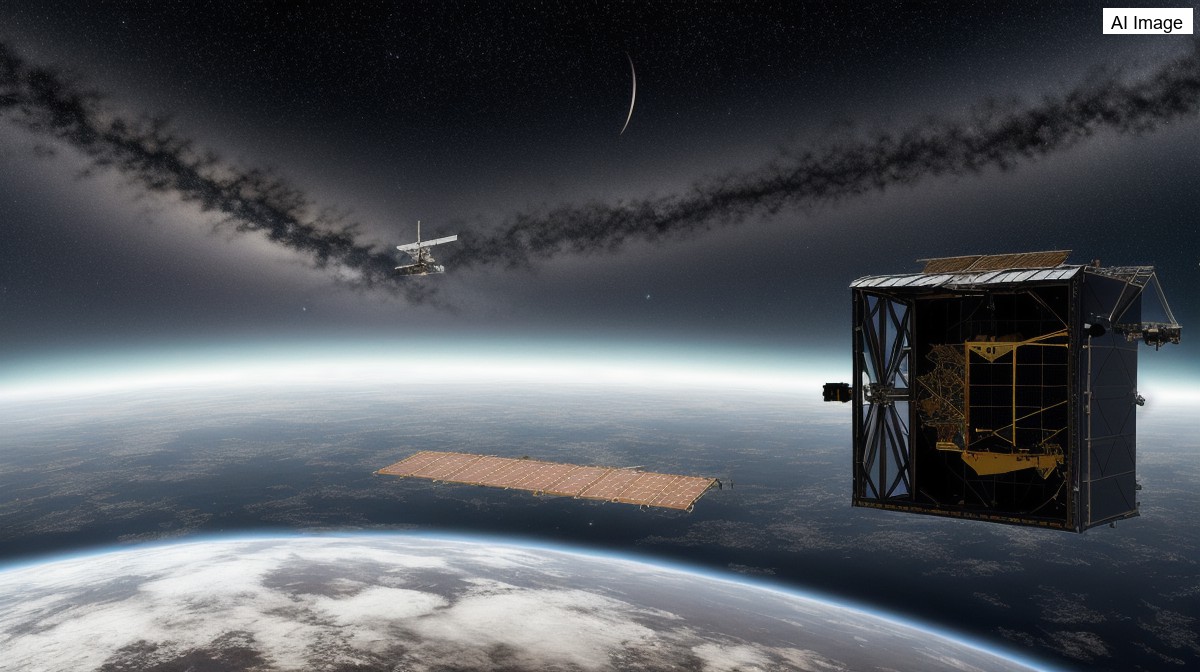
An aging space telescope that has spent more than two decades studying the universe is now facing a threat to its own survival. According to the reporting, the Swift telescope is moving closer to the Earth's surface, a path that would eventually cause it to burn up in the Earth's atmosphere. That looming fate has set the stage for an unusual effort to save the observatory before it is lost.
Rather than letting the telescope fall, space officials and a private company are preparing an ambitious response. According to the reporting, in a first-of-its-kind mission, the startup Catalyst Space is teaming up with NASA to try and rescue Swift. The partnership pairs a government space agency with a young company, signaling a new kind of collaboration aimed at extending the life of a valuable scientific tool.
At the heart of the plan is a piece of hardware built specifically for the job. According to the reporting, the rescue would use the company's newly developed robotic spacecraft, called Link. The vehicle is central to the mission, as it is designed to do the delicate work of reaching the telescope and taking hold of it while both are moving in space.
The mechanics of the operation depend on a careful sequence once Link reaches its target. According to the reporting, the idea is that once in orbit, Link will capture the 22-year-old observatory and use its thrusters to move Swift into a more stable orbit. That maneuver would reverse the telescope's slow descent and place it in a position where it is no longer at risk of falling toward Earth.
If it works, the payoff for the mission would be measured in years of additional science. According to the reporting, boosting Swift into a more stable orbit would give the telescope about 10 more years of mission. That extension would allow the observatory to keep operating well beyond the point at which it might otherwise have been lost to the atmosphere.
The effort stands out not only for the telescope it aims to save but also for what it could represent more broadly. According to the reporting, the mission is described as a first-of-its-kind effort, suggesting that a successful rescue could serve as a template for similar operations in the future. For now, the focus remains on whether Link can reach Swift and carry out the plan as intended.