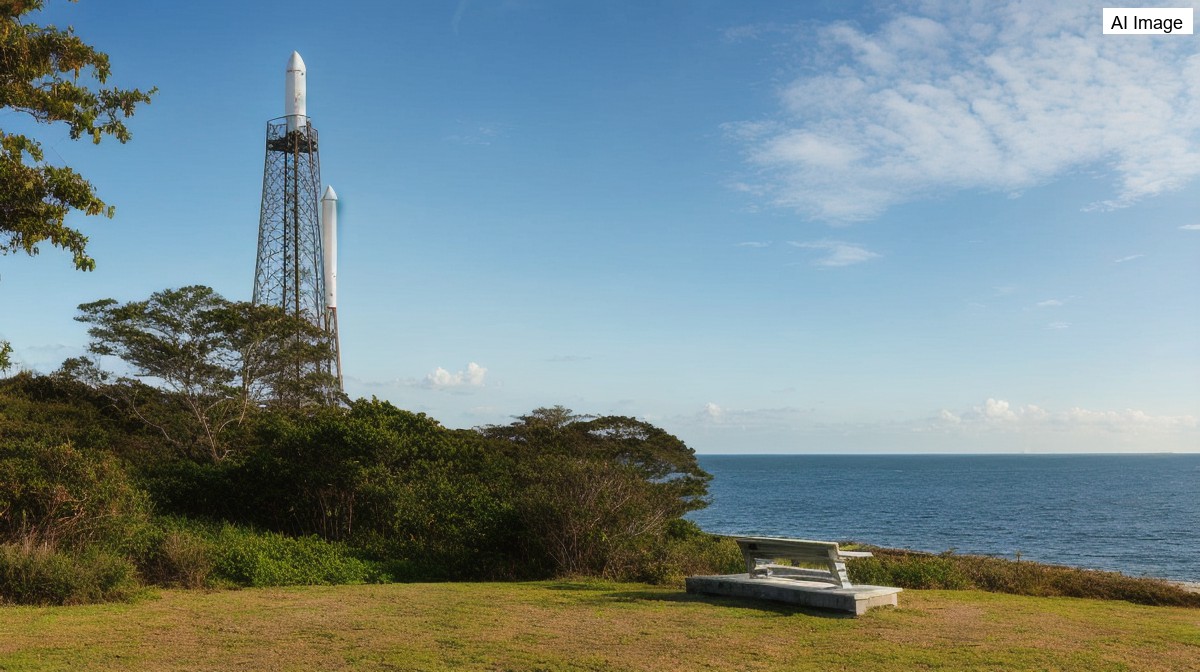
A United States company is building a commercial spaceport in the Dominican Republic, part of a broader contest for influence in space that one analyst described as a marathon, or perhaps an ultramarathon, with no clear finish line in sight. The project is being framed around what its backers call a pivot to the Western Hemisphere.
The current space era differs sharply from the decades of competition with the Soviet Union, according to Carrie Bingen, a director of CSIS's Aerospace Security Project. She said that where so much of what happened in space was once fueled by government, much of what is happening now is commercial, which sets the present period apart.
More than 80 percent of the satellites on orbit today are commercial systems, Bingen said, many of them from the United States through companies such as SpaceX and Starlink, but increasingly from other countries as well. Lower launch costs now mean almost any country or even entity can put something into orbit, with much of it fueled by private capital rather than taxpayer dollars.
China's ambitions feature prominently in the project's rationale. Bingen said China wants to be the world's space power, and that its presence and capabilities in Latin America are part of that strategy. According to her, Beijing is seeking access, influence and the ability to band together with countries in bodies like the United Nations to help shape where standards are set.
The company behind the spaceport said the program began well before many people realized China was interested in acquiring real estate in Latin America. With the Trump administration and President Abinader's administration aligned on the pivot to the Western Hemisphere, the spaceport is described as more of an artifact of that decision than anything else.
Executives stressed that the facility is run by a US company, is designed to be commercial and is complementary rather than competitive with spaceports in the United States. They said they have worked hard to be seen as a friend rather than a foe, and that they asked to adopt US safety standards for launch and reentry, which Abinader agreed to, so customers face the same standard whether they launch from the United States or the Dominican Republic.
The discussion also touched on gaps in monitoring orbital activity. It was noted that radars were never widely placed in South America or Africa because no one expected missiles to be launched across the Southern Hemisphere, yet broader coverage is now seen as necessary as China and Russia maneuver satellites more frequently, raising questions about whether those moves are benign or mask hidden capabilities.
Use of the spaceport will be kept in line with US foreign policy. The company's leader, Catledge, said that as a US firm operating in the Dominican Republic he needs his host country and the United States to remain aligned, since straying off the beaten path would cut him off from the largest commercial market in the world. He estimated that about 10 years after reaching full operations the site would generate roughly 8 billion dollars, making it what he called the first private revenue-generating spaceport in the world.