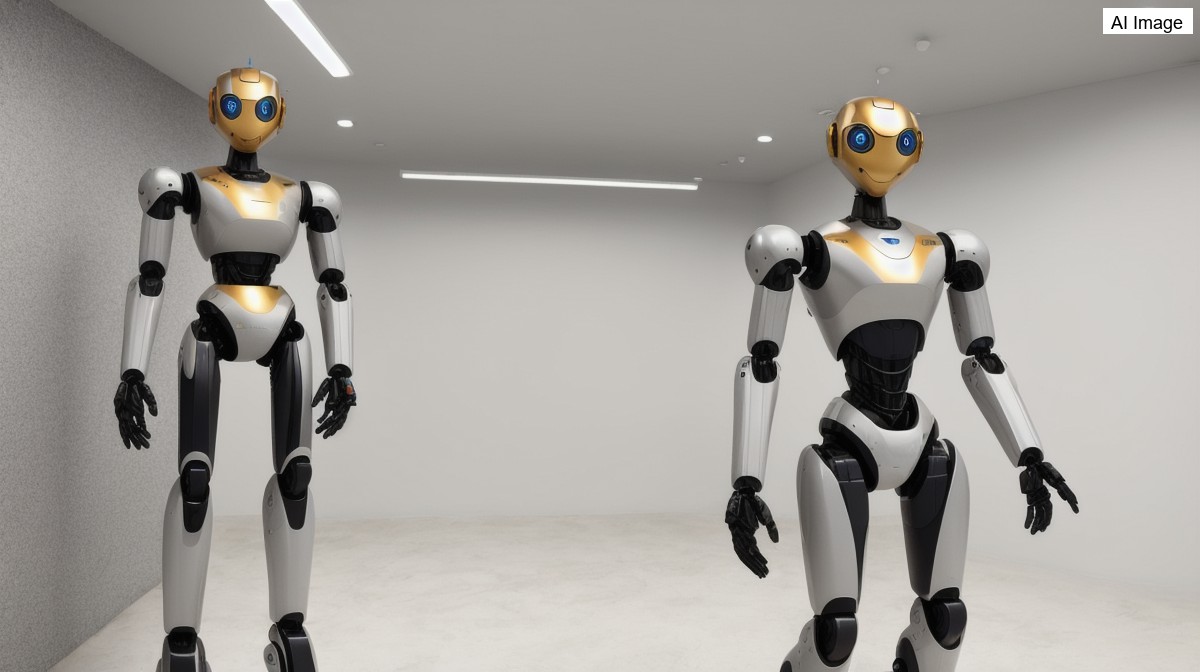
The United States is taking a step to restrict a fast growing category of technology coming from abroad. According to the reporting, the US Federal Communications Commission is banning imports of new foreign made humanoid robots and power inverters, citing national security risks. The move targets devices that are increasingly made outside the country and brought into the American market.
The decision was tied directly to the current administration in the coverage of it. According to the reporting, the New York Post said on social media that the Trump administration was banning Chinese robot imports, citing national security threats. The framing placed the measure within a broader concern about where these machines are produced and the risks that are attached to them.
Those explaining the policy stressed that it was not aimed only at one country. According to the reporting, the measure is not China specific, although it was made clear that China makes most of the humanoids these days, which is where the effect largely lands. The point was that the rule applies to foreign made robots in general rather than to Chinese products alone.
The scope of the ban was also described as limited rather than absolute. According to the reporting, it is a targeted approach and not a wall, because it only stops new unauthorized imports while existing robots and federal buyers are exempt and there are exception paths as well. The design leaves room for machines already in place and for certain buyers even as new imports are blocked.
News agencies summed up the message coming from Washington in blunt terms. According to the reporting, Reuters framed it as no more Chinese humanoid robots, describing it as the message from the Trump administration as it seeks to protect the US artificial intelligence build out. The step was presented as part of an effort to shield the country's push into advanced technology.
The reporting also set out how large China's role in this market has become. According to the reporting, China is described as making about 85% of that global market, a share that helps explain why a ban on foreign made humanoid robots would fall so heavily on Chinese production. That dominance was cited as the backdrop to the security concerns being raised.
An analyst interviewed in the coverage put the change in a wider context for the industry. According to the reporting, the analyst argued that China's lead is in volume and cost rather than in capability, and that robotics is the next arena where artificial intelligence becomes real economic activity, with the winner being whoever innovates fastest and earns the most trust on safety and capability. The comments framed the ban as one moment in a longer competition over robotics.