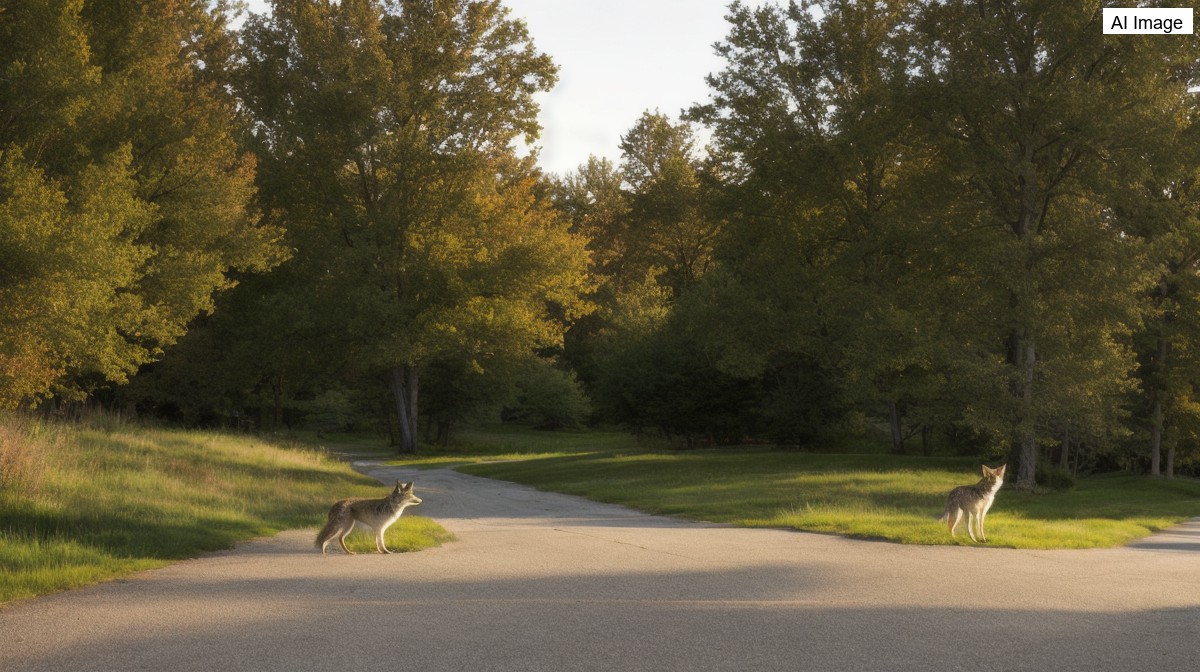
Residents in Westchester County are being urged to stay alert after a string of coyote sightings in Irvington and Hastings over the last couple of days. Police and wildlife experts say pet owners in particular should be on extra high alert, warning that the animals have been spotted moving through residential areas. The advisories follow an alarming encounter that left a family pet badly hurt and prompted neighbors to keep a closer watch on their yards. Officials are stressing caution rather than panic as they track the recent activity.
This past Friday, a dog owner in Irvington captured video of a coyote after it viciously attacked her 10-pound rescue dog right in their own yard. The small dog, named Becky, survived the attack despite suffering 16 puncture wounds, an outcome the owner described as hard to believe given the severity of what happened. The incident has become a focal point of the warnings now circulating in the community, illustrating how quickly such an encounter can turn dangerous even close to home.
The dog's owner recounted the frightening moment, saying the coyote came and grabbed the pet and had her by the throat before dragging Becky behind the trampoline in the yard. She said she could not believe her dog was actually still alive after the attack. The account underscored just how vulnerable small pets can be when a coyote moves into a backyard, and it has resonated with other pet owners in the area who fear a similar encounter.
Wildlife experts say the timing is tied to what is known as pupping season. The cycle begins in January, when coyotes mate, set up their dens and prepare for the birth of their pups, which are usually born in April or May. That means this is the period when adult coyotes are actively traveling to find food for their offspring, which can bring them closer to homes and yards as they search. Understanding that pattern, experts say, helps explain why sightings have picked up now.
To reduce the risk, officials are urging residents to take simple precautions around their properties. They recommend making sure garbage is secure and not leaving food outside, both of which can draw coyotes in. Pet owners are also advised to supervise their animals, especially small dogs and cats, even when they are in their own backyard, since the recent attack showed that a fenced or familiar space is not necessarily safe.
Despite the warnings, wildlife experts note that coyotes, for the most part, are more afraid of people than people are of them. Anyone who encounters one is advised to wave their arms, make a lot of noise and give the animal a wide berth so it has a clear path to run away, since a coyote that feels trapped or cornered is more likely to react. In the affected neighborhoods, residents say they are looking out for one another, with alerts going out to pet owners whenever someone spots a coyote nearby.