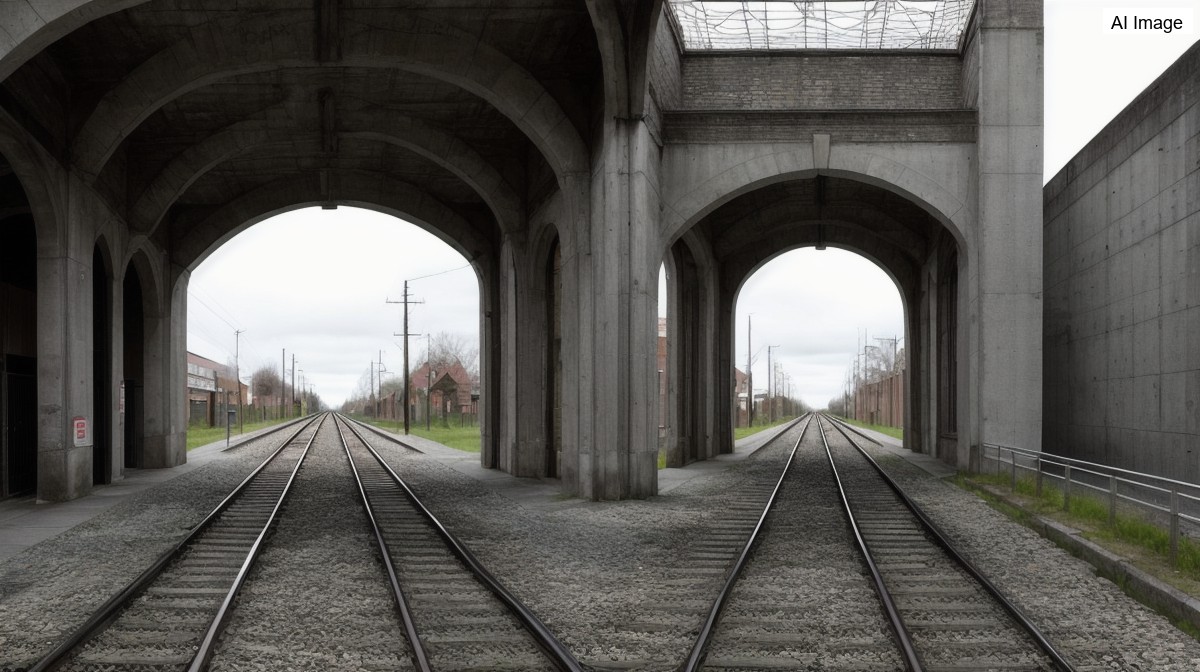
Residents in Essex County, New Jersey, are raising concerns about crumbling train bridges, even as the rail agency insists the structures are safe. The worries are centered in Orange, where people say the deterioration has become visible enough to alarm those who pass beneath the spans every day.
Locals describe clear signs of decay. People in Orange have noticed visible cracks, along with chunks of concrete falling from bridges near Glebe Street and Central Avenue. For residents on the ground, the falling material is the most immediate and troubling symptom of the problem.
The bridges in question carry active commuter rail traffic. They are located where the Morris-Essex line and the Gladstone branch make their stops, putting them at the heart of a routinely used stretch of the network rather than on some abandoned siding.
The issue is not a brand-new discovery for the city. Officials say the problem first surfaced about two years ago, and that the city has since reached out to NJ Transit to flag the condition of the bridges. That means residents have been watching the situation develop over an extended period.
For its part, the transit agency is offering reassurance. NJ Transit says the bridges are structurally safe for rail travel. Even so, that assessment has not settled the matter for the people who live and walk in the area, who remain unconvinced by the official position.
Residents frame their unease around everyday foot and road traffic rather than the trains themselves. One resident noted that many students cross the area and that cars are constantly passing through, arguing that even if the structure is sound for the trains running over the top, the vibration is what appears to be shaking the concrete loose.
The agency points to its inspection record to back up its stance. An NJ Transit spokesperson said the bridge passed its last inspection, adding that the agency inspects all of its bridges every year, with outside consultants carrying out additional reviews every five years. The gap between that formal record and what residents say they are seeing on the street remains at the core of the dispute.