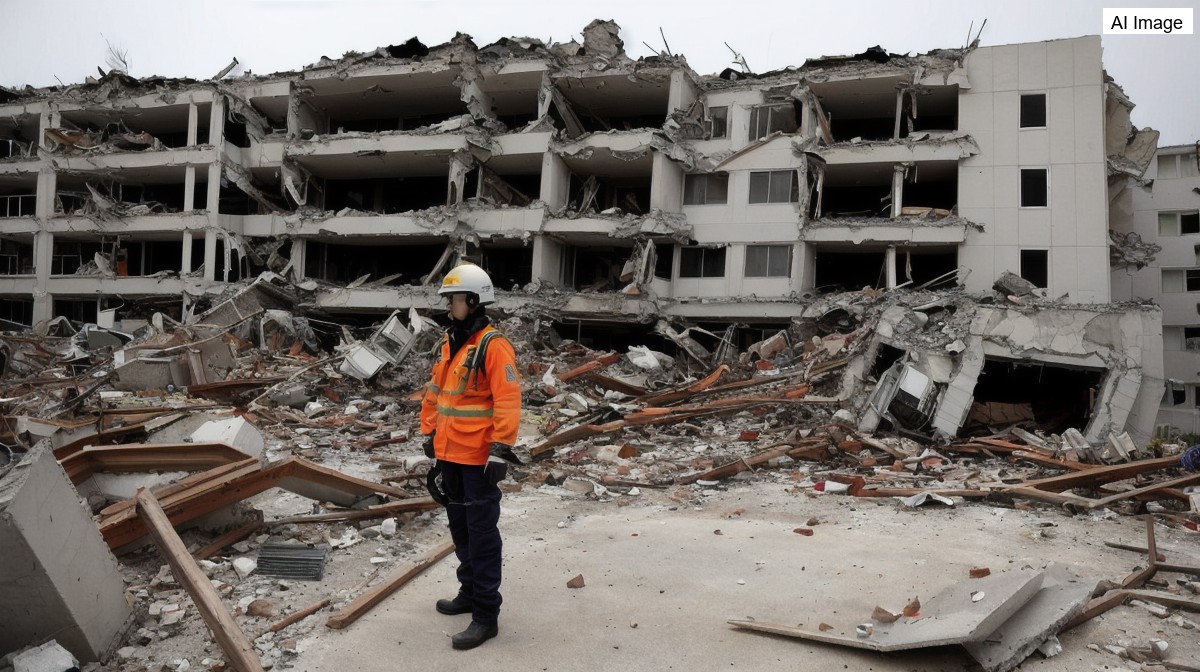
A week after two powerful earthquakes tore through Venezuela, the scale of the catastrophe is still coming into focus, and the death toll is climbing. The two quakes, which struck on 24 June with preliminary magnitudes of 7.2 and 7.5, appear to have been the strongest ever recorded in the country, and the coastal region of La Guaira, closest to the epicentre, was left all but unrecognisable.
The latest official toll has risen to 2,295 dead, up from earlier counts, and authorities and aid workers have made clear even that figure is almost certainly an undercount. Officials warned that the number of people who died in their homes is far higher than what has so far been formally counted, meaning the true toll is expected to keep rising as the data catches up.
Amid the grief there have been moments of hope. Rescuers earlier managed to pull thousands of survivors from the rubble, including a 3-year-old child brought out alive from the debris. Nearly a week on, crews were still working delicately to reach a 14-year-old girl believed to be trapped and alive, after a cry was heard the previous evening; teams used sniffer dogs and thermal cameras, even as officials acknowledged the chances of finding survivors were now slim.
The physical destruction has been immense. According to a preliminary analysis of satellite data by the United States space agency NASA, more than 58,000 buildings were destroyed or damaged by the tremors, and tens of thousands of people remain unaccounted for. Beyond the immediate toll, the World Health Organization has warned that the country could now face outbreaks of disease, and officials fear that food could begin to run short in the aftermath of the disaster.
The economic cost is staggering for a country whose economy was already drained long before the ground shook. Damage has been estimated at close to 7 billion dollars, equivalent to about 6 percent of Venezuela's gross domestic product. At the entrance to hospitals, patients have been left waiting for hours, with corridors more crowded than usual as medical staff struggle to keep pace with the scale of the emergency.
International help has poured in to support the response. Rescue specialists from more than 20 countries have arrived to reinforce Venezuelan teams, with searches continuing around the clock. The United States has doubled its assistance to a total of 300 million dollars for non-governmental organisations and United Nations agencies, repaired the port in the badly hit La Guaira region and helped set up a provisional morgue, while Germany's Technisches Hilfswerk deployed rescuers with search dogs and equipment, and neighbouring Ecuador sent flights carrying water, food and supplies.
For Venezuelans, the twin earthquakes have compounded an already desperate situation, turning whole districts into fields of rubble and leaving families to search for the missing and bury their dead. As crews from around the world continue to dig through the debris in La Guaira and beyond, the focus has shifted from rescue toward recovery, even as officials caution that the true human cost of the disaster is still far from known.