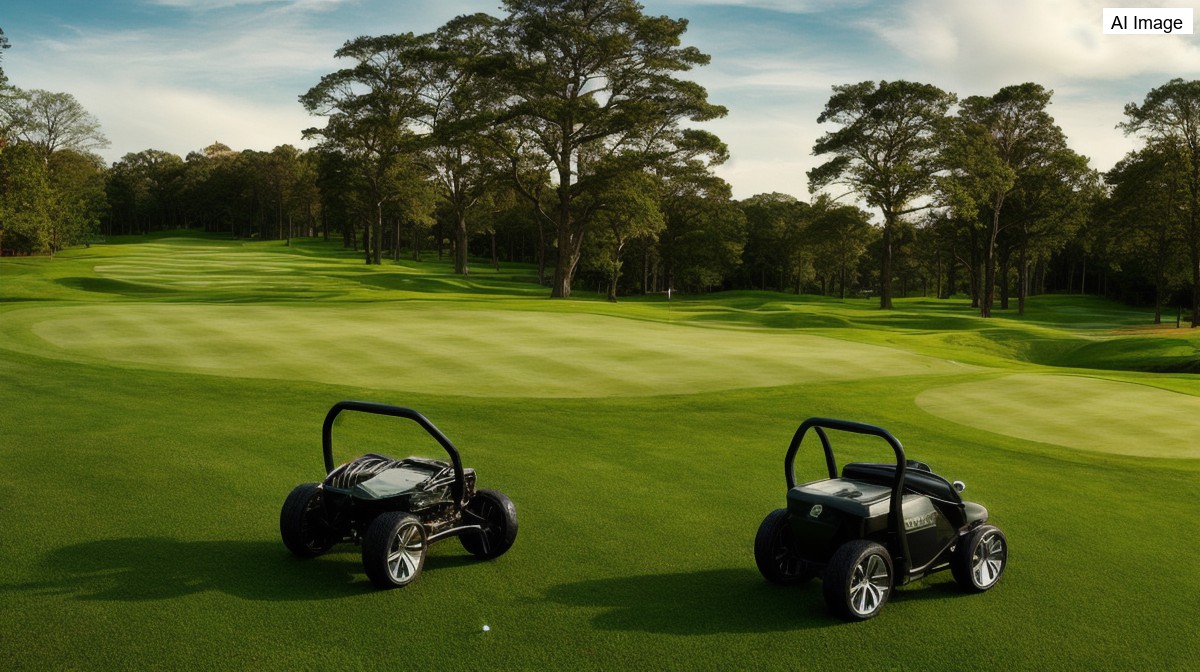
A company in Pickering, Ontario that sells electric golf trolleys says it has been caught by a tariff that was never meant for a product like its own. According to CBC News, the business argues it is being unfairly taxed at a rate designed for Chinese electric vehicles, even though its trolleys have nothing to do with the auto industry the tariff is meant to protect.
The tax in question is a steep one. Canada applies a 100 percent tariff on all Chinese electric vehicles, a category that includes motor vehicles that transport goods using only an electric motor. It was under that category that the Canada Border Services Agency reclassified the golf trolleys in May, sweeping them in alongside far larger vehicles.
The company's owner, McLuckie, rejects the comparison outright. He told CBC that his products have nothing to do with protecting the auto industry, suggesting that if one of his trolleys were parked next to an electric vehicle, the public would struggle to see what the two things have in common.
For its part, the border agency framed the decision as a matter of following the rules. The CBSA said in a statement that it administers surtaxes based on the terms of individual surtax orders, describing its role as applying the orders rather than judging which products should fall under them.
The timing of the case has added to the confusion. According to CBC, the government scrapped the China surtax order in March of this year, and yet two months later McLuckie was notified that his shipment had been reassessed. That sequence left his goods facing the tariff even after the underlying order had been dropped.
McLuckie is now fighting the charge on two fronts. He is in the process of appealing the CBSA's decision, and he has also submitted a remission request asking the federal government to waive the tax. His lawyer cautioned that the remission process takes time and that there is no guarantee it will be granted.
His case is far from the only one. The government told CBC News it has received more than 180 requests for remission since the China surtax order came into effect, and that only five of those requests have been approved, with more than 30 still being assessed. The federal government said it could not comment on the status of the company's own request.