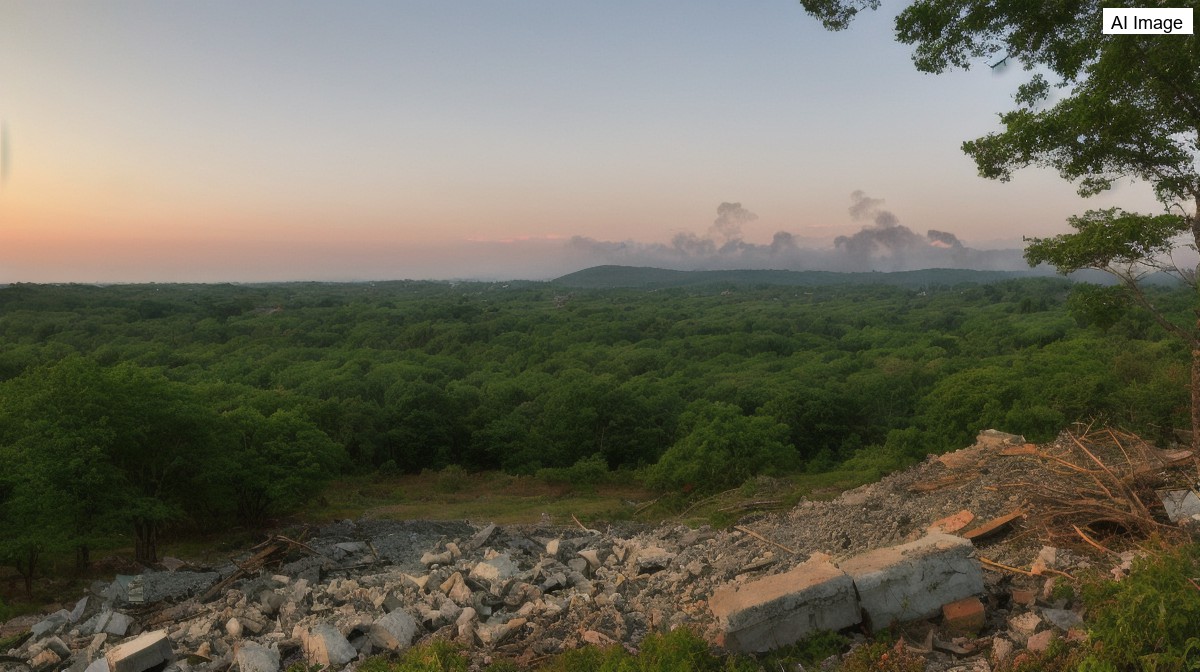
A powerful earthquake struck Colombia on Monday, with initial estimates putting its magnitude at between 7.1 and 7.4, according to information relayed by Sky News. The governor of the affected area reported that the tremor had caused injuries and significant damage, though a full picture of its impact was still emerging in the immediate aftermath of what appeared to be one of the more serious seismic events to hit the country in recent times.
As the hours passed, the scale of the disaster became clearer. At least 20 people were reported to have been killed and serious damage was described across a wide area, with the epicentre of the 7.4 magnitude quake placed in San José del Palma, in the Chocó region in the west of the country. Images showed people digging through rubble in the search for survivors, and Colombia's president said he was deeply aware of what was unfolding and would personally oversee the rescue and recovery efforts. The disaster came only weeks after two back-to-back earthquakes in neighbouring Venezuela, of magnitude 7.2 and 7.5, which claimed thousands of lives.
Reports from the scene painted a picture of widespread destruction, with buildings collapsing in cities across the west of Colombia and residents trapped beneath the debris. According to information carried by broadcasters, at least 18 people were killed in one city and two more in another location, while the tremor was strong enough to be felt in neighbouring Ecuador, though no casualties were immediately reported there. Rescuers picked through the rubble as authorities warned of the danger of aftershocks, and officials cautioned that the death toll could rise further as the full scale of the damage was assessed in the hours ahead.
As is common in the first hour after a major quake, the exact strength of the earthquake was not immediately clear, with different sources offering varying figures. Some early reports put the magnitude as low as 6.7, while others placed it as high as 7.4. Even at the lower end of that range, a tremor of such force is capable of causing serious structural damage over a wide area, and the higher estimates pointed to a potentially destructive event.
Despite the strength of the shaking, authorities indicated that no tsunami warning had been issued in connection with the earthquake. That early assessment offered a measure of reassurance for coastal communities, even as attention turned inland to the casualties and destruction being reported in the area closest to the epicentre, where the ground had moved most violently.
The most immediate concern centred on the capital of the Chocó region, where the governor said the earthquake had left people injured and had caused significant damage to buildings and infrastructure. In the chaotic early stages of events like this, precise figures for the number of casualties and the scale of the destruction typically take time to confirm, and officials were still working to establish the full extent of the harm caused.
The shaking was felt across a wide area, underlining the power of the quake and the potential for its effects to reach well beyond the immediate epicentre. Residents across the region were left to check on homes and neighbours as emergency services began responding to the first reports of people hurt and buildings affected, with the scale of the response likely to grow as more information came in from outlying areas.
With the earthquake having struck only a short time earlier, the situation remained fast-moving and the information available was still preliminary. Authorities were expected to provide clearer details on the confirmed magnitude, the number of injuries and the extent of the damage as their assessments continued, and international attention was likely to focus on Colombia in the hours ahead as the true impact of the disaster became apparent.