Reform UK has set out a prisons policy centred on a pledge to crack down on foreign offenders and to sharply expand the amount of space available across the prison estate. Party leaders said there are currently more than 10,000 foreign national offenders held in Britain's jails, a total they insisted is rising all the time, and claimed that the cost of keeping them behind bars is now around 50 percent higher than it was as recently as 2019. The announcement was framed as an answer to what the party described as a broken justice system.
At the heart of the plan is a proposal to remove foreign offenders from the country. Reform said it would send them back to their country of origin, and where those governments refused to cooperate, transfer them instead to third countries. Party figures pointed to Kosovo, an arrangement they said Sweden already uses, and to El Salvador, where they are organising a visit that would include Lee Anderson and the former prison governor Vanessa Frake. Housing an offender in El Salvador, Reform claimed, would cost roughly half as much as in Britain while freeing up cells at home.
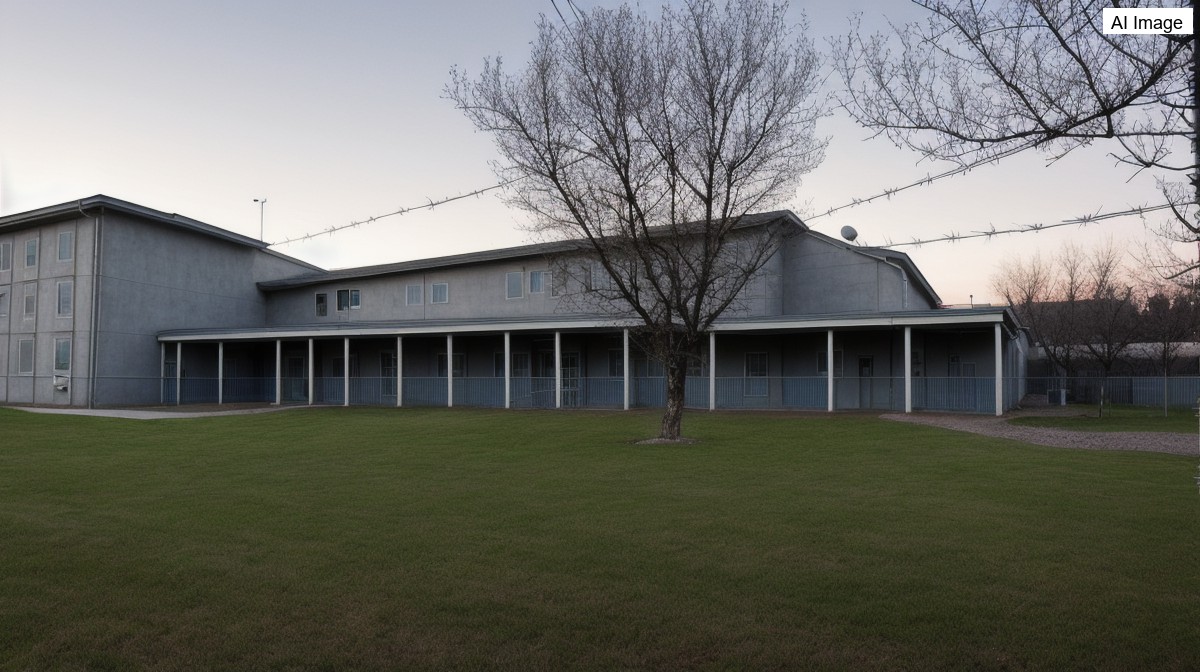
To generate additional capacity, the party proposed what it called Nightingale prisons, built using prefabricated modular technology on Ministry of Defence land, with the Army called in to help construct them. Reform said 12,000 such places could be delivered within the first 18 months of a Reform government. It stressed that these sites would hold lower-category inmates, such as people convicted of shoplifting rather than rapists or murderers, and insisted that despite their basic nature they would be secure and, in the party's words, not a summer camp.
Alongside the new places, Reform pledged to change the law so that those convicted of the most serious offences, including murder, manslaughter, rape and serious violence, would serve their sentences in full, with crimes such as child rape carrying full life terms. Taken together, the party said its measures would create an additional 22,000 prison places compared with the plans of Prime Minister Andy Burnham, and described the programme as the fastest expansion of the prison estate since the Victorian era.
The party presented the policy as a direct response to early release schemes, claiming that Labour has already let 70,000 prisoners out early and that the Conservatives had previously released thousands too, among them murderers and rapists. Reform placed the blame for the capacity shortage squarely on the Conservatives, arguing that during their years in office net immigration of around six million people was matched by the construction of just 455 net new prison places, leaving the system unable to cope.
Reform illustrated its case with specific examples. It highlighted the imminent early release of Albert Bowers and Jesse Cole, who killed Police Constable Andrew Harper by dragging him behind their car for more than a mile at speeds of up to 60 miles an hour in 2019, leaving his widow Lissy Harper to describe a devastating loss. The party also cited Liam Matthews, released early last year, who within hours killed 26-year-old Lewis Bell with a chisel, presenting both as evidence of the human cost of the current approach.
Making its wider argument, Reform said keeping repeat offenders locked up was essential to protecting the public, pointing to Swedish figures which it said showed 60 percent of violent crime is committed by 1 percent of the population. The party insisted that foreign offenders sent abroad would never be permitted to return to Britain, and warned that governments reluctant to take back their own nationals, naming Albania as an example, could face pressure including the possible use of visa bans to force their cooperation.